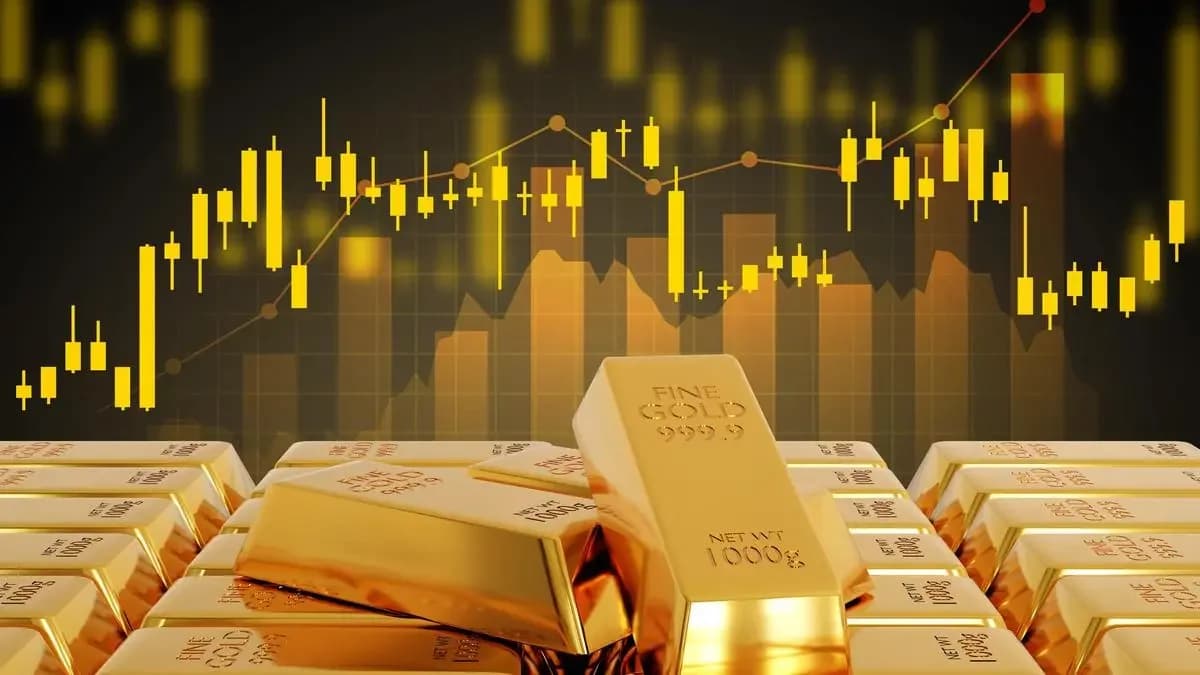
Global gold demand remained flat year-on-year at 1,269 tonnes in the April-June quarter, according to the World Gold Council's 'Q2 2026 Gold Demand Trends' report. The total demand for the yellow metal was 1,268.6 tonnes during the corresponding quarter of 2025, as reported by the WGC. Prices of the precious metal moderated from the record highs touched earlier this year, contributing to the stable demand performance. The demand in the first half of the year rose 2 per cent year-on-year to an estimated 2,522 tonnes, worth $380 billion.
Investment in gold ETFs, bars and coins dropped to 262 tonnes in the second quarter as lower gold prices led to moderation in strong investment momentum witnessed earlier in the year. According to the WGC report, the decline was primarily driven by 45 tonnes of outflows from gold-backed ETFs during the April-June period, although first-half ETF demand remained modestly positive at 18 tonnes. However, bar and coin investment was relatively stable, down just 3 per cent year-on-year during the quarter, while first-half demand was still 21 per cent higher than the corresponding period last year, supported by an exceptional first quarter. The OTC (over-the-counter) market demand stood at 327 tonnes in the second quarter and 571 tonnes in the first half of the year, helped by Asian investment.
Central banks and other official institutions added a net 289 tonnes to the reserves during the April-June quarter, up 62 per cent year-on-year, as buying picked up across several markets, led by countries like Poland, China, and the Czech Republic. As reported by WGC Regional CEO, India Sachin Jain to PTI, the Reserve Bank of India added 200 kg during the April-June quarter. The OTC (over-the-counter) market demand stood at 327 tonnes in the second quarter and 571 tonnes in the first half of the year, helped by Asian investment.
India's gold consumption declined 6 per cent year-on-year to 131.4 tonnes in Q2 2026, according to the World Gold Council report, as elevated prices, higher Customs duty and weaker seasonal demand weighed on purchases. Despite lower volumes, the value of India's gold demand reached a record ₹1,98,100 crore, compared with ₹1,32,500 crore in the year-ago period, reflecting a 50 per cent increase as consumers continued to prioritise gold even at elevated prices. India's jewellery demand declined 15 per cent year-on-year to 75.1 tonnes, while bar and coin investment rose 9 per cent to 50.3 tonnes. Indian gold ETFs recorded net inflows of 4.2 tonnes, even as global ETFs witnessed outflows. WGC Regional CEO Sachin Jain attributed the decline to seasonally subdued demand, the increase in Customs duty and Prime Minister Narendra Modi's appeal to reduce non-essential gold purchases.
The WGC report further stated that high prices continued to weigh on jewellery demand in Q2, which fell 17 per cent year-on-year as consumers bought less gold and shifted towards lighter products. However, jewellery demand by value remained resilient, rising 22 per cent year-on-year in H1 to a global total of $86 billion, reflecting elevated gold prices. High prices will keep pressure on jewellery volumes, though consumers may continue to hold their jewellery rather than sell it, with recycling showing little sign of increasing, as noted by WGC Senior Markets Analyst Louise Street.
Mine supply rose an estimated 2 per cent year-on-year to 966 tonnes, supported by new production from Canada and Chile, while recycling declined 6 per cent year-on-year despite higher prices. The average gold price stood at $4,506.3 an ounce globally, while the average quarterly price in India rose to ₹1,50,744.8 (excluding import duty and GST), compared with ₹94,875.9 a year earlier. WGC Senior Markets Analyst Louise Street noted that gold's early-year rally reversed in the second quarter, with prices consolidating after correcting from record highs. She expects investment to drive growth in the second half of 2026, with OTC activity and Asian investor demand playing increasingly prominent roles, while central banks will remain significant buyers at a slightly slower pace than the last four years. The market remained well supported, reflecting gold's established role as a diversifier and store of value.