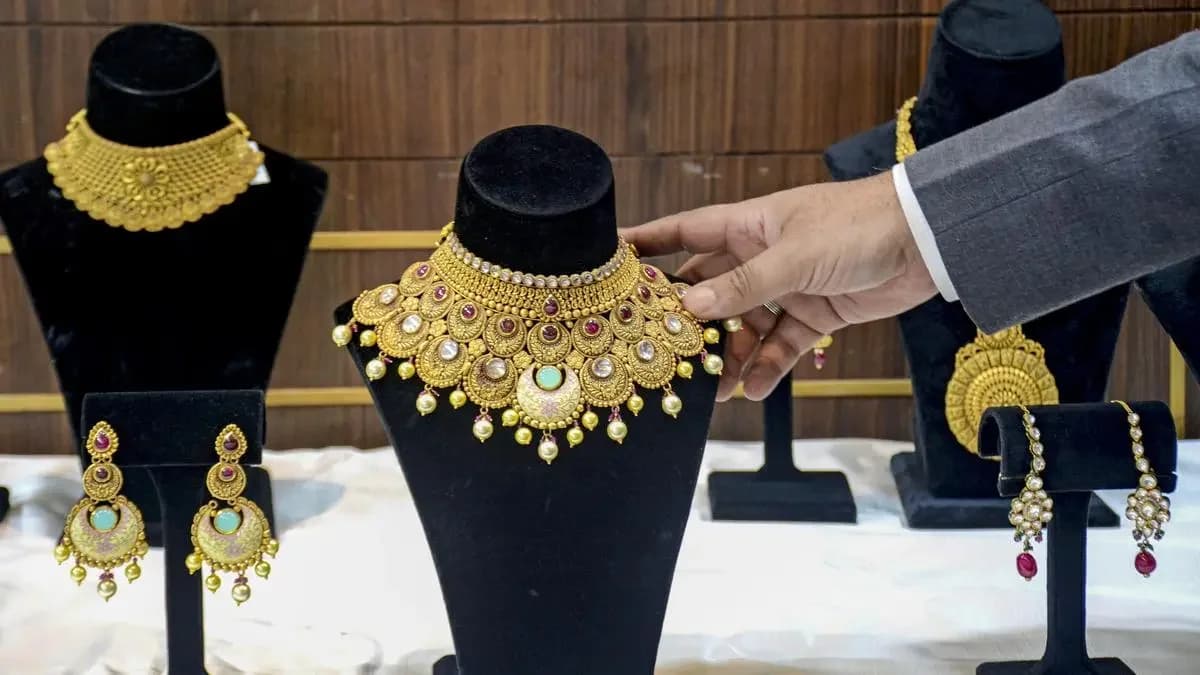
India's gold market is undergoing a fundamental transformation as investment demand now accounts for 70% of total gold demand, according to the World Gold Council (WGC). This represents a significant shift from traditional jewelry consumption, which has declined 17.1% to 141.2 tonnes in the first half of the year. The transition metal is increasingly being treated as a financialisation instrument rather than merely a consumption good, with investment demand comprising bars, coins and exchange-traded funds (ETFs) driving this structural change.
India's gold demand stood at 131 tonnes during Q2 2026, down 6% from the same period last year, as reported by the WGC. However, the total value of gold demand rose 50% year-on-year to a record ₹1.979 lakh crore (approximately $21 billion), with domestic gold prices remaining 59% higher than a year ago. Despite lower buying volumes, jewelry spending rose 34% to ₹1.13 lakh crore due to elevated prices. The WGC notes that higher prices changed the mix of purchases, with retailers reporting better demand for lightweight ornaments, lower-carat jewelry and studded products. Consumers responded to higher prices by changing what they bought rather than abandoning purchases altogether.
Jewelry demand totalled 75 tonnes in Q2, up 14% from the January-March quarter due to seasonal purchases around Akshaya Tritiya and weddings, according to the WGC report. However, compared with a year earlier, demand declined 15%, making it one of the weakest second-quarter performances since 2000. The quarter was characterized by two contrasting phases: jewelry demand received support from Akshaya Tritiya and wedding-related buying in April, while conditions weakened from mid-May through mid-June due to 'Adhik Maas', the sharp hike in import duty from 6% to 15%, and government measures aimed at moderating gold imports. Exchange transactions increased significantly during the quarter, with overall exchange volumes rising by 10-20%. Some jewellers reported that exchanged jewelry formed a significant share of total sales, with exchanged jewelry accounting for as much as 70% of sales for some retailers, reflecting consumers' preference to recycle existing gold holdings rather than sell them. India remained the world's largest jewellery market during the quarter, accounting for 27% of global jewellery demand.
A third significant trend has emerged as households increasingly use existing gold holdings as collateral rather than selling them. According to the WGC, outstanding retail bank loans backed by pledged gold jewellery reached around ₹5.1 lakh crore by June 2026, doubling over the past year. The broader banking system has seen extraordinary acceleration with gold loan portfolios reaching about ₹5.4 lakh crore by June 2026, registering close to 94% year-on-year growth. Non-banking financial companies (NBFCs) also participated in this growth, with gold loan books rising 70% to ₹3.3 lakh crore, reflecting the growing popularity of borrowing against gold instead of liquidating it. Domestic credit rating agency Icra expects the organized gold loan market to see a compound annual growth rate of more than 30% during FY27 and FY28. The latest RBI data shows NBFC gold loans surged to ₹3.42 lakh crore by June 2026, up 69.3% from ₹2.02 lakh crore a year earlier, marking the fastest growth among all major lending segments.
Gold supply fell to 120 tonnes in Q2, the lowest second-quarter level in six years, as bullion imports dropped 53% quarter-on-quarter and 22% from a year ago following the import duty increase in May 2026. According to the WGC, existing inventories and recycled gold continued to meet market requirements, with no shortage of gold in the domestic market. Investment demand, covering bars, coins and gold exchange-traded funds (ETFs), moderated after three consecutive strong quarters, with total investment demand coming in at 54 tonnes, down from an average of around 100 tonnes over the previous three quarters. Bar and coin purchases slipped 19% sequentially to 50 tonnes as investors paused following the sharp rally in prices, though demand remained 9% higher than a year ago. Gold ETF demand fell to 4 tonnes in Q2, over 80% lower than Q1's record 20 tonnes, though investors returned to buy the dip by early June. Gold prices experienced moderation in Q2 2026 after a strong rally in 2024 and early 2025, with the average LBMA Gold Price PM decreasing by 8% quarter-over-quarter, while domestic MCX spot price remained stable due to higher import duties and a 4% rupee depreciation.