Oil prices continued their decline on Thursday as markets responded to President Trump signing the US-Iran peace agreement in Versailles, France. Brent crude oil prices were trading 1.75% lower at $78.16 per barrel as of 9:32 am IST on Thursday, compared to $79.55 per barrel at the previous market close, according to The Hindu BusinessLine data. US West Texas Intermediate crude oil prices were trading 1.99% lower at $75.26 per barrel compared to $76.79 per barrel at the previous commodity market close. The benchmarks have declined significantly, with oil prices down over 13% in one week, more than 27% in the last month, and over 23% in the last three-month period in the global market. As per Investing.com, after more than three months of oil prices staying at elevated levels due to the West Asia crisis, the energy rates are finally heading towards their pre-conflict levels. Brent crude fell towards $79 a barrel on Friday and was down more than 9% for the week, while West Texas Intermediate traded near $75, marking the steepest weekly decline in months as signs of a gradual reopening of the Strait of Hormuz eased concerns over global supply disruptions.
The terms of the preliminary agreement have not been released by either country, but the framework involves a 14-point memorandum that begins a 60-day negotiation period during which Iran will allow toll-free passage through the Strait of Hormuz. The deal calls for traffic through the strait to be restored to its full capacity within 30 days, as reported by Business Standard. The agreement is set to be effective on an immediate basis, with the Strait of Hormuz expected to be fully re-opened in a few days' time, according to earlier reports. The preliminary accord defers many of the more difficult issues, such as Iran's nuclear program, and also requires the US and its partners to come up with a $300 billion plan to finance Iran's recovery. If the agreement is successfully implemented and the Strait reopened, this year's supply crisis could turn into a significant supply glut in 2027, with the IEA forecasting in its monthly market report that supply will outstrip demand by 5.05 million barrels per day next year as Middle East oil returns to the market.
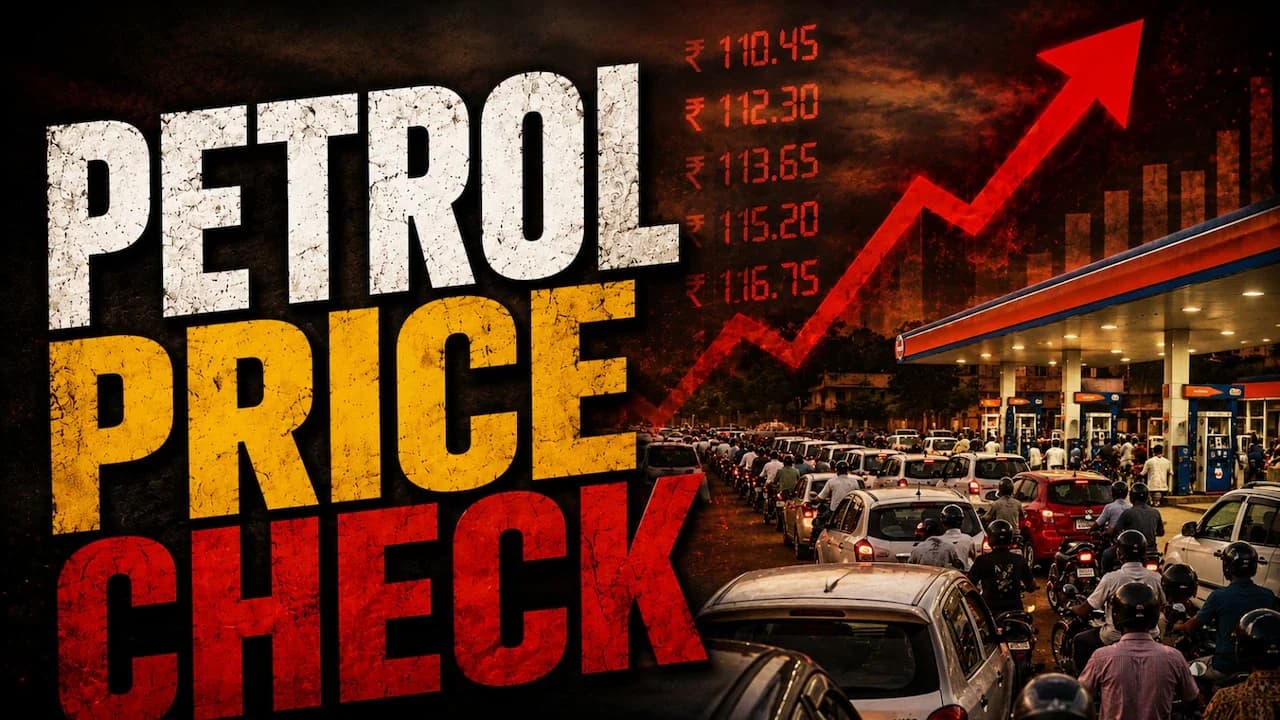
Despite the sharp decline in crude oil prices, petrol and diesel prices have remained unchanged on Thursday, June 19, as reported by NDTV Profit. Fuel prices had been pushed higher across the board on supply concerns during the US-Iran war, but with the war coming to an end, brent crude prices have also declined sharply, erasing most of the war premium. Ever since the US-Iran War began, fuel prices have been hiked for four times, with the latest increase of ₹2.6 and ₹2.7 per litre respectively announced last month, so far prices have increased by ₹7.5-8 since the start of the war. In Delhi, petrol is priced at ₹102.12 per litre, while diesel costs ₹95.20 per litre on June 19. Petrol prices across major cities include ₹113.51 in Kolkata, ₹111.21 in Mumbai, ₹108.01 in Chennai, ₹115.73 in Hyderabad, and ₹110.89 in Bengaluru, while diesel prices range from ₹99.82 in Kolkata to ₹103.82 in Hyderabad. Oil manufacturing companies' (OMCs) under-recoveries have also seen a notable reduction, with petrol under-recoveries down 83% to ₹3 per litre from ₹24 per litre on April 1, while diesel's under-recoveries saw a 75% reduction to ₹27 per litre from ₹105 per litre.
The IEA report projects significant shifts in global oil markets if the deal holds. Global oil supply is expected to fall by 3.9 million barrels a day on average in 2026 to 102.4 million barrels a day, while global oil demand is projected to rise by a relatively modest 2 million barrels a day to 105.3 million barrels a day. However, oil supplies look set to surge by around 8 million barrels a day to 110 million barrels a day, providing a welcome respite to the market and an opportunity to replenish depleted inventories. The return of shipping activity through the Strait of Hormuz has prompted traders to unwind much of the risk premium that had built up in oil prices during the conflict, as crude has now surrendered nearly all the gains recorded since fighting began in February.
The weekly petroleum status report by the US EIA showed mixed inventory changes for the week ending June 12. US commercial crude oil inventories decreased by 8.3 million barrels from the previous week, bringing total inventories to 418.2 million barrels, about 6% below the five-year average for this time of year. Total motor gasoline inventories decreased by 0.9 million barrels from last week and were 6% below the five-year average for this time of year. Distillate fuel inventories increased by 1 million barrels last week and were about 13% below the five-year average for this time of year. Total products supplied in the US over the last four-week period averaged 20.6 million barrels per day, up by 3.3% from the same period last year. Over the past four weeks, motor gasoline product supplied averaged 8.9 million barrels per day, down by 1.1% from the same period last year, while distillate fuel product supplied averaged 3.7 million barrels per day over the last four weeks, up by 5.5% from the same period last year.
The US Federal Reserve held interest rates steady at 3.5-3.75% under new chair Kevin Warsh, maintaining the decision unanimously following its first policy meeting under the new leadership. As reported by Reuters, the Fed cited elevated uncertainty owing to the Middle East conflict and noted that inflation remains elevated relative to the Committee's 2% goal, in part reflecting supply shocks in energy prices. Inflation hit 4.2% last week, marking a three-year high according to consumer price index data. The Fed anticipates rates will rise a quarter of a percentage point by end of 2026, with CME FedWatch showing a 99% chance that rates would remain unchanged. However, nine of 19 Fed policymakers now think a rate hike will be needed, Wednesday projections showed, a departure from three months ago when none of them held that view, as the US Federal Reserve increasingly weighs whether it will need to raise interest rates later this year to rein in inflation.