
Diesel prices have risen by ₹7.50 per litre between May 15 and May 25, including a ₹2.71 per litre hike on Monday, according to reports from The Financial Express. However, freight rates on major routes have barely moved, leaving truckers with no bargaining power despite increasing operating costs. Diesel and fuel together make up 50 to 60% of a transporter's operating costs, making freight operators among the most fuel-sensitive businesses in the economy.
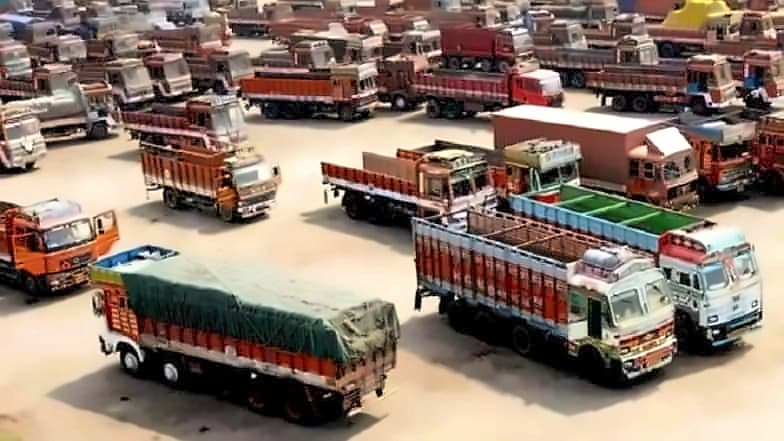
The All India Motor Transport Congress (AIMTC) estimates that of roughly 9 million trucks in India, nearly 20 to 25% are currently sitting idle, as reported by The Financial Express. That is between 1.8 and 2.25 million trucks with no loads to carry. The problem has been building for months due to strong commercial vehicle sales between September 2025 and March 2026, driven by easy financing, GST benefits and manufacturer discounts, which added large amounts of fleet capacity to the market.
According to the Indian Foundation of Transport Research and Training (IFTRT), trucks on several routes are now waiting three to five days for return loads, a significant increase from the 24-hour wait time a few months ago, according to The Financial Express. As reported by IFTRT, the demand for different destinations was very docile and mixed due to uncertain availability of loads from factory gates. Global pressures have made things worse, with Crisil Intelligence noting that prolonged uncertainty in trade flows caused by the West Asia conflict has weighed on supply chains.
A government study found that nearly 70% of India's freight moves by road, making the system heavily dependent on trucking efficiency, but the benefits of India's high-speed highways are being diluted by operational bottlenecks. The study revealed that despite access-controlled expressways and national highways designed for speeds of 100-120 kmph, average commercial vehicle speeds remain low at 37-38 kmph on highways and 47-48 kmph on expressways, only marginally higher than the 35-37 kmph recorded in FY14. This remains well below freight speeds in countries such as the US and China, where commercial vehicles average 65-70 kmph.
The Ministry of Road Transport and Highways (MoRTH) has written to the Department for Promotion of Industry and Internal Trade (DPIIT) seeking measures to reduce loading and unloading delays that are undermining logistics efficiency gains. Industry experts suggest formalizing shipper-transporter agreements through enforceable service level agreements (SLAs), mechanizing cargo handling, adopting relay driving, and scaling up load aggregation. However, analysts warn that driver availability could emerge as the industry's biggest operational bottleneck by 2030, with improving working conditions being critical to address this emerging constraint. The government is planning to expand time-bound delivery commitments across a broader range of commodities to incentivize faster vehicle turnaround and optimize fleet utilization.