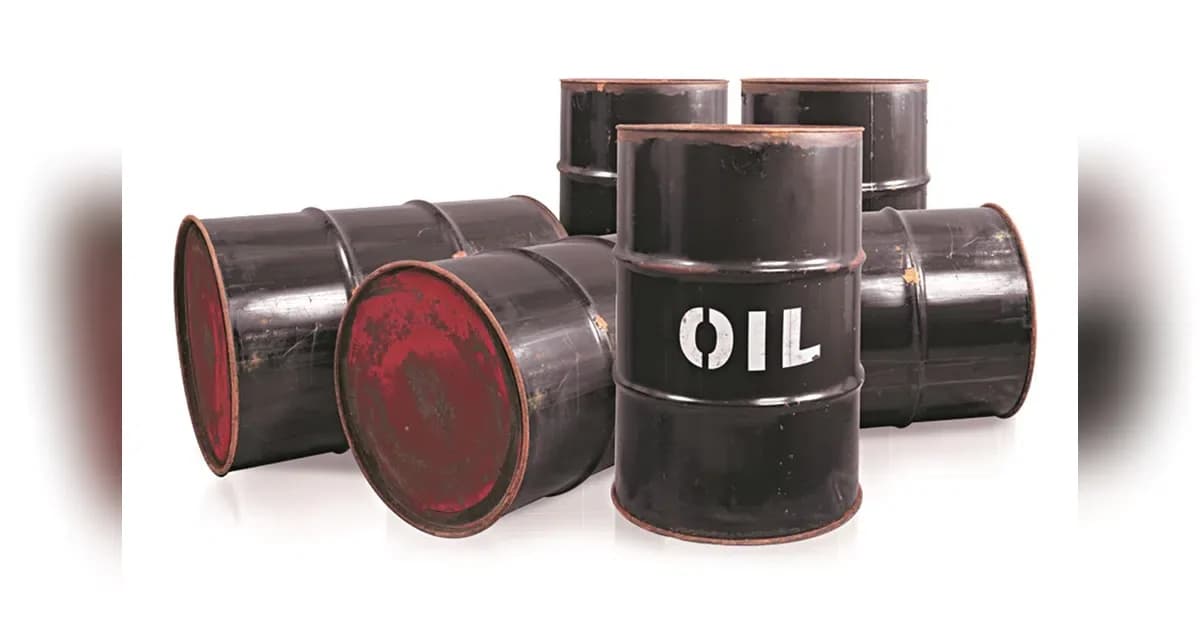
According to Julius Baer's Mark Matthews, crude oil prices are expected to decline to around $60 per barrel, as reported by NDTV Profit. Matthews indicated that markets are already pricing in this decline, and he does not anticipate oil prices rising to the $100-$150 per barrel levels that investors may be concerned about. The analyst expressed hope that the Middle East situation will normalise soon, with market cues expected to turn positive from the Gulf region. As per Mint, Matthews recently told NDTV that there are chances oil can touch $60 a barrel in the coming days, with Brent crude currently trading near $91.16 per barrel and WTI around $84.92, driven mainly by concerns over Middle East supplies and heightened geopolitical risks.
Matthews expects the pressure on the Indian rupee to subside once crude oil prices decline, as reported by NDTV Profit. He also pointed to improving domestic consumption in India as a positive factor for the economy. According to Matthews, strong revenue and earnings growth are supporting India's macroeconomic outlook, which should benefit from the expected decline in crude prices. As per Mint, a sustained decline in crude prices is unequivocally favourable at the macroeconomic level, particularly if caused by increased supply rather than a global recession. India imports most of the crude it consumes, so cheaper oil improves the terms of trade, reduces the import bill and current-account pressure, supports the rupee, lowers inflation and improves corporate margins.
While lower crude prices may benefit India at the macroeconomic level, the transmission to retail fuel prices is complex and not immediate. As reported by Mint, retail fuel prices incorporate refining and marketing costs and margins as well as central and state taxes and levies. India formally operates a market-linked pricing system, but these additional components mean that changes in international crude prices need not be reflected proportionately in pump prices. Mint's Sujan Hajra explains that if crude falls sharply, it would be unrealistic to assume that the entire reduction will be immediately passed on to consumers as cheaper petrol and diesel. The common man should benefit from substantially cheaper crude, but the gain is likely to be broader than the petrol pump and smaller than the percentage decline in the landed cost of crude oil.
According to Mint's analysis, there is considerable latent supply in the global oil system with Gulf producers, particularly Saudi Arabia, Iraq and Kuwait, having substantial capacity that could return to the market. The IEA's latest assessments underline both the size of this potential supply rebound and the possibility of a sizeable global oil surplus emerging once disrupted production and trade flows normalise. However, Hajra notes there is a relatively low probability of crude prices remaining around or below $60 for the next three to six months, requiring several conditions including durable de-escalation in West Asia, normalisation of shipping routes, some easing of sanctions and embargoes, substantial recovery in production, and relatively weak global demand. As per Mint, there is also a self-correcting mechanism - if prices remain near $60 for an extended period, OPEC+ may cut production, while high-cost oil producers could reduce investment, limiting supply and pushing prices higher.

While Korean markets remain highly volatile, Matthews said Korean stocks are currently fairly priced, according to NDTV Profit. He also expects Asian markets to attract more investor attention, indicating that the region could see greater investor focus as market conditions evolve. Matthews noted that Asian markets are currently attracting more investor attention, though volatility remains elevated in parts of the region. As per Mint, oil is perhaps one of the least forgiving markets for point forecasts, with its response to the same macroeconomic or geopolitical development varying widely depending on inventories, positioning, spare capacity, and market psychology at the time. The analysis suggests it's better to consider possible price ranges and scenarios rather than making fixed predictions about oil prices.