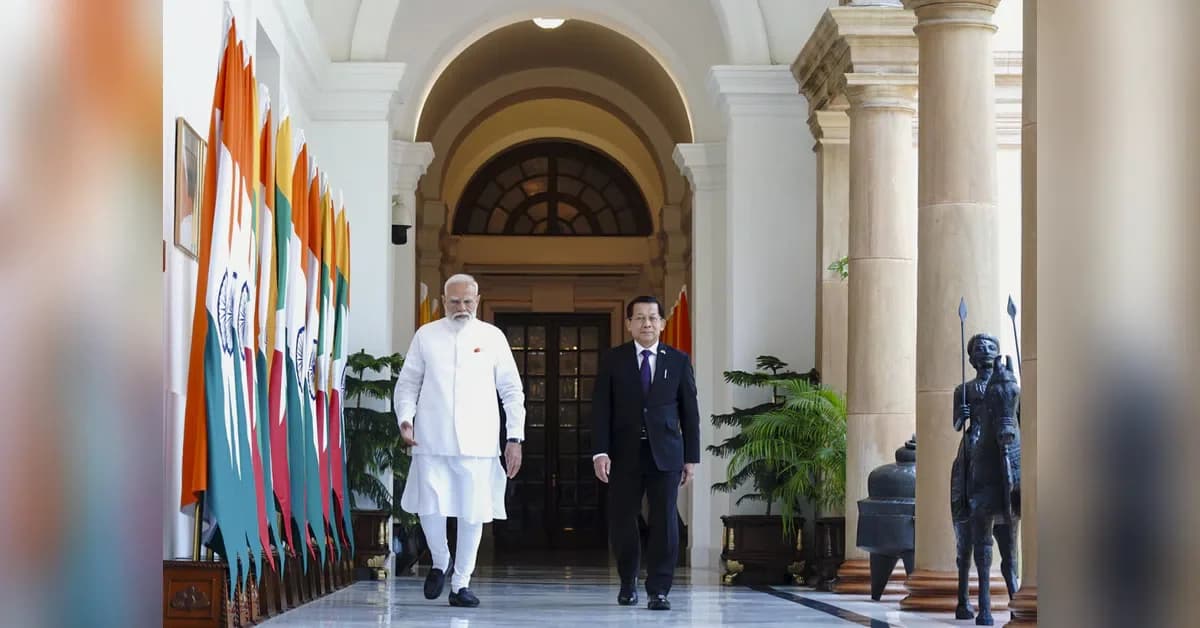
India's engagement with Myanmar has intensified with Myanmar President U Min Aung Hlaing's visit to New Delhi in June this year, where he met Prime Minister Narendra Modi, External Affairs Minister S Jaishankar, and National Security Adviser Ajit Doval. According to reports, the engagement continued at the 23rd National Level Meeting held in New Delhi on July 7-8, where the Indian side was led by Home Secretary Govind Mohan and the Myanmar side by Min Thu. The countries have agreed to enhance cooperation in tackling terror threats, insurgency, drugs, cross-border crimes, and ensuring stability in border areas. As per Dr Cchavi Vasisht, Associate Fellow at the Centre for Geopolitics and Strategic Studies, "What is encouraging is that the signals from New Delhi's diplomatic calendar in 2026 are broadly consistent with this logic. The PM Modi-Min Aung Hlaing summit, the Joint Statement's language on 'critical minerals, rare earths, energy, and mining sectors' signals India's intent to build an economic relationship with Myanmar that goes beyond border security and into the resource economy that China currently dominates."
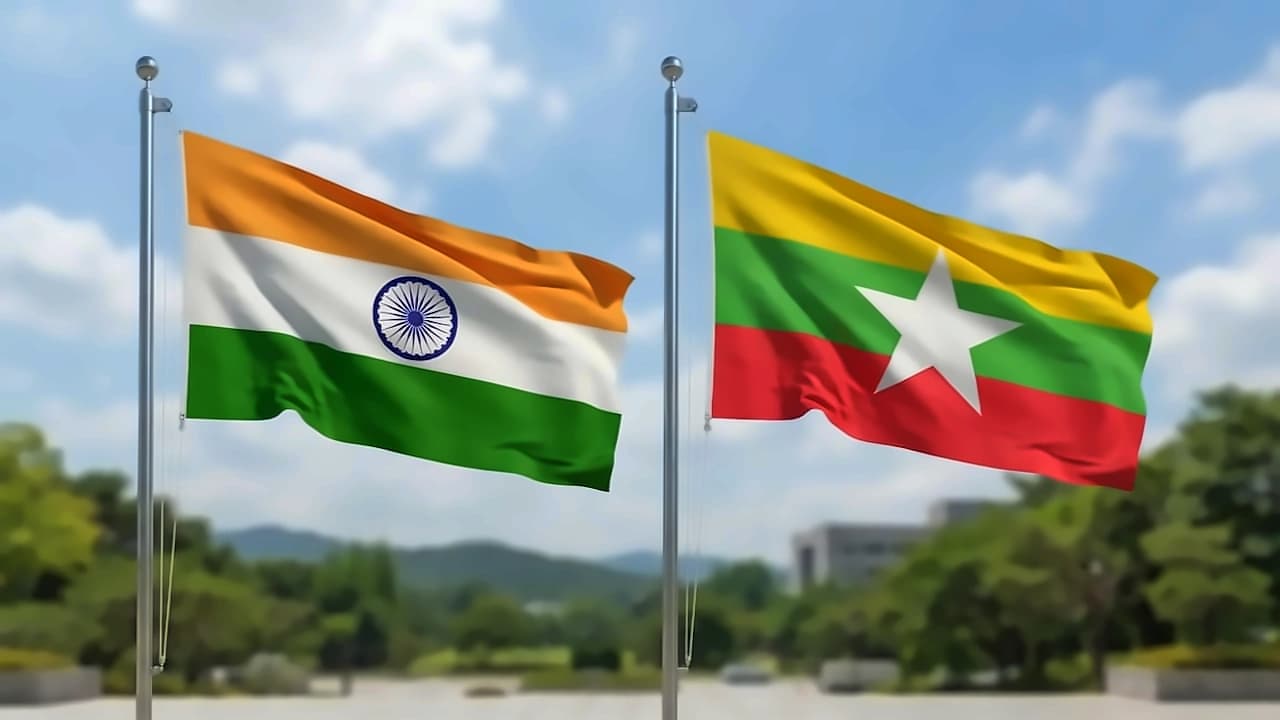
Prime Minister Narendra Modi has positioned Myanmar at the intersection of three of India's signature foreign policy doctrines: Neighbourhood First, Act East, and the recently articulated Mahasagar framework. As reported by analysts, this underscores New Delhi's view that stable ties with Naypyidaw are non-negotiable for its regional ambitions. The Joint Statement's affirmation of the 'sovereignty and territorial integrity' of Myanmar and shared commitment to 'peace, progress and prosperity' provides a normative framework for continued engagement that insulates India somewhat from democratic legitimacy critique. Dr Vasisht notes that "India's Act East Policy has always recognised Myanmar's centrality, but the current geopolitical context is compelling a sharper focus. With Bangladesh's evolving partnership with China, it is essential to recalibrate relations with the new government in Bangladesh, and surely MEA is looking into it."
Kachin State in Myanmar, which shares a border with Arunachal Pradesh, is the world's largest source of rare earths. According to reports, in December 2021, China imported $200 million of rare earths from Myanmar, exceeding 20,000 tonnes. Myanmar's reserves of Heavy Rare Earth Elements (HREE), particularly dysprosium and terbium, are critical for India's emerging focus on EV policy and defence-industrial programs. As per Dr Cchavi Vasisht, "This physical reality is compounded by the urgent need for upstream access to heavy rare earth minerals, particularly dysprosium and terbium, concentrated in Kachin and Shan States, which are critical for India's emerging focus on EV policy and defence industrial programmes and for diverting resources from China's near-monopoly over global supply chains." India is seeking to enhance cooperation with Myanmar in line with its Act East and Neighbourhood First Policies, with bilateral trade growing steadily since the 1970 trade agreement.
Despite India's engagement with the National Unity Government of Myanmar, Ethnic Armed Organisations exert control in border areas adjacent to India, particularly in Rakhine, Chin, and northern Sagaing states. The Arakan Army controls Sittwe's periphery and 14 of 17 Rakhine townships, while the KIA controls sections of the Kachin-India border. Chin resistance groups hold large sections of the Chin-Mizoram borderland. The KIA and its affiliated People's Defence Forces (PDFs) have gained control of areas in Kachin State that border India along Arunachal Pradesh's east, with China already having a huge presence in the area. India's security agencies have contacts with many of these groups, but what has not yet happened is the formalisation or deepening of those contacts into structured, strategic engagements with clear objectives around infrastructure protection and border security cooperation.
The India-Myanmar-Thailand (IMT) Trilateral Highway is a cornerstone of India's Act East Policy, designed as a 1,360 km transnational road network connecting Moreh, Manipur to Mae Sot, Thailand via Mandalay and Naypyidaw. A coordination meeting on this project and the Kaladan Multi-Modal Transit Transport Project was held in Naypyidaw, attended by President Hlaing himself. The president recalled his fruitful visit to New Delhi last month and highlighted the importance of these projects for improving regional connectivity, trade, investment, and economic cooperation. The India-Myanmar-Thailand Trilateral Highway will lower transportation costs and transit times, helping India access wider ASEAN markets through the Northeast. The Kaladan Multi-Modal Transit Transport Project includes a waterways component of 158 km on the Kaladan River from Sittwe to Paletwa and a road component of 109 km from Paletwa to Zorinpui on the India-Myanmar border in Mizoram State. PM Modi underlined that completing the corridor was essential for fostering regional prosperity, with enhanced connectivity fostering mutually beneficial economic linkages and shared prosperity in the region.