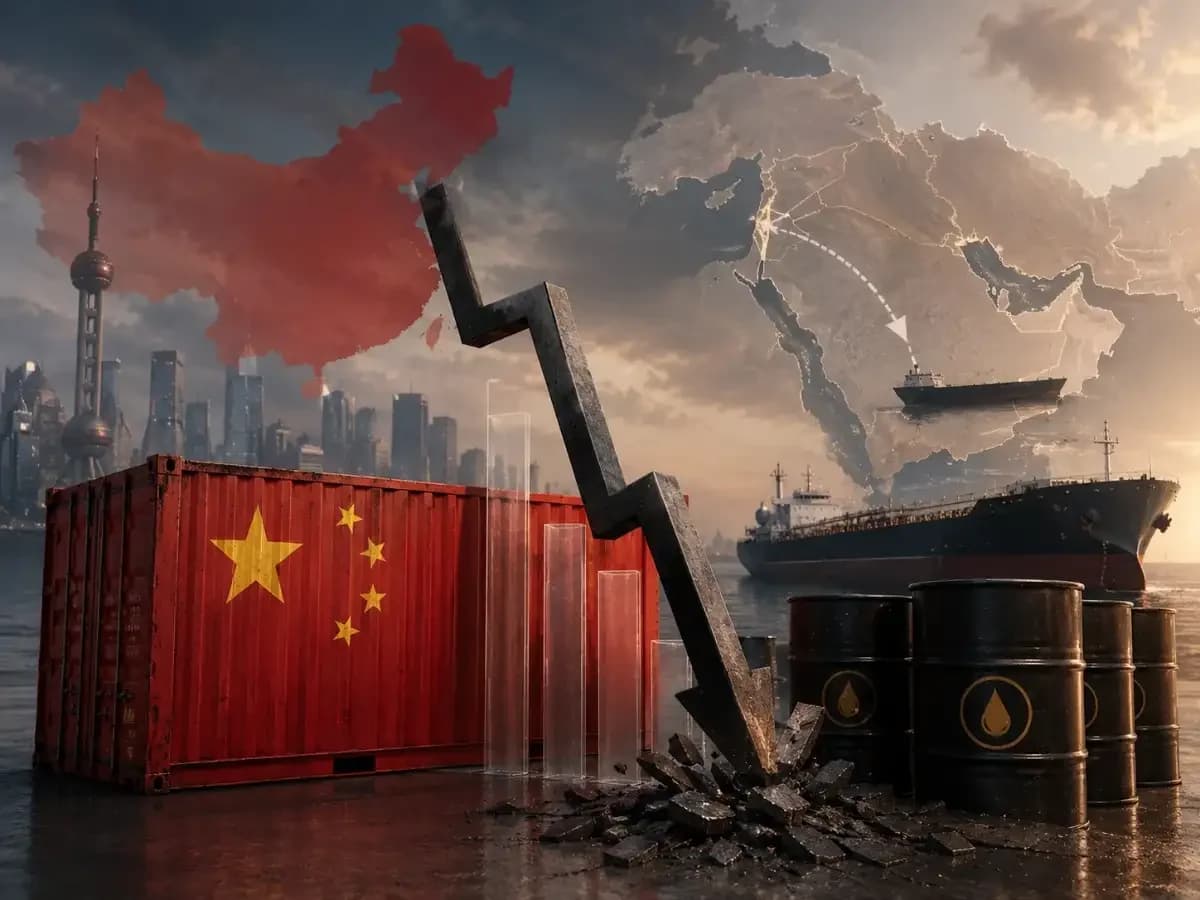
China is bearing the brunt of Asia's crude oil demand slowdown as Middle East supplies shrink following the Iran conflict. According to reports from Reuters, Chinese crude imports fell sharply in June and July, with July imports recovering to 8.41 million barrels per day from the near-decade low of 7.12 million bpd recorded in June. However, July imports remained 24.3% lower than a year earlier, while combined June and July imports averaged around 7.78 million bpd, down by roughly 4.21 million bpd from the 11.99 million bpd average recorded during the three months through February. The data indicates that Asia's lost imports roughly correspond to the decline in China's imports over the past two months, with China doing all the heavy lifting to reduce crude oil demand in Asia as a way to compensate for the reduced shipments of Middle East oil due to the Iran war.
The sharp decline in imports comes after the United States and Israel attacked Iran on February 28, triggering an escalation in the conflict that effectively disrupted traffic through the Strait of Hormuz. As reported by Reuters, before the conflict, the waterway handled about 20% of global crude oil and refined petroleum product shipments. Although Saudi Arabia and the United Arab Emirates have increased exports through ports outside the strait, overall crude flows from the Middle East have still fallen by around 5 million bpd. Most Middle Eastern crude exports are destined for Asia, making the region particularly vulnerable to the disruption. According to Kpler analytics, total oil imports into Asia stood at 22.82 million barrels per day in July, an improvement from April's 18.77 million bpd but remaining about 4 million bpd below the 26.89 million bpd average in the three months before the Iran conflict began.
Data compiled by commodity analysts Kpler showed that Asia imported 22.82 million bpd of crude in July, an improvement from April's 18.77 million bpd but remaining about 4 million bpd below the 26.89 million bpd average in the three months before the Iran conflict began. Although July imports rose from April, they remained at wartime highs but still 15% below prewar levels. According to Reuters, China's reduced appetite for crude has also been influenced by oil price volatility, with Brent futures surging to a four-year high of $126.41 a barrel on April 30, a date when cargoes for June and July would have been scheduled. The country has considerable scope to maintain lower imports due to its large crude inventories, with analysts estimating China's stockpiles at at least 1.2 billion barrels. China's traditional approach of reducing imports when prices rise has been amplified by the scale of the current decline.
China's crude imports are expected to see a modest recovery in August as cargoes that managed to leave the Strait of Hormuz during a brief ceasefire between the United States and Iran reach Chinese ports. Kpler estimates China's Middle Eastern crude imports at 2.71 million bpd for August, compared with 2.43 million bpd in July and just 1.42 million bpd in June. Total Chinese crude imports for August are currently estimated at around 5.97 million bpd, although the figure is likely to rise as more cargoes are assessed during the month. For now, the dynamics indicate that China remains the key factor balancing oil demand in Asia, while the coming months will show how long this role will last.
September crude imports may offer a more significant indication of how the supply disruption is affecting China, as Middle Eastern shipments could come under greater pressure following the breakdown of the ceasefire arrangement between U.S. President Donald Trump and Tehran. According to Reuters, even if efforts to restore shipping through the Strait of Hormuz succeed, it could take weeks for Middle Eastern exporters to rebuild shipments through the waterway and additional time for tankers to reach Chinese ports. Chinese refiners therefore have two main options: continue limiting purchases of imported crude and draw down their substantial inventories, or compete for supplies from producers outside the Middle East. The question for the market is how long China is willing to act as a balancing factor for oil demand in Asia, with the coming months expected to show significant adjustment as China seeks to maintain a balance between supply availability and its own needs.