Brent crude oil prices climbed near $111 on Monday after President Donald Trump warned that Iran's "clock is ticking," with the commodity now approaching a critical technical breakout level. The daily Brent crude chart shows price coiling inside a symmetrical triangle that began forming on March 19, with the pattern now approaching the apex that typically dictates directional movement. The triangle traces lower highs and higher lows, with point A near $120, point B near $92, point C near $116, and point D near $100. The Relative Strength Index (RSI) reads near 58 on the daily timeframe, trending higher and approaching the bullish 70 territory. A confirmed close above $115 would open the path toward the prior high near $119.58, with failure likely sending Brent back toward the $100.32 level. The $94 channel floor remains the deeper line of defense as the technical setup suggests a binary outcome based on geopolitical developments.
Crude oil prices extended gains to a third straight session on Monday, 18 May 2026, as President Donald Trump renewed pressure on Iran to strike a deal aimed at ending weeks of conflict and reopening the strategically important Strait of Hormuz. Brent crude futures rose $2.60, or 2.37%, to touch $111.86 per barrel after hitting an intraday high of $112 earlier in the session, marking the highest level since May 5. US West Texas Intermediate crude advanced $3.28, or 3.11%, to $108.70 per barrel, as reported by IANS. The front-month June contract is set to expire on Tuesday. Back home, crude oil prices on Multi Commodity Exchange (MCX) also witnessed a similar upward movement, with MCX crude oil futures for June 18 delivery climbing to ₹9,978, up 3.02% or around ₹300. This represents a significant escalation from previous levels, driven by fresh geopolitical developments in the Middle East.
The primary trigger for the oil price surge was the confirmation of a drone strike near the UAE's Barakah nuclear power facility on Sunday. As reported by The Financial Express, the UAE described the incident as a "dangerous escalation," raising fears that critical energy infrastructure in the Gulf region could increasingly become targets in the ongoing conflict. According to The Hindu BusinessLine, reports said that a drone attack led to a fire at a nuclear plant in the UAE, while Saudi Arabia also reported interpreting three drones. The latest developments show that UAE authorities said they were investigating the source of the strike on the Barakah nuclear power plant and asserted the country's right to respond to what it described as "terrorist attacks". UAE officials reported that the Barakah strike hit an electrical generator outside the inner perimeter of the nuclear facility, with no radiation leak or injuries. The UAE's defense ministry said two other drones had been successfully dealt with, while Saudi Arabia said it had intercepted three drones that entered its airspace from Iraq. These attacks are just the latest in a string of attacks on U.S. allies in the region after President Trump launched Project Freedom, his latest attempt to reopen the Strait of Hormuz for trade. The Strait of Hormuz, a navigable channel roughly 33 kilometres wide at its narrowest point, connects the Persian Gulf to the Gulf of Oman and transports approximately 20 to 21% of global oil trade daily, along with significant volumes of liquefied natural gas from Qatar.
Another major factor behind the oil rally was the latest warning from US President Donald Trump toward Iran. According to reports from The Financial Express, Trump posted on Truth Social, "For Iran, the clock is ticking, and they better get moving, FAST, or there won't be anything left of them. TIME IS OF THE ESSENCE!" He further added, "TIME IS OF THE ESSENCE!" As per IANS, Trump indicated a harder stance against Iran, agreeing with Chinese President Xi Jinping that Tehran must not be allowed to develop nuclear weapons and should reopen the Strait of Hormuz. The comments further unsettled investors already worried about the possibility of a broader military escalation. Trump's scheduled meeting with national security advisors in the Situation Room on Tuesday, 20 May 2026, was being monitored by Reuters as a potential escalation signal. Trump's weekend Truth Social post fueled fresh fears of a renewed Middle East conflict that could choke global supply, with any military action beyond the current parameters of Project Freedom eliminating the base case scenario almost entirely and shifting market pricing toward Scenario B or C frameworks. The fragile ceasefire reached in April has done little to ease tensions across the region, with the Hormuz waterway remaining mostly shut as Tehran continues to block the strait while Washington keeps Iranian ports under blockade.
A major factor driving oil prices higher remains the growing uncertainty around the Strait of Hormuz, one of the world's most critical energy shipping routes. Nearly one-fifth of global oil and liquefied natural gas shipments pass through the narrow waterway, which serves as a key export corridor for major producers including Saudi Arabia, Iraq and Qatar. According to IANS, concerns over disruptions in the region have intensified following reports of continued attacks, territorial seizures and rising military activity around the Strait. Energy markets fear that any prolonged disruption could tighten global supplies further and push oil prices even higher. The latest gains add to last week's sharp rise, when crude prices had already surged more than 7% amid fading hopes of a diplomatic breakthrough between Washington and Tehran. Warren Patterson and Ewa Manthey from ING Think noted that the oil market continues to reprice ongoing supply disruptions, with last week's Trump-Xi talks yielding no tangible progress in West Asia. The failed Trump-Xi summit removed hopes for any immediate diplomatic stabilization, with the broader conflict having already evolved far beyond isolated exchanges.
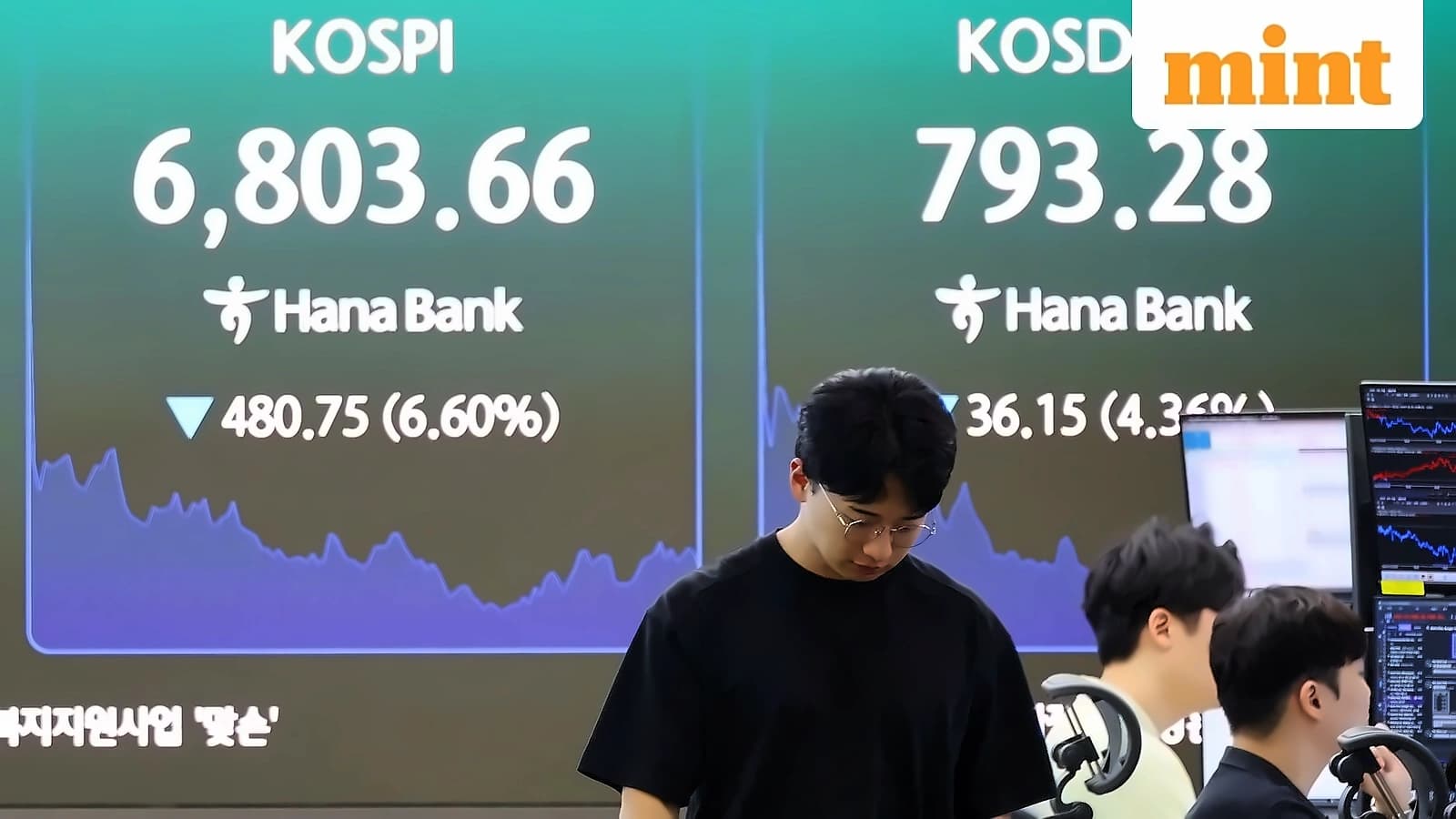
The global energy crisis is being compounded by severe supply constraints that are forcing unprecedented market responses. The International Energy Agency, in its latest Oil Market Report, estimated that there will be "a 6 mb/d gap from March to June" between supply and demand. JPMorgan estimates that OECD inventories could approach "operational stress levels" by early June, raising the risk of more extreme price spikes and potential physical shortages. Oil prices have surged more than 50% since the US and Israel launched attacks on Iran in late February, as reduced flows through the Strait of Hormuz disrupted supplies from Persian Gulf producers. The size of that deficit has already forced governments and traders to drain stockpiles at an unprecedented pace, with both global inventories dropping and floating storage being used up. Asian equity markets traded mostly lower as rising crude oil prices and geopolitical uncertainty weighed on investor sentiment. Japan's Nikkei fell around 1% while Hong Kong's Hang Seng index declined more than 1%. South Korea's KOSPI, however, bucked the broader trend and gained nearly 1%. For India, which imports more than 85 per cent of its crude oil needs, the surging crude oil prices create multiple economic challenges due to the country's heavy reliance on energy imports. Higher oil prices increase import costs, weaken the rupee and raise inflation-related risks. After keeping fuel prices unchanged for nearly two years, oil marketing companies recently raised petrol and diesel prices by around ₹3 per litre. India's wholesale inflation reached a 3.5-year high with fuel costs up 25%, while US gasoline prices rose toward $4.18 per gallon. The Indian rupee has also remained under pressure against the US dollar, with the rupee opening at a record low of 96.17 against the US dollar compared to Friday's close of 95.97 a dollar. Approximately 80 nations had activated emergency energy measures by mid-May 2026, a figure that contextualises the scale of the supply constraint beyond financial market dynamics.