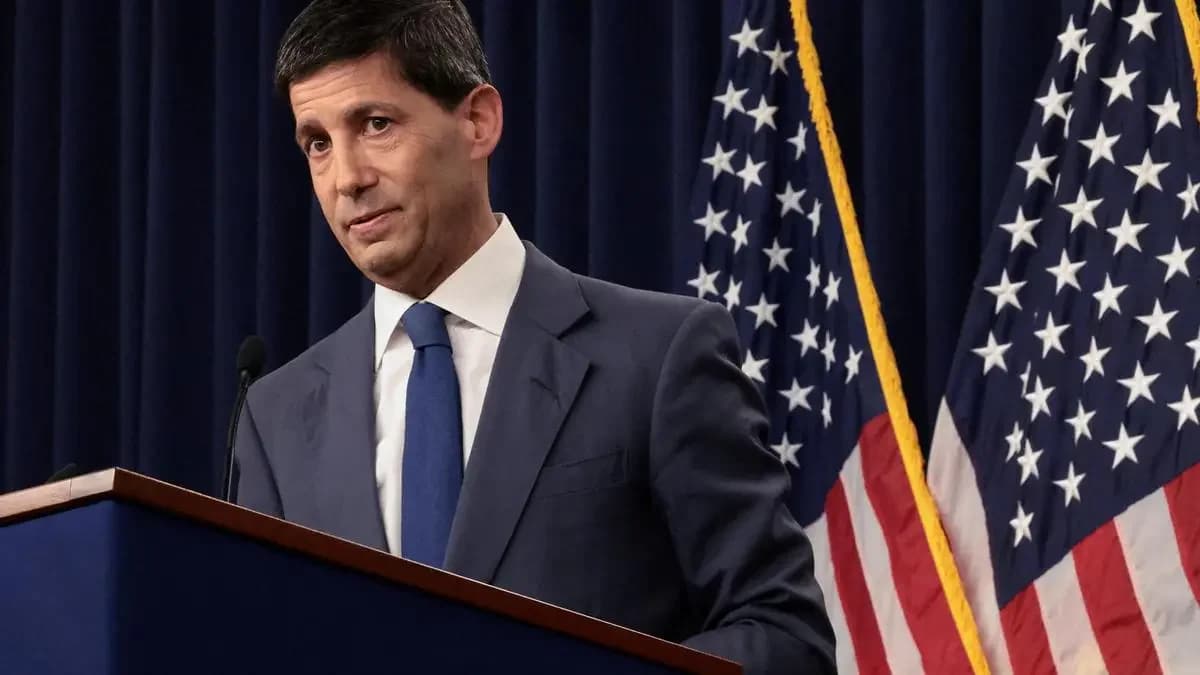
Federal Reserve Chair Kevin Warsh faces a pivotal week as his leadership comes under scrutiny from both the judiciary and global policymakers. The U.S. Supreme Court is expected to rule as early as Monday on whether President Donald Trump can remove Federal Reserve Governor Lisa Cook, a case widely viewed as a critical test of the central bank's independence. According to reports from Reuters, lower courts have allowed Cook to remain on the Federal Reserve Board while her legal challenge proceeds, finding she is likely to prevail against Trump's attempt to dismiss her. Federal Reserve governors are protected by law from removal except 'for cause,' though U.S. courts have clearly defined that standard. Trump argued that alleged misstatements by Cook on a home mortgage application justified her dismissal, marking the first attempt by a U.S. president to remove a sitting Fed governor. The Supreme Court ruled this week that Fed Governor Lisa Cook can keep her job despite President Trump's announcement last year that he had fired her, with Powell being lauded by his peers as a bulwark in maintaining the Fed as a prop to global financial stability.
Despite policy differences, Trump has adopted a more measured tone toward Warsh than he did with former Fed Chair Jerome Powell, whom he frequently criticized for keeping interest rates elevated. Powell remains a member of the Federal Reserve Board after previously facing calls for his removal. Warsh has signaled a significant shift in the Federal Reserve's communication strategy by moving away from providing explicit forward guidance on future interest rate decisions. Following the Fed's June policy meeting, he emphasized that policymakers would no longer signal the likely path of rates in advance, instead allowing incoming economic data to drive decisions. Warsh's comments after the June 16-17 policy meeting prompted investors to boost odds the Fed will raise interest rates as soon as September, as markets have already begun pricing in tighter policy. This approach will receive its first major international test on Wednesday when Warsh joined European Central Bank President Christine Lagarde, Bank of England Governor Andrew Bailey and Bank of Canada Governor Tiff Macklem at the European Central Bank's annual forum in Sintra, Portugal. At the forum, Warsh told questioners they would 'fail' to break his rule against forward guidance, stating 'I am not going to give forward guidance' when asked by CNBC anchor Sara Eisen. Warsh declared unwavering commitment to the 2% inflation target, signaling no monetary policy easing despite President Trump's repeated demands for rate cuts. "If people thought this central bank was going to be comfortable with an inflation objective above 2%, they would be disappointed," Warsh told a European Central Bank panel in Sintra, Portugal, adding, "We have been an independent central bank for a long time. We are going to be an independent central bank at this moment and you will see no changes on that."
Warsh has announced plans to revolutionize Fed decision-making by leveraging real-time economic data that will help the US central bank make better policies, replacing what he termed problematic government reports. Speaking at a monetary policy forum in Portugal, Warsh said his aspiration is that nine to 12 months from now the Fed will be using new technologies to understand what's happening in the real economy in a contemporaneous, real-time way. "My favorite data is upon us, and if we do our jobs, we'll be here a year from now, and we'll say we've discovered data that helps us make better decisions," Warsh stated. He contends that flawed data has contributed to poor policymaking, allowing inflation to remain above the central bank's target for more than five years. The Federal Reserve relies on a broad mix of government, private-sector and internal data — both public and non-public — to assess economic conditions and guide interest rate decisions aimed at supporting employment and keeping inflation under control. Warsh has argued that the Fed places excessive reliance on official data, which he believes often lags or fails to accurately reflect current economic conditions. Warsh stopped short of drawing conclusions about the latest economic indicators or signaling any shift in monetary policy, while making the case for better real-time information. Other Fed officials have long argued that looking at broader trends rather than individual data releases helps reduce the risk of policy errors caused by data revisions.
Warsh has launched an aggressive internal restructuring, establishing five task forces dedicated to productivity, employment, data collection, and other areas, aiming to build a more structured and granular approach to economic analysis. This mirrors Greenspan's famous reliance on unconventional data—from commodity prices to yield curves—but formalizes it in a way the former chair never did. At the June FOMC meeting, policymakers received only a single policy option, a departure from the Greenspan-era practice of presenting three alternatives. Warsh also said he would start naming members of his five new task forces from next week, one of which focuses on finding new data-gathering sources and methods. Warsh says his task force may have ideas about how to improve official data but also about how to generate more up-to-date information about the economy. As part of his reform agenda, Warsh said he expects to announce members of five newly created task forces next week, with one group specifically focusing on identifying new methods of collecting and analyzing economic data. The other task forces will examine Fed communications, the central bank's balance sheet, productivity and employment, and the inflation framework. The advisory panels will comprise former central bankers, academics and international specialists, with Bloomberg reporting that former Bank of England Governor Mervyn King is expected to lead one of the panels. The groups will include experts from outside the United States, reflecting Warsh's view that outside perspectives can help identify institutional shortcomings. The recommendations from these task forces are intended to provide independent advice rather than predetermined conclusions, with any significant policy or operational changes requiring support from the broader Federal Reserve leadership.
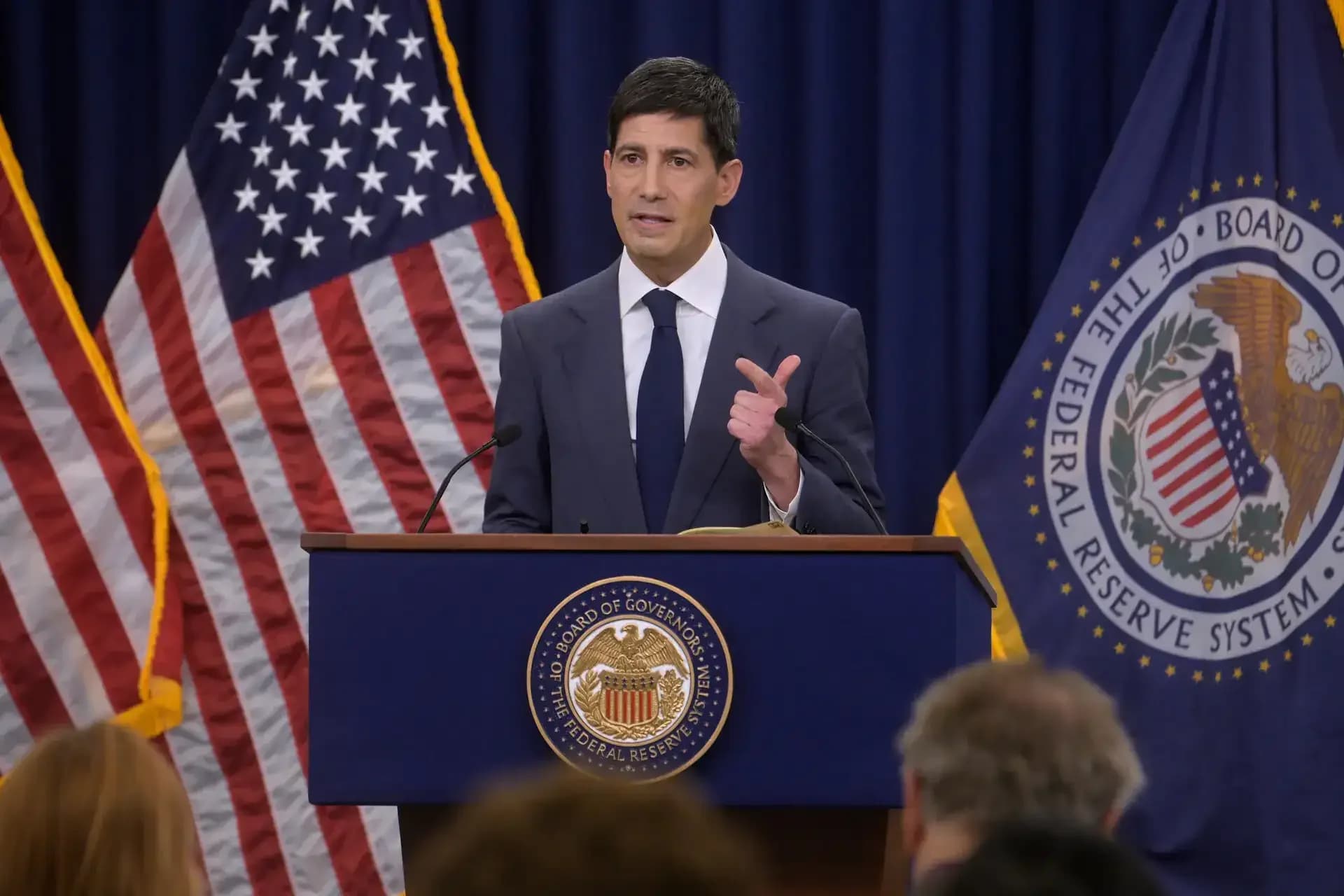
The market implications are profound as Warsh's approach may prove more centralized than Greenspan's, though it stops short of overtly disregarding the committee's formal consensus. Warsh has made clear he wants the Fed out of the fiscal business, which implies aggressive sales of the central bank's roughly $6.74 trillion in assets, primarily long-term Treasury bonds and mortgage-backed securities. Open-market divestitures on that scale would depress bond prices and lift yields, adding another channel of stealth tightening. The Financial Times has cautioned Warsh not to fall into the same trap as Greenspan, writing that he'should not be dogmatic on markets, nor seduced by the golden calves of Wall Street and Silicon Valley.' For investors, the message is mixed - a less communicative Fed could create more short-term volatility, but periods of uncertainty have historically rewarded long-term value buyers. Despite his criticism of official statistics, Warsh stressed that the Federal Reserve remains firmly committed to restoring price stability, with inflation expectations and inflation risks having eased in recent weeks. Warsh, who became Fed chairman in May after campaigning on promises to overhaul the institution's operations and decision-making process, has consistently avoided providing forward guidance on interest rates while pushing for broader reforms to the central bank's policymaking framework.