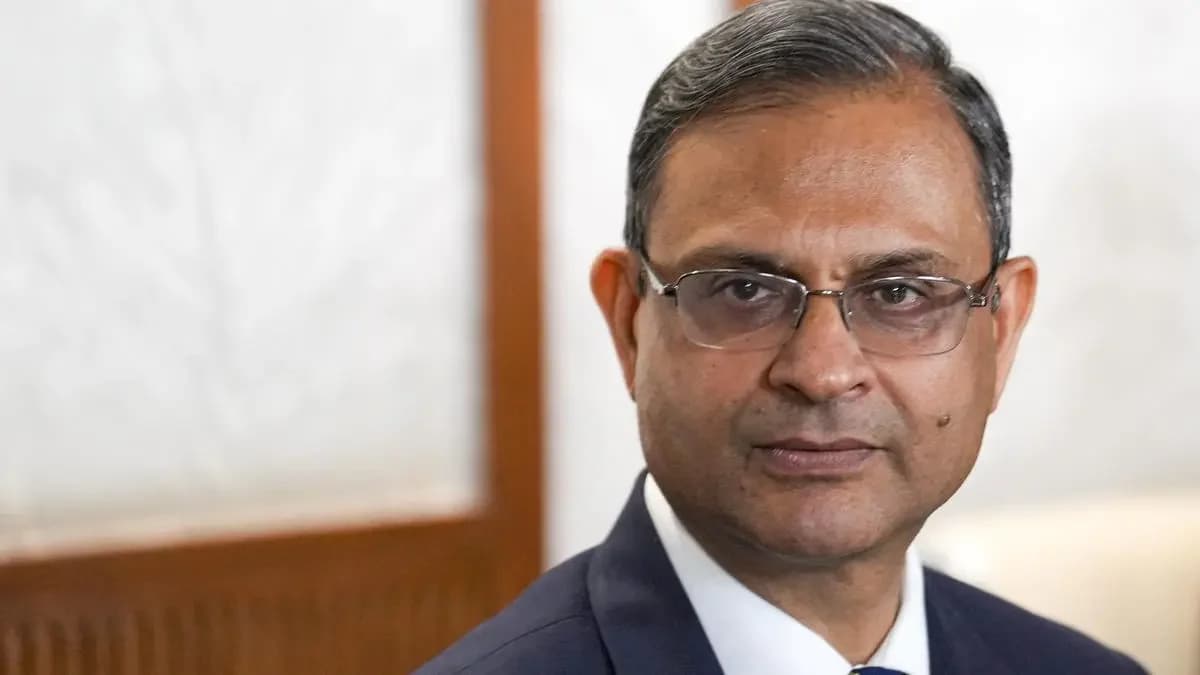
The Reserve Bank of India's decision to hold rates reflects easing inflation risks for now, but rising price pressures could warrant policy tightening in the coming months. According to reports from Business Standard, the inflation projection for this financial year has been lowered by 10 basis points to 5 per cent, though the rate is expected to increase in coming quarters. RBI Governor Sanjay Malhotra emphasized that the central bank is neither dovish nor hawkish, stating this is the right policy for the current situation given projected dynamics. The Governor clarified that the RBI's framework targets headline inflation rate, not the core inflation rate or any measure excluding specific components, with the endeavour to bring headline inflation in line with the target over the medium term.
The RBI noted that headline inflation had 'edged up above target as expected,' but core inflation, excluding precious metals, continues to 'remain moderate.' As per Reuters reports, core inflation is expected to climb up to 4.7% in the financial year ending March 2027, with higher inflation mostly on account of fuel and food, though little signs of widespread price pressures so far. Governor Malhotra explained that core inflation is expected to decline after peaking in the December quarter, adding that greater clarity needs to emerge on inflation about 'its path, and composition before taking any policy action.' The central bank maintains its focus on core inflation, which excludes energy and food prices, while acknowledging that a prolonged rise in energy prices could lift core inflation through higher input, transportation, and operational costs.
Future rate action would have to 'consider the need for recalibration of policy rates in line with the evolving growth-inflation dynamics,' according to Governor Malhotra. HSBC Global Investment Research expects inflation to stay above 5% for eight months starting October, a level that will be difficult for both the RBI and markets to overlook. The research firm anticipates the central bank to raise rates in October and December by 25 basis points each. The policy repo rate at the current level of 5.25 per cent could turn negative in real terms, but Governor Malhotra stated the RBI is comfortable with a very low, but not negative real policy rate. The nature and extent of policy-rate adjustment will obviously depend on the incoming data, with the Governor emphasizing that the RBI will remain data-dependent and focused on maintaining price stability. Business Standard notes that with headline inflation projected to remain above 5 per cent for three consecutive quarters, the central bank may have to begin raising rates in coming meetings.
The benchmark Nifty 50 index was trading flat, while 10-year bond yields fell about 4 basis points to 6.782% following the RBI's decision. India's consumer inflation touched an 18-month high of 4.38% in June as oil prices surged, with the government partially passing on fuel price increases to the public since May. Despite the RBI's measures to attract foreign flows, India's rupee remains one of the worst-performing Asian currencies due to fiscal deficit widening and persistent capital outflows. Standard Chartered estimates the rupee to trade at 96 per dollar in 2026 as forex inflows from FCNR-B ease from September onwards. The country faces strong macroeconomic headwinds with growth expected to be lower this financial year, with the outlook described as 'hazy' due to uncertainties from southwest monsoon, El Niño, geopolitics, and global trade policy.
Several Asian countries including Japan, the Philippines, Indonesia, and South Korea have raised interest rates in recent months to curb inflation as Middle East conflict has driven energy prices higher. India, the world's fastest-growing major economy, is among the countries most vulnerable to supply disruptions caused by the Iran war, meeting nearly 85% of its fuel needs via imports with the Strait of Hormuz a key supply route. However, experts suggest higher food prices pose a bigger inflation risk than energy price shocks, with ANZ chief economist noting that even if oil prices settle at $90 per barrel, it would not become a sticking point for inflation. India faces the risk of El Niño this year despite copious recent downpour, with experts warning of potential deficient monsoon conditions that could further impact food prices and inflation dynamics.