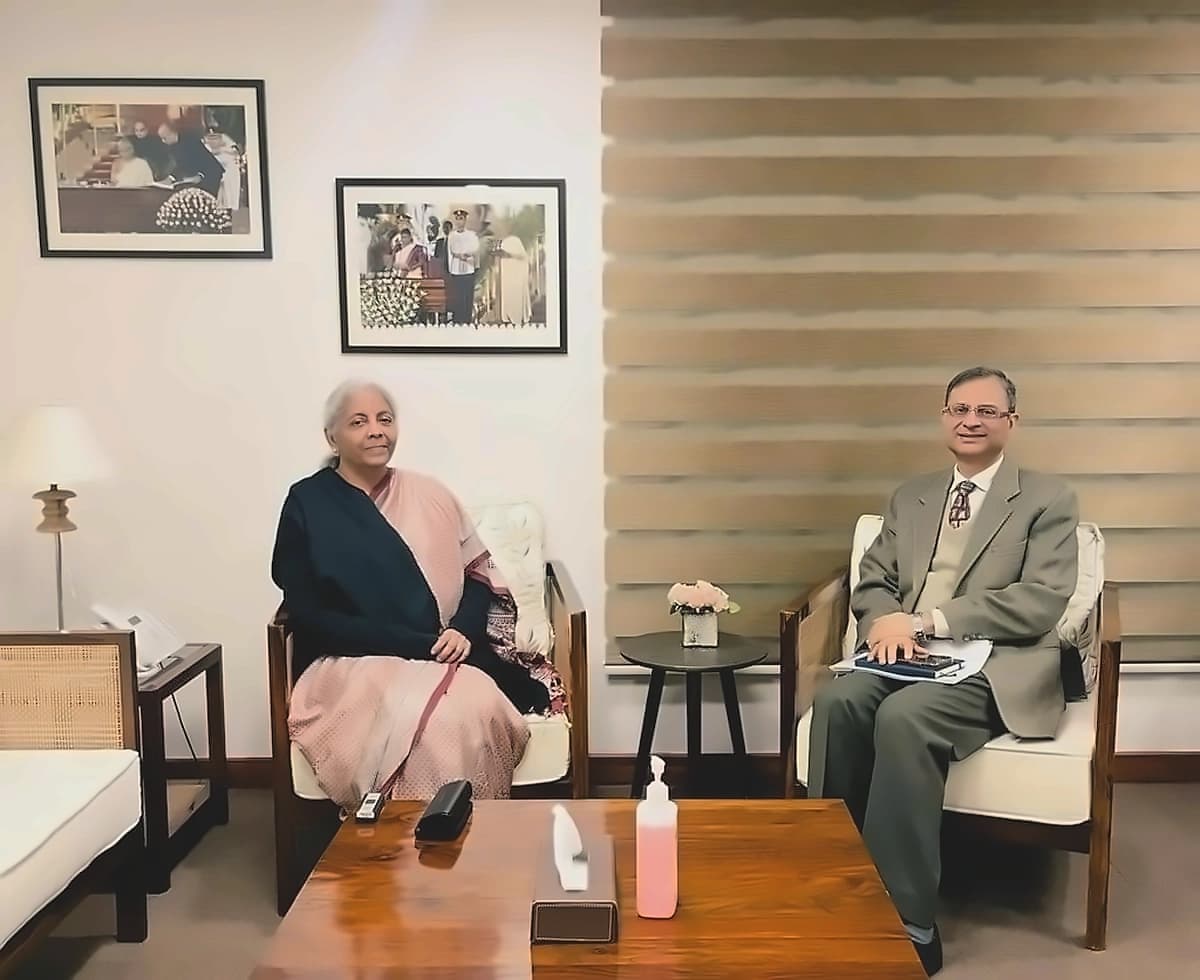
The Reserve Bank of India and European Central Bank have signed a new Memorandum of Understanding aimed at enhancing cooperation in central banking. The agreement was signed by RBI Governor Sanjay Malhotra and ECB President Christine Lagarde on the sidelines of the Bank for International Settlements (BIS) meetings in Basel. According to The Hindu BusinessLine, the MoU replaces the earlier agreement signed in 2015 and establishes a framework for regular exchange of information, policy dialogue and technical cooperation between the two central banks in areas of mutual interest. The RBI stated that the renewed arrangement is expected to further strengthen institutional engagement and collaboration on central banking practices and financial sector developments.
The Reserve Bank of India is expected to maintain current interest rates during its June policy meeting, with the central bank likely to focus on providing liquidity support rather than rate adjustments. According to HSBC's Chief India & ASEAN Economist Pranjul Bhandari, the RBI will keep liquidity flush in the banking sector to support economic activity. As reported by ANI, Bhandari noted that the central bank faces a delicate balance between controlling price rises and supporting domestic economic momentum. RBI Governor Sanjay Malhotra confirmed the central bank's cautious approach, stating that the RBI is in a 'wait-and-watch mode' regarding policy rates. In its April meeting, the RBI kept repo rate unchanged at 5.25% with a neutral stance, as reported by ABP Live.
US benchmark West Texas Intermediate crude oil futures fell more than 13% at one point Wednesday after US President Donald Trump said 'Great Progress' had been made on an agreement to end the war with Iran. The decline in oil prices comes as a significant relief for economies heavily dependent on imported oil, with the UK leading debt market gains as two-year yields fell nearly 20 basis points to their lowest in over a week. According to TD Securities rates strategist Jan Nevruzi, 'If the conflict conclusion is happening, oil should continue moderating, inflation priced out even more and rates do well.' The surge in oil since the US attacked Iran in late February has driven up US consumer price gauges, with the US consumer price index rising 3.3% in March from a year earlier, the most in nearly two years. However, the broader impact of high global oil prices is yet to percolate through retail inflation, as pump fuel prices remain unchanged.
India's April inflation is expected to rise to 3.9% YoY from 3.4% in the previous month, edging closer to the mid-point of the target range, according to DBS Bank Senior Economist Radhika Rao. Food inflation is likely to have edged up towards 4.5% from 3.7%, reversing last year's weak momentum, driven by selected perishables such as tomatoes and eggs, along with cereals and edible oils, and further exacerbated by untimely rains in some regions. Core inflation is expected to remain stable and modest at 3.4%, helped by a pullback in precious metal prices. Transport inflation is expected to show signs of an updrift due to ATF prices and services in the restaurant and hospitality sector, as reported by ABP Live.
The RBI confronts two conflicting objectives as the economy faces potential double shocks from energy prices and uncertain weather patterns. According to Bhandari's analysis, the central bank must navigate between the necessity of curbing inflation and the risk of dampening economic activity. She highlighted that significant supply-side pressures have complicated the RBI's monetary policy path, creating what she described as a large energy shock that will be compounded by potential El Niño conditions over the next couple of months. The RBI has flagged El Niño as a risk to inflation, with the central bank closely monitoring the fallout from the West Asia conflict and its impact on global supply chains. Imported costs due to elevated commodity prices and a weak rupee are also impacting inflation, as noted by ABP Live.
Any potential shift toward monetary tightening through rate hikes would likely be deferred until the current energy crisis shows signs of abating. According to Bhandari's assessment, the timing depends on the stabilization of global supply chains and a subsequent decline in oil prices. She expects that once the energy crisis is behind the RBI, likely when the Strait opens and shipping operations normalize, the central bank will reassess whether rate hikes are necessary to address built-up inflation from recent months. Madan Sabnavis, Chief Economist at Bank of Baroda, indicated dimmed likelihood of any further rate cuts, as the RBI has flagged El Niño as a risk to inflation. The RBI's April decision to keep rates unchanged was appreciated by Assocham as a 'calibrated step aimed at strengthening stability in the macroeconomic environment', helping sustain growth momentum and ensure price stability.