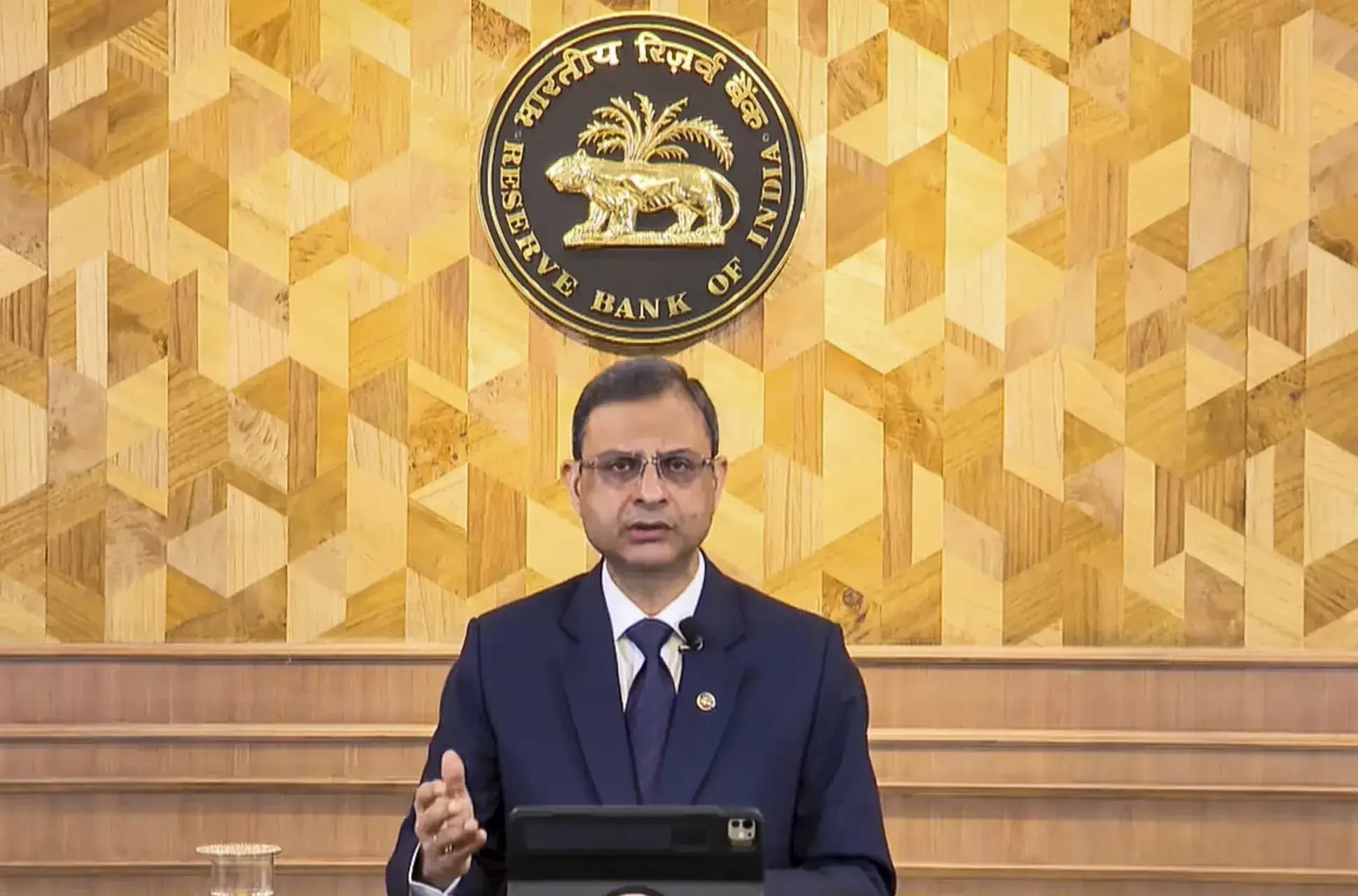
The Reserve Bank of India has intensified its crackdown on speculative activity in the rupee, targeting corporate arbitrage after earlier measures on banks failed to alleviate pressure on the currency. According to The Economic Times, late on Wednesday, the RBI barred banks from offering rupee non-deliverable forwards to resident and non-resident clients, with the central bank further stating that companies cannot rebook cancelled forward contracts. The move comes as corporate arbitrage flows at one bank alone were estimated at $750 million–$800 million, as reported by bankers who requested anonymity citing media restrictions. One banker said corporate arbitrage flows at his bank alone were estimated at $750 million–$800 million, highlighting the scale of the problem that emerged after banks were forced to cut their positions. The RBI's latest step now targets this surge in corporate arbitrage, as banks exiting positions by offering them to corporates created renewed pressure on the rupee and diluted the impact of initial measures.
India's central bank has implemented the most stringent foreign exchange position limits in nearly 15 years, directing banks to limit their net open positions on the rupee to $100 million at the end of each business day, effective April 10, 2026. According to The Times of India, this represents a significant shift as the net open position limit was previously set by bank boards, marking the first time the RBI has directly imposed such caps. The move comes as the RBI takes away powers hitherto vested with bank boards, demonstrating the central bank's proactive approach to managing currency volatility amid challenging market conditions. As reported by The Hindu BusinessLine, authorised dealers have to ensure compliance with the order at the earliest but no later than April 10, 2026, according to the central bank. The Economic Times reports that this is far lower than the 25% of total capital limit earlier, representing a dramatic reduction in banking sector flexibility. Until Friday, banks could run net open positions of up to 25% of their net worth, with large lenders often accumulating sizeable long dollar bets sometimes in excess of $1 billion on expectations of rupee depreciation.
The new directive forces banks to unwind hedging positions of anything from $20 billion to $40 billion against their domestic exposures, as reported by The Economic Times. Banks will have to take big mark to market losses on their onshore and offshore exposures as the spreads between onshore and offshore are expected to widen materially. According to The Times of India, banks pressed RBI to either relax or grant more time over the weekend, but with RBI standing firm, banks will have to start unwinding on Monday to meet the April 10 deadline. The compliance burden falls particularly heavily on the last two days of the financial year, creating additional pressure for banks. The Economic Times notes that banks used to calculate their open positions after netting off their hedged bets in the overseas non-deliverable forward (NDF) market, but with the RBI putting a $100 million daily cap for overnight onshore deliverable rupee positions, banks will no longer be able to net off these trades with the offshore NDF effectively winding down the overseas trades. The regulation specifically targets overnight open positions which traders are allowed to keep in respect of all currencies involving the rupee, with large banks typically maintaining positions around $1 billion both in onshore and offshore markets.
The order comes as the rupee has hit a string of record lows, with the currency closing at a new all-time low of 94.8125 per US Dollar on Friday (March 27, 2026), down about 84 paise against the previous close of 93.9775. According to The Hindu BusinessLine, the rupee has depreciated about 4% since the West Asia war began on February 28, 2026, putting it on track for its first fiscal-year decline in over a decade. As reported by YES Securities, the Indian rupee fell to a record low, past 94 per dollar this week, pressured by energy supply concerns and foreign outflows. The currency's decline has been driven by worries about a sustained disruption of global energy supplies due to the Middle East conflict, particularly spillovers from the Iran war. The Times of India reports that pressure persists as dollar is expected to gain globally due to geopolitical tensions rise and fuel inflation fears and FPIs selling across markets. FPIs were net sellers on all trading days in March, so far, taking total selling through March 27 to a record ₹1,18,093 crore, according to VK Vijayakumar. The key drivers are the West Asia conflict, Gulf remittance-risk, hit to growth and earnings from high crude prices. India's vulnerability is particularly acute as it imports 90% of its oil needs, with the higher cost of crude oil imports expected to widen India's current account deficit.
The banking sector paid an immediate price for the RBI's intervention, with Nifty Bank tumbling 2.5%, with Axis, Kotak, and IndusInd Bank leading losses with 3% declines, while ICICI, HDFC Bank, and SBI fell around 2% each, as reported by The Economic Times. The rupee rebounded nearly 1% to 93.85 per dollar on Monday after the RBI capped banks' net open positions, demonstrating the immediate impact of the central bank's intervention. The potential losses stem from how banks had structured their foreign exchange operations, with lenders building substantial arbitrage positions by buying dollars in the onshore market at lower premiums and selling them in the offshore non-deliverable forwards market at higher premiums. According to Jefferies analysts, the size of such positions is estimated at $25 billion to over $50 billion, with every ₹1/USD dual movement in INR on $30-40 bn of book can lead to a one-time loss of ₹30-40 bn (₹3,000-4,000 crore) for the banking sector. If the gap between rupee-dollar rates in the NDF market and the onshore market widens to Re 1 during unwinding, traders said banks could face losses of up to ₹4,000 crore, reflected in current fiscal year books. However, The Hindu BusinessLine reports that the curbs will hit banks' trading revenue and economic risks will erode currency gains, as the 1-month dollar/rupee non-deliverable forward points surged to a high of 100 paise on Monday, far above the 3-5 paise spread at which these trades were initially locked in.

The new directive is specifically aimed at discouraging speculative trading in currency markets, as confirmed by RBL Bank's head of treasury Anshul Chandak. As reported by Financial Times, Chandak warned that the RBI might implement more measures if depreciation continues, referring to the rupee's ongoing weakness. Bankers note that while speculation helps provide liquidity in the forex market, in volatile times, when markets are one-sided, such bets can be self-fulfilling. A currency trader at a private sector bank explained that "Traders must be long on the dollar in a large way. This regulation basically curbs speculative positions of a bank, which will in turn reduce pressure on the rupee." The regulation specifically targets overnight open positions which traders are allowed to keep in respect of all currencies involving the rupee. However, some bankers are skeptical of special schemes to raise dollars, as earlier dollar mopping exercises relied on offering guaranteed returns to non-resident Indians, which may be less effective now due to investors having access to a wider array of structured products. The Hindu BusinessLine reports that bankers sought a three-month period to meet the deadline - a period over which most of these positions would have matured, fearing "major dislocation" from the abrupt changes. Additionally, the central bank barred banks from rebooking any foreign exchange derivative contract on behalf of clients, whether deliverable or non-deliverable, which has been cancelled after April 1.
The current measures represent a repetition of December 2011 when RBI cut banks' open positions on the rupee by up to 75% for some banks to reduce speculation on the rupee, as reported by The Economic Times. The central bank took over the powers of the board to determine the overnight position and also took away the flexibility of banks to cancel or rebook forward contracts. The measures had helped the rupee recover some losses after sliding for most of the year. The step comes as the RBI's flexibility is shrinking, with its defense of the currency having sharply reduced its foreign-exchange reserves. According to Financial Times, the country's forex reserves have dropped more than $30 billion in the first three of March, with analysts partly attributing the decline to the authority's support of the rupee. Uday Kotak called the move "an unconventional policy action" triggered by a West Asia crisis that has entered "uncharted territory." He noted it "reminds me of Bimal Jalan play book as RBI Governor in 1998 when the rupee was depreciating sharply post Asian crisis." As reported by The Hindu BusinessLine, Dhiraj Nim, an economist and FX strategist at ANZ, noted that "This is a move that reflects the RBI's desire to stabilise the currency in the immediate term, while noting that the FX interventions via dollar sales alone may not be cutting it since the risks from the oil price rise are so large." However, he added that "Near-term stability is likely but (the rule change) doesn't rewrite the fundamental pressures."