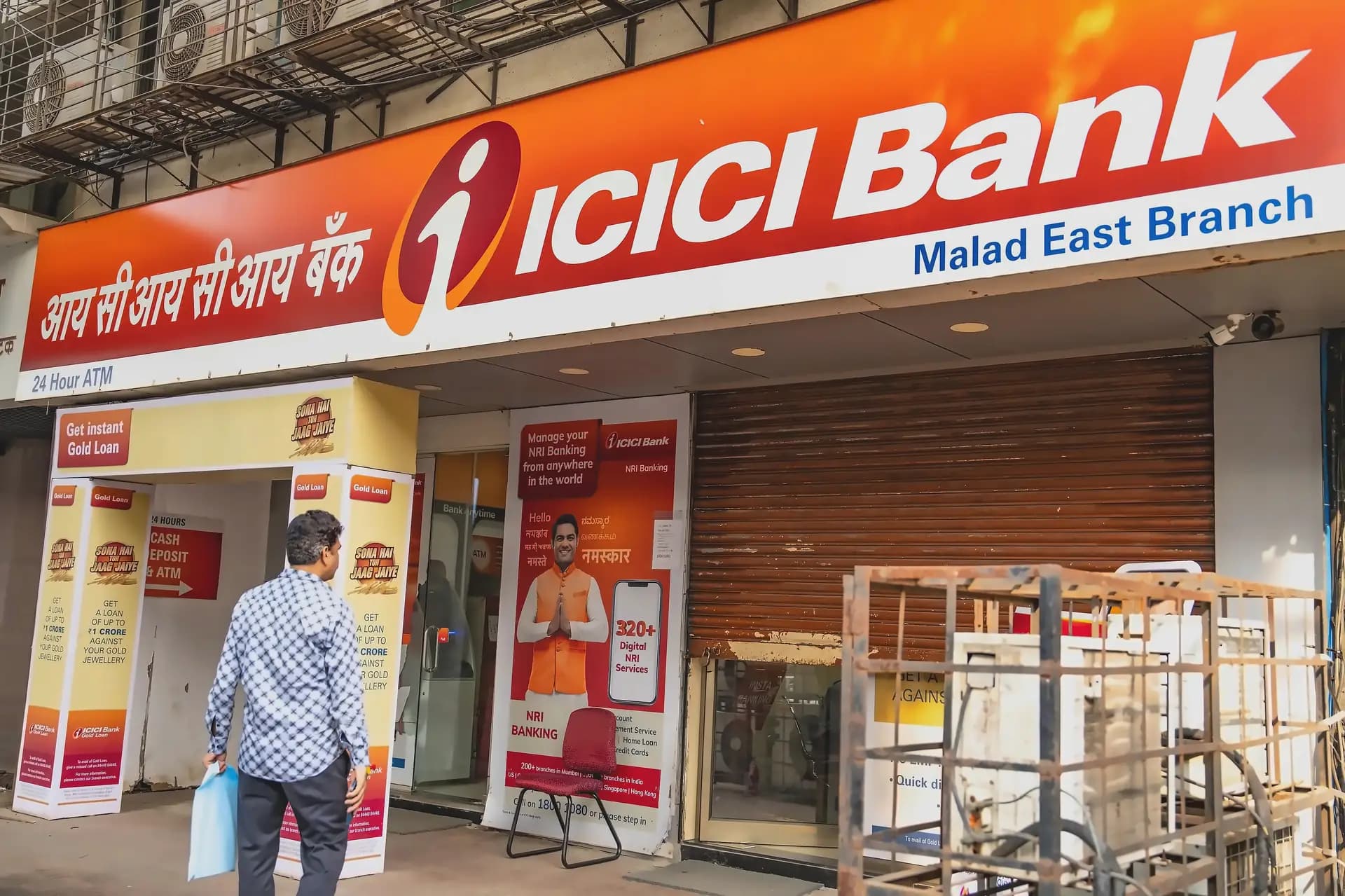
HSBC Holdings Plc and ICICI Bank Ltd. emerged as the biggest lenders to India's diaspora under RBI's special foreign-exchange swap program, according to data compiled by the International Financial Services Centres Authority (IFSCA). The two lenders in Gujarat International Finance Tec-City (GIFT City) disbursed a combined $19.3 billion through the central bank's concessional swap facility for foreign-currency non-resident deposits which ran from June till the end of August. HSBC disbursed $10.9 billion while ICICI Bank contributed $8.4 billion to the program, signaling the financial hub's growing role in channeling global capital into the country.
The Reserve Bank of India's program drew a surge in foreign-currency funding into the country, boosting activity in GIFT City significantly. Twenty lenders in the zone gave out a combined $52.8 billion in loans under RBI's program, with other major participants including Bank of Baroda, State Bank of India and Canara Bank, as reported by IFSCA. India garnered a record $127.22 billion from its overseas nationals through special programs, surpassing even the most optimistic estimates and giving policymakers a formidable buffer to defend the currency against external pressures. Prime Minister Narendra Modi is positioning GIFT City as a zone capable of competing with established financial centers such as Singapore or Hong Kong.
HSBC expects the foreign currency non-resident (FCNR) deposits it mobilised under the RBI swap facility to act as a force multiplier for its wealth management and retail banking businesses in India, according to Sandeep Batra, managing director and head of wealth and personal banking in India. The bank secured $14.5 billion through the special facility, making it the second-largest mobiliser after ICICI Bank's $17.88 billion. HSBC offered deposits ranging from $100,000 to $2.5 million with leverage up to 19 times, mostly financed through its Gift City branch. The bank plans to deploy the liquidity conservatively, focusing on corporate lending, three-year fixed mortgages, and government securities.
Banking assets in GIFT City are expected to top $150 billion by the end of September from $120 billion as of end-August, according to IFSCA chairperson K. Rajaraman. The number of depositors at banks in the zone has risen nearly 50% to about 32,000 as of the end of August from end-March, compared to only roughly 4,000 three years ago. The center, which houses firms including HSBC, Standard Chartered Plc and Mitsubishi UFJ Financial Group Inc., already offers exemptions from certain taxes and regulatory restrictions, boosting its appeal as an international capital raising venue. The central bank offered to take on the risk of currency-hedging costs of FCNR deposits, prompting some lenders such as HSBC to provide loans amounting to up to 19 times the original deposit.
Capitalizing on the success of the foreign-currency non-resident accounts, banks are expected to aggressively expand wealth management and tap the global Indian diaspora through extensive international outreach, according to IFSCA chairperson K. Rajaraman. HSBC plans to open 12 more branches and deploy the FCNR scheme conservatively toward corporate lending and mortgage offerings. The bank offers wealth management services to clients with ₹50 lakh to ₹80 crore in assets and plans to launch retail broking later this year. Non-resident Indians would be critical to the hub's growth, with the center's infrastructure and regulatory framework positioning it as a competitive alternative to established financial centers.