Normally, banks bear this cost when converting foreign currency deposits into rupees for domestic deployment, constraining interest rates to 3.5-4%. By eliminating this burden for fresh deposits mobilized between June 8 and September 30, 2026, the RBI enabled banks to offer 6-7% rates instead. This dramatic improvement made leveraged structures mathematically viable and profitable.
The impact was immediate and explosive. Aggregate sanctions under the concessional swap facility surged from $28.60 billion on August 14 to $37.26 billion on August 21, reaching $54.02 billion by August 31, 2026. Of this, $52.82 billion was already disbursed across 20 lenders. The RBI's intervention didn't just improve margins—it created an entirely new business case for aggressive capital mobilization from the Indian diaspora.
Leverage Ratios: HSBC's 19x Advantage
The removal of hedging costs enabled banks to deploy leverage multiples that would have been impossible under normal circumstances.
This structure allows a $100,000 investment to scale into a $2 million deposit through borrowed funds. At a 6.45% FCNR deposit rate and 5.75% borrowing cost, HSBC's 19x leveraged structure generates net returns of 19.75% on customer capital.
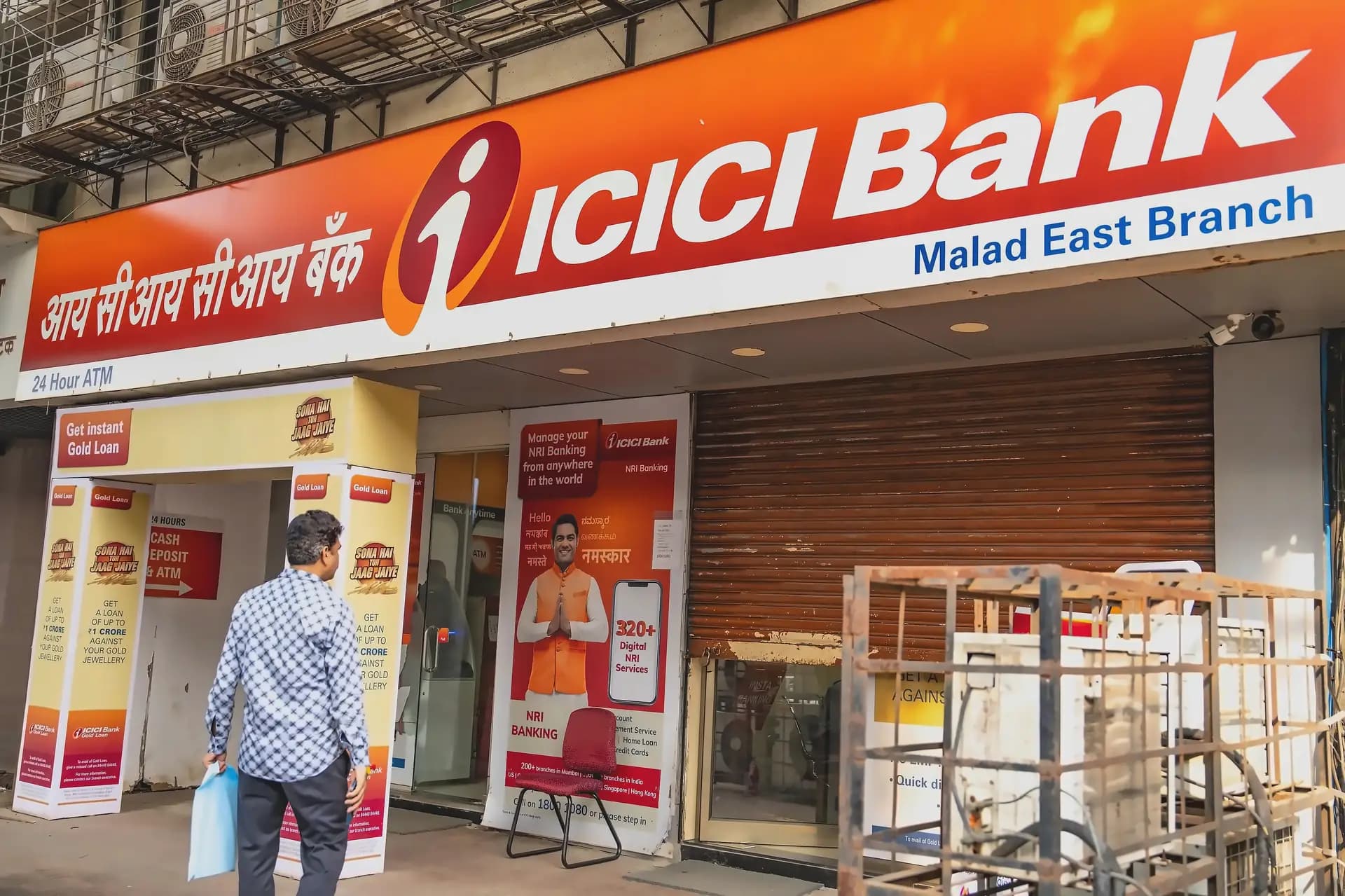
Other banks adopted more conservative approaches. State Bank of India offered leverage of up to 9 times, while ICICI Bank, HDFC Bank, and Axis Bank deployed lower multiples than HSBC. Bank of Baroda and Canara Bank also participated but with even more conservative leverage ratios. The spread between the FCNR deposit rate and borrowing cost determines profitability, and HSBC's 19x multiple maximized this spread while maintaining acceptable risk parameters.
Why HSBC Outpaced ICICI Bank
Several competitive factors explain this $2.5 billion differential. HSBC's 19x leverage ceiling provided a significant competitive advantage in attracting yield-seeking NRIs. While ICICI Bank offered leveraged structures, their multiples were reportedly lower, limiting their appeal to the most aggressive investors.
HSBC's extensive international presence in key diaspora markets—including the Gulf, Singapore, Hong Kong, the UK, and the US—provided direct access to high-net-worth NRIs and corporate treasury accounts. This global footprint facilitated faster mobilization of large-ticket deposits. Additionally, HSBC's position as the only international bank offering a full spectrum of products from wholesale banking to wealth management in GIFT City gave it a unique competitive edge in cross-selling and relationship management.
IFSCA's Regulatory Framework: The Foundation of Success
The International Financial Services Centres Authority created a comprehensive regulatory environment that made GIFT City exceptionally attractive for diaspora capital mobilization. Key exemptions included 100% income tax exemption for 10 consecutive years within a 15-year block period, no Securities Transaction Tax or Commodity Transaction Tax on IFSC exchange transactions, and GST exemptions on specified services and offshore transactions.
This reduced the effective cost of deposits further and created additional room for higher depositor rates. The unified regulatory framework under IFSCA eliminated coordination delays between multiple regulators, while the single-window governance model streamlined approvals and compliance.
The KYC Revolution: Speed and Efficiency
IFSCA's streamlined KYC process delivered significant operational advantages. For existing retail customers, onboarding takes 2-3 days—comparable with financial centers like Singapore and Hong Kong. New customer due diligence typically requires 10-12 days, though this period is expected to shorten as know-your-customer requirements are further streamlined.
Assisted video KYC is already available to NRIs, with unassisted face authentication via biometric systems expected to be enabled by end-2026. This will allow NRIs with an Aadhaar footprint to complete onboarding digitally without external assistance, eliminating the need for physical documentation, courier services, or wet signatures. The reduction in customer acquisition costs—estimated at 70-75%—combined with conversion rate improvements of 133-150%, positions HSBC and ICICI Bank to scale their NRI customer acquisition dramatically.
This capability is particularly valuable for leveraged FCNR structures where multiple transfers must be consolidated precisely. The near-instant settlement reduces working capital requirements and liquidity constraints while minimizing counterparty risk.
The cost savings are substantial. Traditional SWIFT transfers cost 0.5-1.5% of transaction value, while GIFT City transfers cost an estimated 0.05-0.15%. For HSBC and ICICI Bank's combined $19.3 billion FX lending portfolio, this represents annual savings of $86.4-259.2 million. The simplified tax regime and faster operating infrastructure deliver additional annual savings of $107.7-192.7 million compared to maintaining equivalent operations in Singapore or Hong Kong.
Wealth Management: The Next Frontier
The 50% increase in depositors to 32,000 at GIFT City banks creates significant wealth management opportunities. With banking assets projected to grow from $120 billion to $150 billion by end-September 2026, and an estimated 40-50% of assets representing investable capital, the addressable wealth management market is substantial. IFSCA has explicitly encouraged banks to create dedicated wealth management units and aggressively expand operations targeting the global Indian diaspora.
The cross-selling potential from FX lending clients is significant. Customers using 9x-19x leverage demonstrate advanced financial understanding and substantial capital, making them ideal candidates for wealth management services. The conversion funnel—from FX lending to banking products, then to wealth management, and finally to comprehensive solutions—could generate $17-111 million in additional annual revenue depending on conversion effectiveness.
Competitive Positioning for the Future
The implementation of unassisted face authentication by end-2026 will be a game-changer, potentially reducing customer acquisition costs by 60% while increasing conversion rates by 133%. This technological advantage, combined with first-mover position in wealth management, positions HSBC and ICICI Bank to capture disproportionate market share compared to competitors like Standard Chartered and Mitsubishi UFJ.
Standard Chartered received IFSCA approval for wealth management operations only in August 2026, putting it behind HSBC and ICICI Bank in establishing market presence. Mitsubishi UFJ's capabilities in GIFT City wealth management remain limited. The combination of transaction efficiency, cost benefits, and digital enablement creates a sustainable competitive moat that will be difficult for competitors to replicate in traditional financial centers.
As GIFT City continues its trajectory toward becoming a premier international financial hub, HSBC and ICICI Bank's early dominance in FX lending positions them perfectly to capture the wealth management opportunity. The infrastructure advantages, regulatory framework, and technological capabilities create an ecosystem where both banks can scale their NRI operations while maintaining superior profitability compared to their operations in Singapore and Hong Kong.