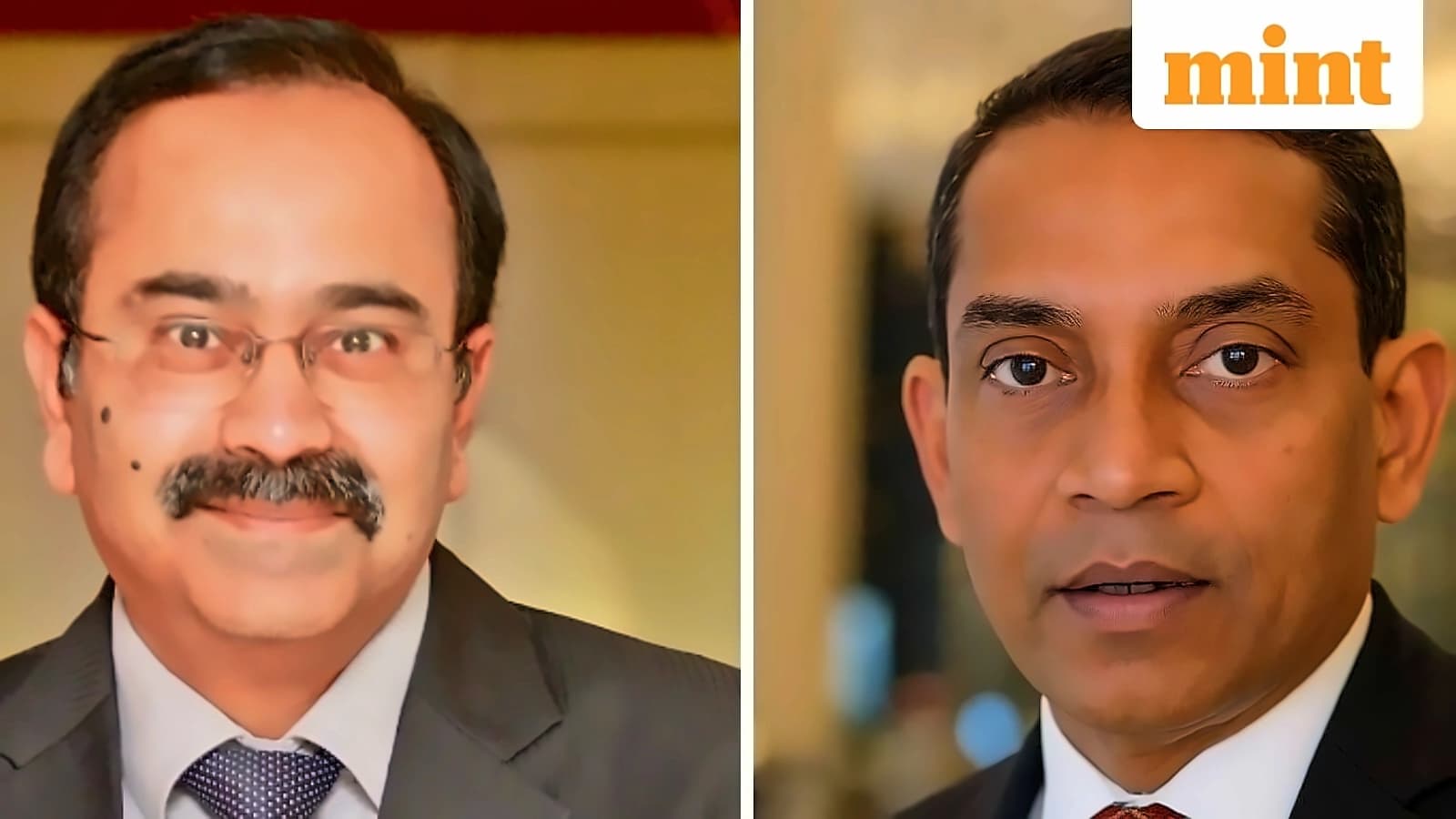
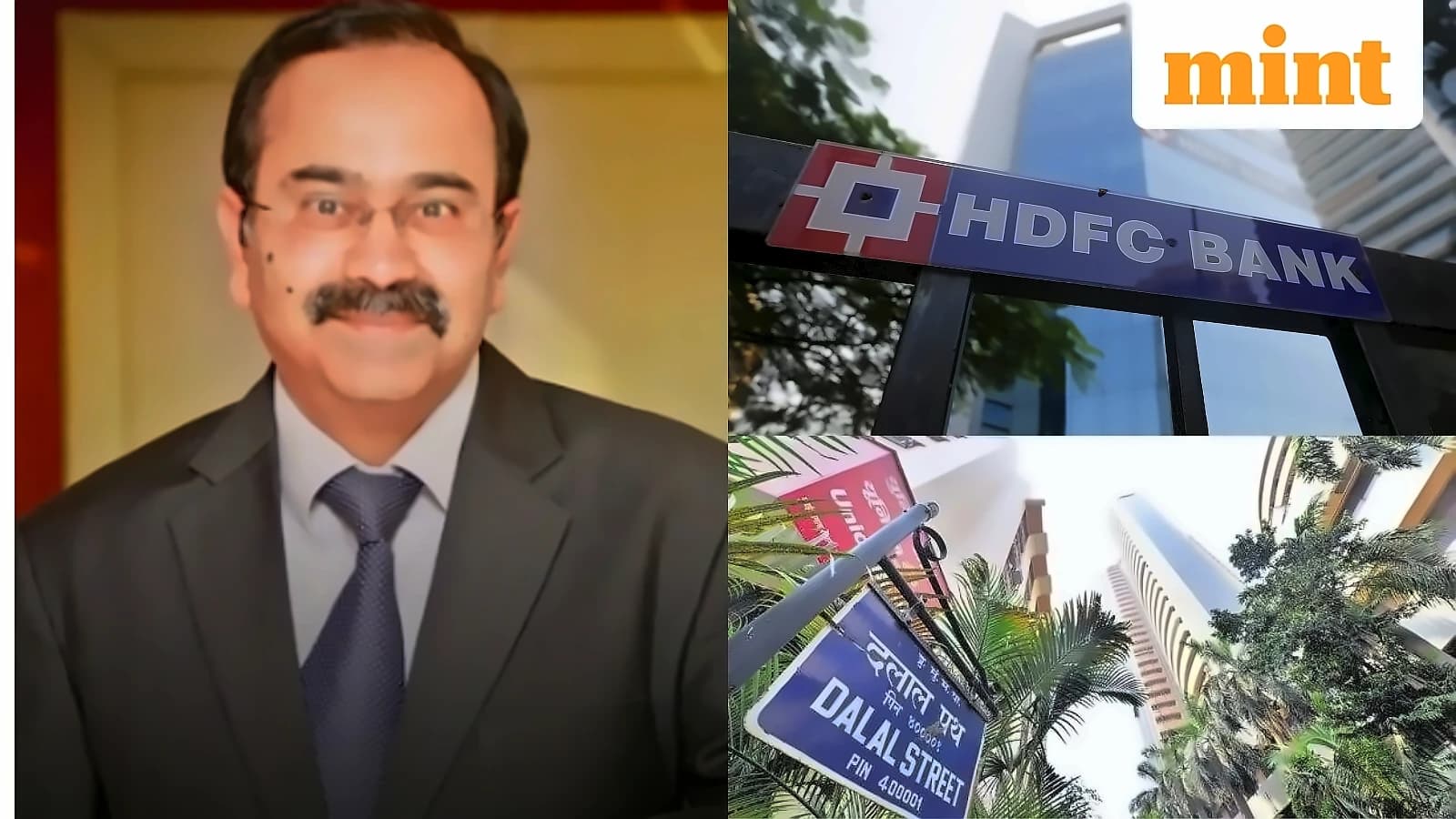
The Reserve Bank of India has approved Anup Bagchi's appointment as the next Chief Executive and Managing Director of HDFC Bank, with the RBI clearing his name to lead India's largest private sector lender on Thursday, October 1. Bagchi will take over as MD & CEO from October 27, 2026, for a three-year term, as per an exchange disclosure by the lender. Bagchi, who has been associated with rival ICICI Bank and its subsidiaries since 1992, will succeed Sashidhar Jagdishan, whose six-year stint in the corner office was marred by allegations of unethical conduct and questionable governance practices towards the end. The 56-year-old Bagchi, an alumnus of IIT-Kanpur and IIM-Bangalore, has been serving as managing director and chief executive of ICICI Prudential Life Insurance since 2023 and served as executive director of ICICI Bank for six years before that. According to Emkay Global Financial Services, the approval is broadly in line with market expectations and media reports, with the brokerage believing the appointment could help address uncertainty around the bank's management transition. Motilal Oswal notes that the appointment removes a key overhang surrounding HDFC Bank's leadership succession and brings an external perspective at a time when the bank is seeking to rebuild investor confidence.
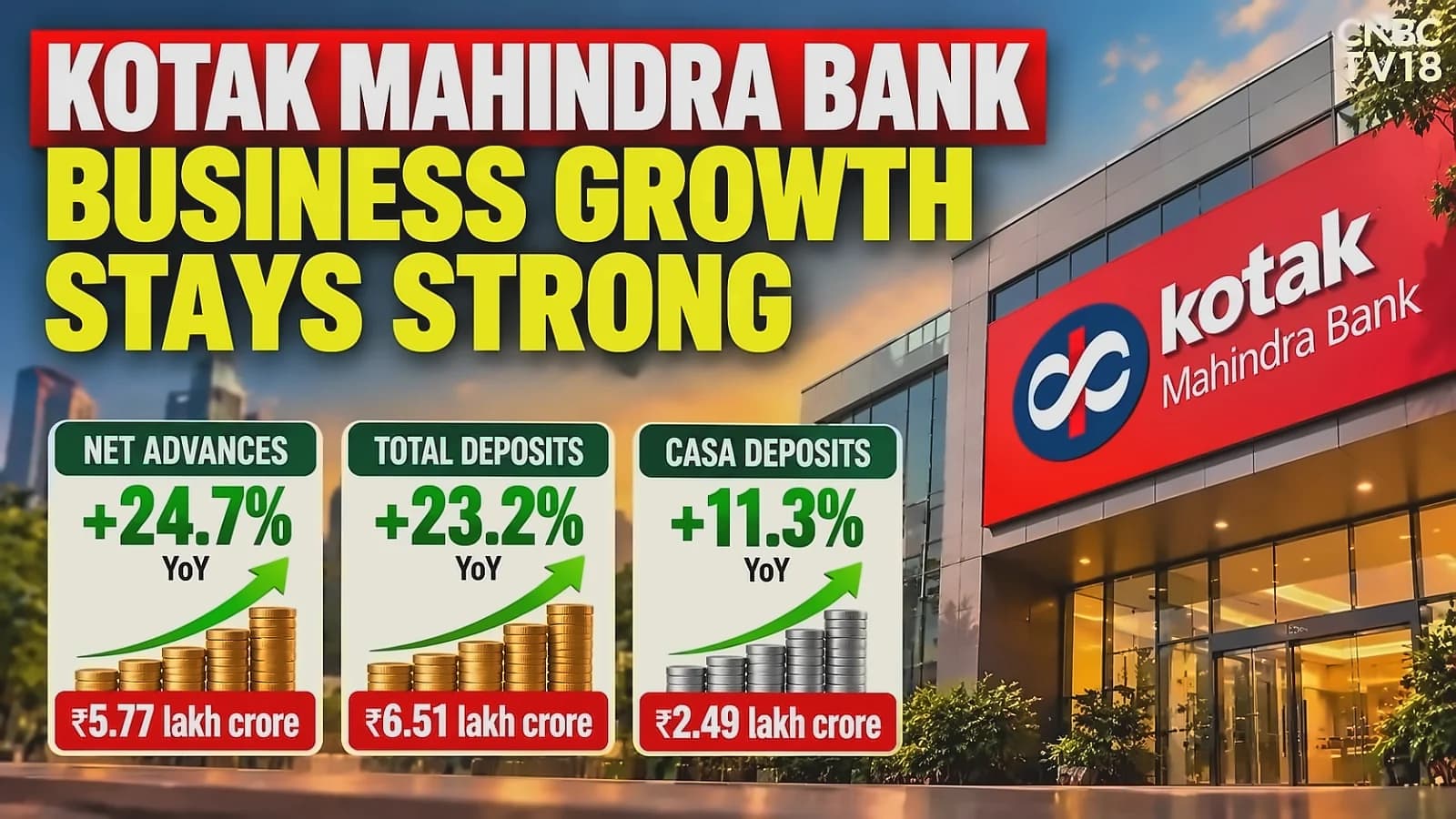
HDFC Bank disclosed its provisional business updates for the September quarter, showing continued momentum in deposit growth outpacing loan growth on a year-on-year basis. Gross advances grew by 16.3% year-on-year to ₹32.19 lakh crore, while deposit growth stood at 18.8% from last year, reaching ₹33.27 lakh crore at the end of the quarter. On a sequential basis, loan growth stood at 5.2%, indicating steady but moderated growth momentum. Average advances under management grew by 14% year-on-year to ₹31.87 lakh crore, with the period-end figure at ₹33.07 lakh crore, a growth of 15.3% year-on-year. Average deposits were ₹31.66 lakh crore for the September 2026 quarter, a growth of around 16.8% over ₹27.10 lakh crore for the corresponding September 2025 period. Average CASA deposits were ₹9,712 billion for the September 2026 quarter, a growth of around 10.7% over ₹8,770 billion for the corresponding September 2025 period, while average time deposits were ₹21,952 billion, a growth of around 19.7% over ₹18,335 billion. At the end of September 2026, total deposits stood at around ₹332.75 lakh crore, with period-end CASA deposits increasing 10.8% to ₹105.2 lakh crore and time deposits jumping 22.8% to ₹227.55 lakh crore.
HDFC Bank has mobilized $11.5 billion worth of FCNR (B) deposits under the RBI swap window, with the overseas branches of the bank extending loan facilities aggregating to $5.7 billion against these deposits. The bank also issued $2.5 billion worth of USD-denominated senior unsecured bonds during the quarter. Under the RBI's FCNR(B) deposit swap facility introduced on June 8, 2026, HDFC Bank mobilised foreign currency deposits worth $11.5 billion (₹1,103.4 billion) through August 31, while its overseas branches extended $5.7 billion (₹547.7 billion) in loans against these deposits, with standby letters of credit issued to other banks for such loans amounting to $3.1 billion (₹293.4 billion). Separately, the bank issued $2.5 billion (₹239.6 billion) of USD-denominated senior unsecured bonds during June–August 2026.
HDFC Bank shares gave up early gains and ended over 2% lower on Monday amid profit-taking, with the stock closing at ₹705, down 1.99% on the BSE after earlier climbing 2% to ₹734. At the NSE, the stock dipped 2.27% to ₹704.80 after rising 1.80% to ₹734.20 earlier in the session. The opening move came after the Reserve Bank of India approved Bagchi's three-year term effective October 27, 2026, with the stock gaining momentum as the leadership speculation overhang was removed. HDFC Bank shares ended 1.8% higher at ₹721.20 on Thursday following the official announcement of Anup Bagchi's appointment as MD & CEO, with the stock gaining momentum as the leadership speculation overhang was removed. US-listed shares of HDFC Bank (ADRs) gained as much as 2.7% on Thursday after the announcement, but gave up all those gains on Friday. The Reserve Bank of India has approved Bagchi's three-year term effective October 27, 2026, with the stock trading higher as the appointment puts an end to succession uncertainty after Sashidhar Jagdishan announced he will not be seeking re-appointment once his term ends. Bagchi has already been appointed as an Additional Director on the board from October 2, providing continuity during the transition period.
Global investment banks have issued positive ratings on HDFC Bank following the appointment announcement. Morgan Stanley maintains an 'Overweight' rating with a price target of ₹1,025, representing a 42% upside potential, noting that the underlying deposit growth remained strong at around 15% YoY excluding FCNR deposits. Citi has a 'BUY' rating with a price target of ₹970, viewing the appointment as strategically positive and potentially supporting a re-rating. Citi sees 35% upside potential, emphasizing that execution, strategic direction and continuity of Kaizad Bharucha remain key factors. Jefferies maintains a 'buy' rating with a price target of ₹880, noting that Bagchi's appointment provides clarity on succession and strategic direction. Bernstein has among the highest targets on the street for HDFC Bank at ₹1,150 along with an 'outperform' rating, emphasizing that an external hire in the form of Bagchi could reset internal dynamics and investor expectations, with a three-year term providing runway for the future. Emkay Global Financial Services has retained its 'Buy' rating with a target price of ₹1,225, implying 70% upside potential, noting that HDFC Bank's prolonged underperformance has brought its valuation to attractive levels. The stock is down 27% so far this year, making the positive analyst sentiment particularly significant for potential recovery. Motilal Oswal retains a 'Buy' rating with a target price of ₹925, 1.8 times FY28E adjusted book value and ₹128 for subs, noting that leadership stability under Anup Bagchi, a proven BFSI professional, alongside an improvement in growth and earnings trajectory, should improve investor sentiment and help the stock re-rate over the medium term.
Anup Bagchi, 56, brings over three decades of experience across banking, capital markets, wealth management, and insurance, with membership in the ICICI Group since 1992. During his tenure as Executive Director of ICICI Bank (2017-2023), he oversaw Retail, Business, Rural, and Wholesale Banking, playing a key role in strengthening the bank's retail franchise and driving profitable growth. Under his leadership, ICICI Bank became the first private-sector bank in India to surpass a retail mortgage portfolio of ₹2 trillion. Since June 2023, Bagchi has served as MD & CEO of ICICI Prudential Life Insurance Company, where he led the company to cross the ₹10,000 crore mark in Annualised Premium Equivalent (APE) for the first time in FY2025. APE rose 15% year-on-year to ₹10,407 crore, while profit after tax increased nearly 40% to ₹1,189 crore. His move to HDFC Bank marks a return to mainstream banking and places him at the helm of one of India's biggest private-sector lenders, making him the first external candidate to lead HDFC Bank. Bagchi holds a management degree from the Indian Institute of Management, Bangalore, and an engineering degree from the Indian Institute of Technology, Kanpur. Motilal Oswal highlights that Bagchi's three decades of experience across retail and wholesale banking, digital financial services, capital markets, wealth management and insurance will enable him to lead India's largest private bank with leadership across BFSI segment, with his digital and data-analytics experience further aiding in improving the product propositions and overall productivity metrics.
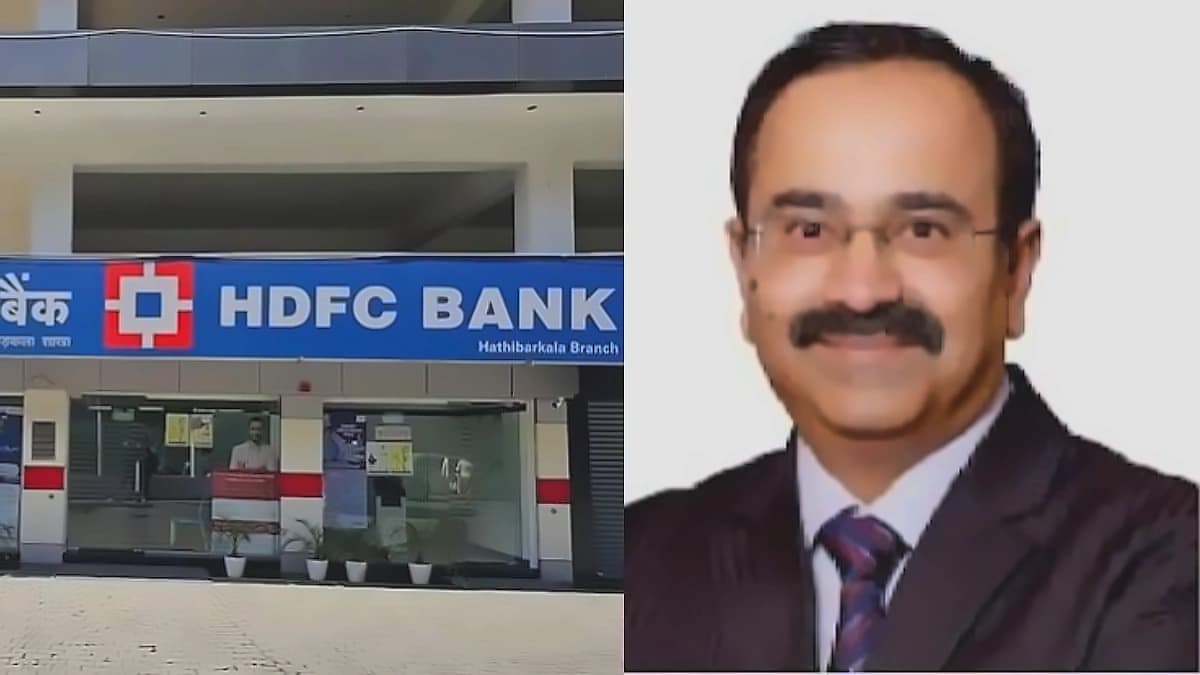
Emkay Global Financial Services expects management stability, deposit growth and branch productivity to remain key priorities for the new leadership. The brokerage believes the appointment should help restore investor and customer confidence in the bank, with Bagchi's non-obtrusive leadership style, focus on broader strategic priorities, and aversion to micromanagement expected to help carry the core team along. Technology and digital capabilities will also need attention, while processes will have to be strengthened to address issues seen in the past, including instances of mis-selling. Overall, Emkay believes this appointment should remove the prolonged overhang around management succession and help restore customer and investor confidence in the bank. A sustained re-rating could depend on the bank delivering on its business priorities, while any moderation or reversal in foreign portfolio investor outflows amid easing geopolitical uncertainty could also influence the stock. The brokerage expects progress in deposit and credit growth to support a potential re-rating. Challenges awaiting Bagchi include increasing core income, as net interest margins continue to remain under pressure and curbing instances of product mis-selling, according to market watchers. The top-level leadership issues came to the fore in March this year with the surprising resignation of non-executive chairman Atanu Chakraborty, who cited issues regarding values and ethics, adding to the management transition challenges.