India's banking sector is experiencing significant workforce changes driven by technology adoption. According to reports from Business Standard, scheduled commercial banks employ around 1.8 million people, representing one of the largest shares in India's organised sector. The country's largest private-sector bank, HDFC Bank, reported a decline in total headcount for the first time in nine years, reaching 211,000 employees at the end of March 2026, down 1.6% year-on-year. This decline is attributed to increased use of technology and artificial intelligence in operations.
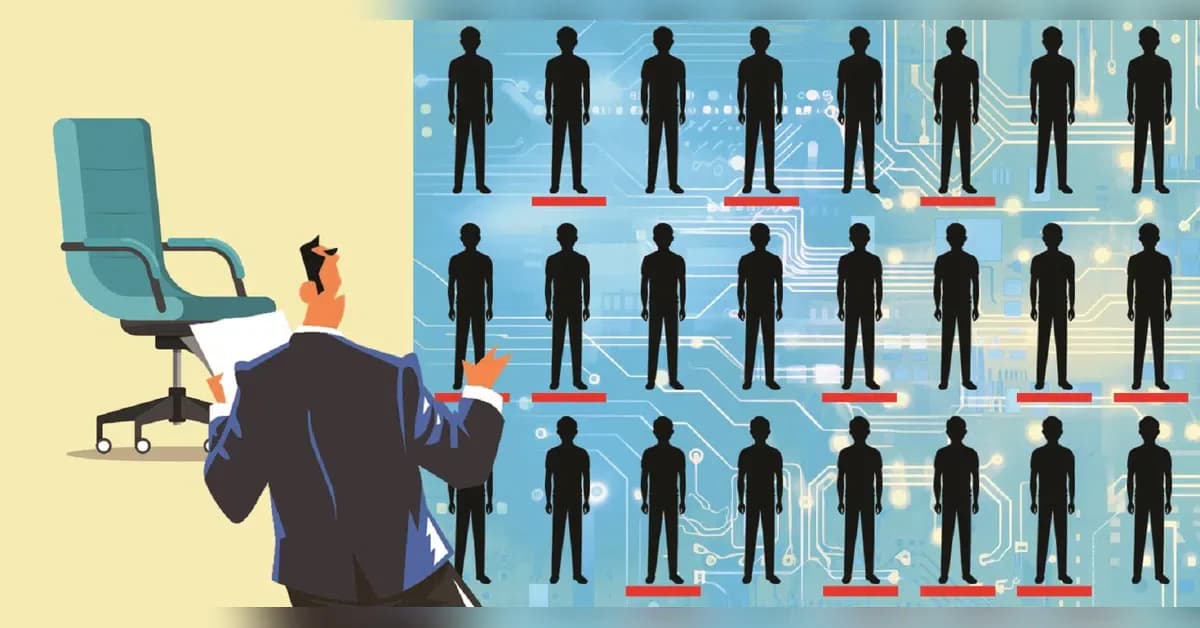
The employment decline shows a clear pattern across different staff categories. As reported by Business Standard, non-supervisory staff at HDFC Bank declined by close to 5% at the end of March 2026, resulting in an over 8,000 employee decline in one year, while supervisory staff strength increased by 11%, adding over 4,800 employees. Similarly, State Bank of India reported a 3.8% total headcount increase to 245,000, but this growth was largely driven by officers (2.2% increase) and associates (8.8% increase), while subordinate and other staff fell by 7%. This trend indicates that technology adoption is primarily affecting lower-skilled positions while creating opportunities for higher-skilled roles.
The accelerating pace of AI adoption has made traditional workplace learning obsolete, driving organizations toward microlearning solutions. According to the 2025 World Economic Forum Future of Jobs Report, 39% of workers' existing skills are expected to be transformed or become outdated between 2025 and 2030, making continuous reskilling essential. Microlearning addresses this challenge by delivering knowledge in short, highly targeted modules that employees can consume when they need it most. Instead of completing lengthy courses, employees can access seven-minute lessons on delivering effective feedback before performance reviews or spend five minutes learning how to refine AI-generated job descriptions. The 2025 LinkedIn Workplace Learning Report found that 91% of learning and development professionals believe continuous learning is more important than ever for career success, with 84% of employees believing learning adds purpose to their work.
The banking sector trends highlight broader concerns about technology's impact on employment across sectors. According to Business Standard analysis, over 46% of Indians depend on agriculture for their livelihood, and the goal is to reduce this dependence to improve agricultural productivity. However, the shift away from agriculture will be challenging as employment opportunities will be fewer in different sectors of the economy, with the shortage being seen more in low-end jobs. The report warns that many young people without training will see their job opportunities decline, potentially leading to social unrest and economic distress.
The analysis emphasizes the urgent need for comprehensive skilling initiatives that align with the microlearning revolution. The ministry of skill development and entrepreneurship, established as an independent ministry in 2014, must become more visible with policy actions and programmes. The ministry's vision of 'Skilled India' is critical as rapid technology and AI adoption has made the tasks set out for the Union ministry even more critical. The report stresses that job opportunities for unskilled workers will be fewer than those for people who are adequately trained in AI and other relevant technologies. Modern learning platforms are now using AI to recommend personalised content based on an employee's role, career aspirations and existing skill gaps, making learning more targeted and relevant while organizations adopt blended learning models that combine comprehensive programmes with ongoing microlearning.