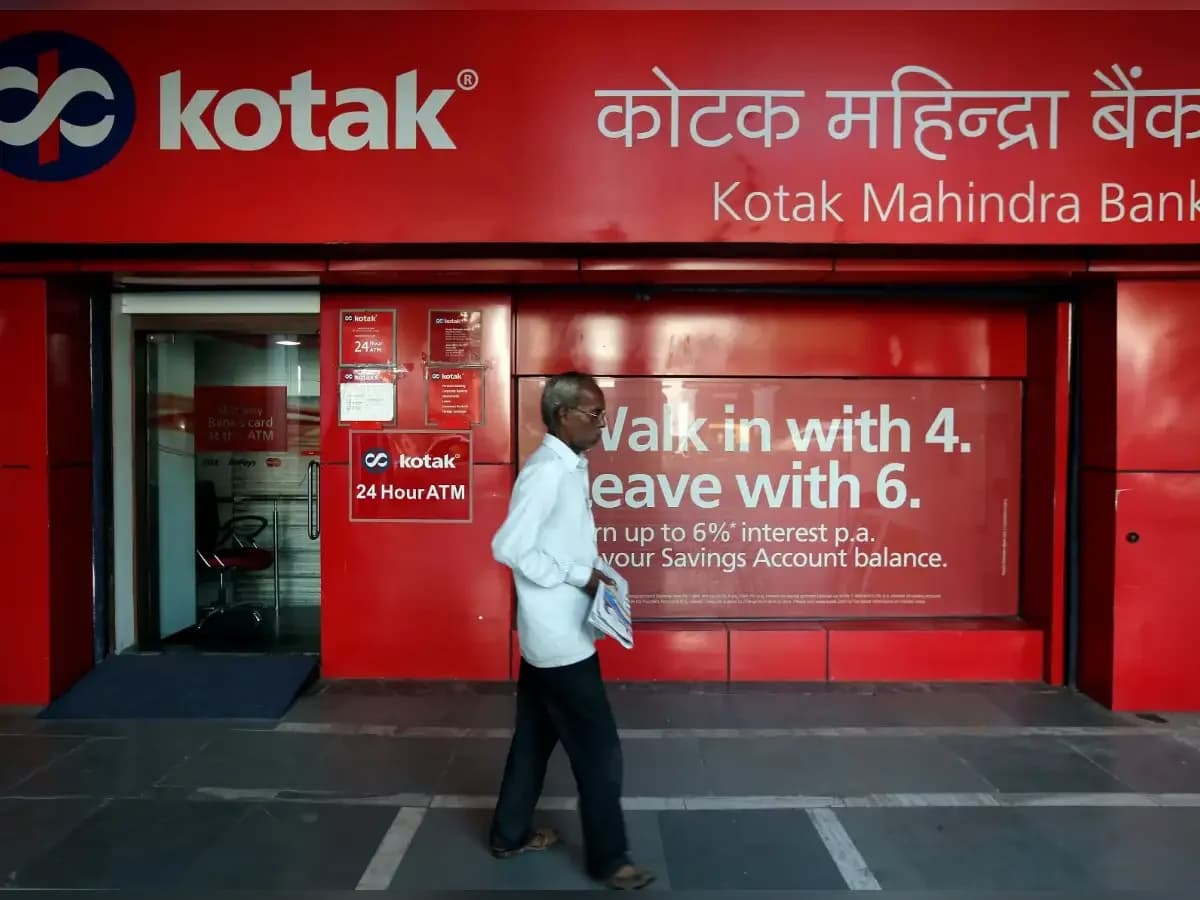
Kotak Mahindra Bank stands at a pivotal moment. Ashok Vaswani, who took charge as MD & CEO in January 2024, announced in June 2026 that he will not seek re-appointment when his term ends on December 31, 2026.
The board has initiated the succession process, with two internal candidates emerging as frontrunners: Anup Kumar Saha and Paritosh Kashyap.
The choice between these two executives represents more than just a personnel decision. It will fundamentally shape the bank's growth trajectory, risk profile, and strategic priorities as it pursues the ambition of becoming India's third-largest private sector lender by after-tax profit. Currently, Kotak ranks fourth by asset size among private lenders.
The Candidates: Divergent Paths
Anup Saha joined Kotak in 2026 after leading Bajaj Finance as CEO. He oversees consumer banking, marketing, and data analytics as a Whole-time Director. His background is steeped in retail lending, digital transformation, and customer acquisition strategies that powered Bajaj Finance's rise as a consumer finance powerhouse.
Paritosh Kashyap represents the institutional alternative. A Kotak veteran with over three decades in the group, he heads the wholesale banking business and serves as a Whole-time Director. His expertise spans structured finance, investment banking, and debt capital markets, making him the architect of Kotak's strong corporate and SME franchise.
Retail vs Wholesale: Strategic Trade-offs
The divergence in their backgrounds presents a clear strategic choice. Saha's retail DNA could accelerate Kotak's unsecured lending growth, which currently represents only 8.9% of net advances. Bajaj Finance's model emphasizes embedded marketing at point-of-sale locations, relationship-led cross-sell, and performance-driven digital acquisition—strategies that could significantly boost Kotak's retail penetration. Transcripts
However, retail acceleration comes with trade-offs. Unsecured lending typically carries higher risk weights, requiring more capital allocation. It also brings higher sensitivity to economic cycles and consumer stress. While yields are higher, credit costs can be more volatile, as evidenced by the progressive reduction in Kotak's credit costs through FY26: Q1 (93 bps), Q2 (79 bps), Q3 (63 bps), Q4 (39 bps). Transcripts
Kashyap's wholesale expertise offers a different value proposition. The SME franchise represents 24% of total advances (~INR 1.2 lakh crore) with 19% YoY growth. The corporate SME book is described as "absolutely clean" with very minimal credit costs. More importantly, the institutional business generates capital-efficient fee income, with cross-selling adding approximately 200 basis points to corporate banking ROE. Transcripts +2
The RBI Factor: Timing and Certainty
The Reserve Bank of India's evaluation will significantly influence the transition timeline. Banking regulations mandate that the board must refer at least two names to the RBI, ranked in order of preference, at least four months before the incumbent's term expires. For Kotak, this means submitting candidates by August 31, 2026.
The RBI applies rigorous "fit and proper" criteria, including age (35-67 years), educational qualifications (minimum graduate), and relevant experience in banking, finance, economics, law, risk management, or information technology. The due diligence process extends to verifying past employment history, regulatory compliance, and ethical track records. For candidates with international experience, the RBI may reach out to corresponding regulators or past employers for feedback.
Historical precedents demonstrate that rejections can occur. In April 2024, the RBI rejected Tamilnad Mercantile Bank's CEO candidates and asked for a "fresh panel of candidates with suitable experience". Such delays could create strategic uncertainty, potentially impacting decision-making, talent retention, and competitive positioning.
Market Pricing and Valuation Dynamics
This positive momentum suggests the market is pricing in constructive expectations around the succession process.
This premium reflects investor confidence in the bank's strong asset quality, superior capital adequacy (Tier 1 CAR of 21.3%), and proven risk management track record.
Brokerages maintain constructive views. Nomura has a Buy rating with a target price of ₹460 (15% upside), while Jefferies maintains a Buy rating with a target of ₹450. Both identify Saha as a strong internal candidate, suggesting that his appointment could provide succession clarity and support valuation re-rating.
Strategic Continuity and the Kotak Family Influence
The transition from founder Uday Kotak to Ashok Vaswani, and now to either Saha or Kashyap, occurs against the backdrop of the Kotak family's 25.88% shareholding as of March 31, 2025. This significant stake ensures that while professional management drives day-to-day operations, long-term strategic vision remains aligned with founding principles. AnnualReports +1
The bank and group are now aligned on a common strategy, with Vaswani suggesting that the current phase could be an appropriate transition point.
The next CEO will inherit a cleaned-up balance sheet and a unified strategic framework. The choice between Saha and Kashyap will determine whether the bank accelerates retail growth or continues optimizing its wholesale franchise. Both paths can support the ambition of becoming the third-largest private lender by after-tax profit, but they require different capital allocation approaches and risk management frameworks.
The Path Forward
The Nomination and Remuneration Committee's requirement to recommend at least two candidates strengthens governance practices by promoting board independence and ensuring organizational resilience. This approach reduces key person risk and develops a broader leadership pipeline.
As the August 31 deadline approaches for submitting names to the RBI, all eyes are on whether the board will prioritize Saha's retail acceleration or Kashyap's wholesale optimization. The decision will shape Kotak's competitive positioning, risk profile, and growth trajectory for years to come.
The market's recent performance suggests investors are looking beyond near-term uncertainty to focus on the bank's fundamental strengths. With strong internal candidates, a robust governance framework, and a clear strategic foundation, Kotak Mahindra Bank is well-positioned to navigate this leadership transition and maintain its growth momentum regardless of which candidate ultimately assumes the corner office.