Sign in to fuzzto save your conversations, follow your research and come back anytime.

Rural Electrification Corporation Ltd (REC) is a Navratna Central Public Sector Enterprise under the Ministry of Power. It is an NBFC that provides financial assistance for power infrastructure projects across India. REC primarily offers long-term loans to state electricity boards, power utilities, and private sector companies for generation, transmission, and distribution projects. The company also acts as a nodal agency for government electrification schemes. REC has diversified into financing renewable energy projects, equipment manufacturing, and coal mines. It offers various financial products including long-term, medium-term, and short-term loans, debt refinancing, and equity financing. As of March 31, 2023, Power Finance Corporation Limited held 52.63% of REC's equity, with the remaining 47.37% held by public shareholders.
In the news

REC shares recover 2% after hitting 52-week low, trading at ₹301.3

Tokenised Corporate Bonds Pass Launch Test, Secondary Market Key
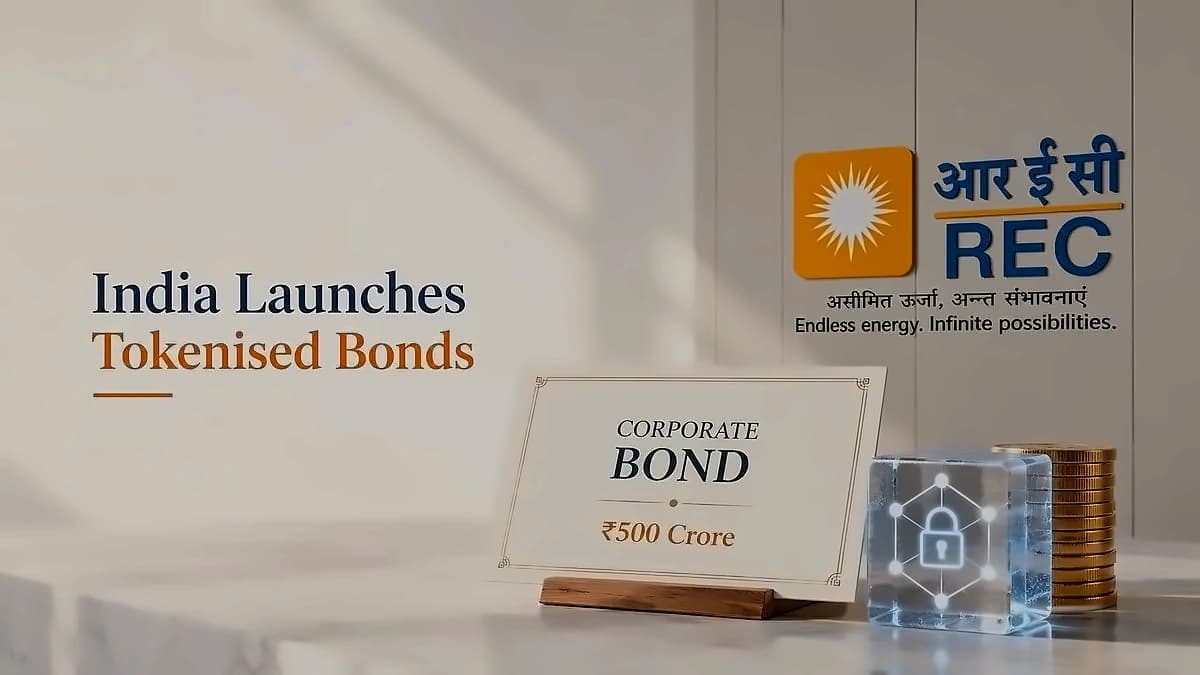
REC's ₹500 Cr Tokenized Bond Issue Attracts Top Banks

REC Launches India's First Tokenised Corporate Bond Next Week

REC's Tokenized Bond Strategy: A Digital Leap in Infrastructure Financing

Seven Strategic Corporate Moves Reshaping India's Business Landscape in 2026

The Great Power Merger: What the PFC-REC Union Means for India

PFC-REC Merger: Creating India's Power Sector Financing Giant
The Quarter story
The two most recent quarterly results, compared side-by-side.
REC Ltd strengthens asset quality and green lending while managing a temporary slowdown in new disbursements.
Gross credit-impaired assets fall from 1.06% to 0.23% from Q2 FY26 to Q1 FY27 — confirming strong asset quality.
Total disbursements fall from ₹59,508 Cr to ₹23,537 Cr from Q1 FY26 to Q1 FY27 — signaling a slowed lending pace.
Renewable Energy loan assets grow from ₹63,850 Cr to ₹78,596 Cr from Q1 FY26 to Q1 FY27 — driving aggressive green portfolio expansion.
State sector loan assets drop from ₹5,07,829 Cr to ₹4,96,946 Cr from Q1 FY26 to Q1 FY27 — reflecting a deliberate reduction in public sector exposure.
Profit After Tax rebounds from ₹4,043 Cr to ₹4,149 Cr from Q3 FY26 to Q1 FY27 — maintaining earnings resilience.
Conventional Generation loan assets ease from ₹1,54,948 Cr to ₹1,49,686 Cr from Q2 FY26 to Q1 FY27 — showing portfolio maturation.
Foreign currency borrowings fall from ₹1,55,000 Cr to ₹1,42,121 Cr from Q2 FY26 to Q1 FY27 — lowering currency risk.
Stage II loan assets fall from ₹16,112 Cr to ₹12,352 Cr from Q2 FY26 to Q1 FY27 — indicating contained but ongoing risk migration monitoring.
Stage I loan assets climb from ₹5,59,909 Cr to ₹5,76,265 Cr from Q2 FY26 to Q1 FY27 — indicating robust standard lending.
Interest income dips from ₹14,348 Cr to ₹13,967 Cr from Q2 FY26 to Q1 FY27 — tracking recent loan book adjustments.
Company insights, generated from the most recent coverage.
Government ownership and strategic role in infra financing insulate REC's bond spreads from equity index exclusion — the cost-of-capital hit lands on equity, not on its ruised borrowing programme.
Nifty 100 exclusion is mechanical, driven by the -16 to -18% slide eroding market-cap rank — it removes automatic passive bid but does not change REC's sovereign-backed franchise.
Q1FY27 net profit fell 6.1% YoY and Q4FY26 dropped 21.7% — profit is contracting even as FY26 revenue grew 5.7%, confirming spread compression rather than a demand problem.