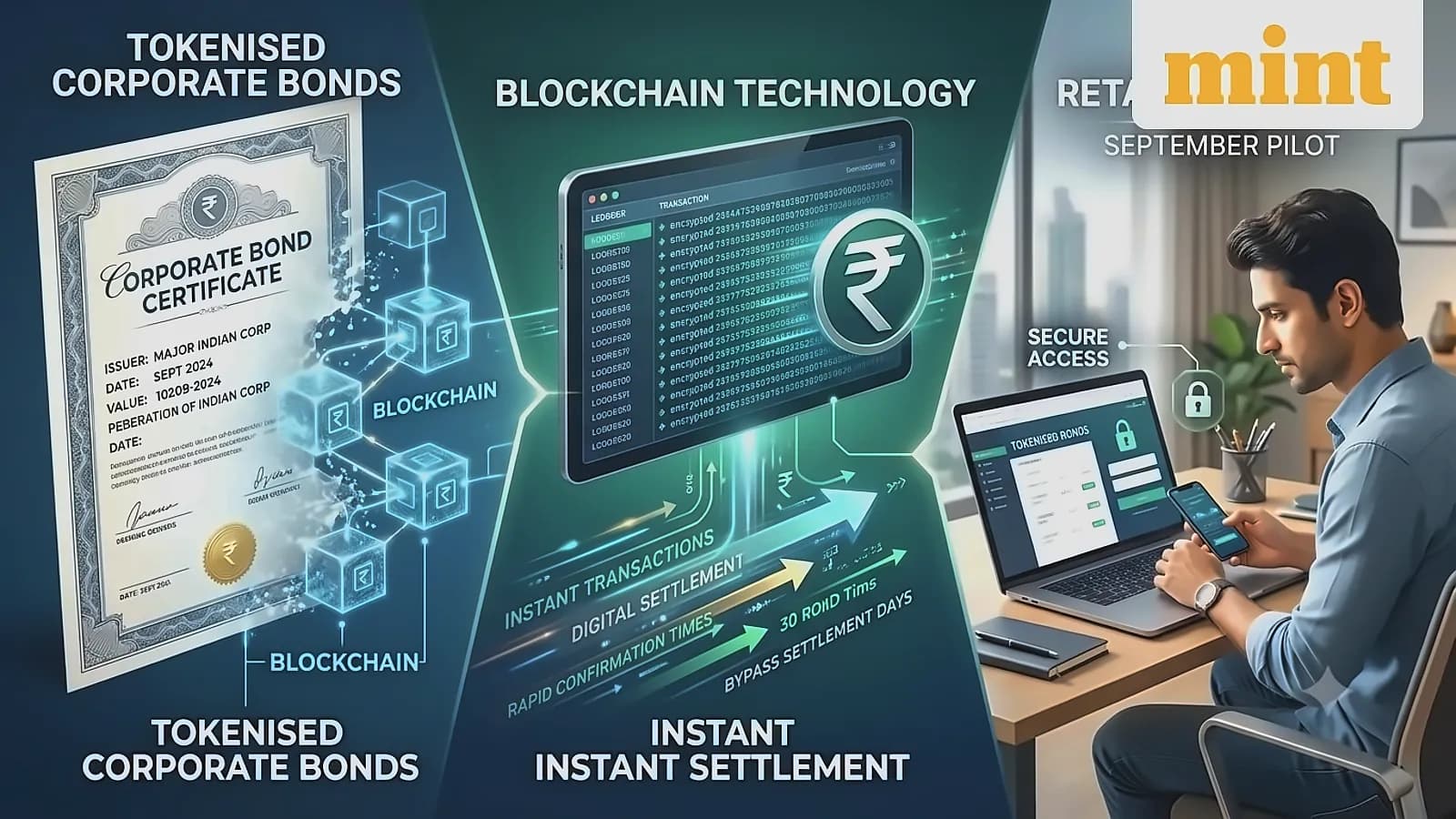
State-run power financier Rural Electrification Corporation Ltd (REC) has successfully completed India's first pilot issue of tokenized corporate bonds under the Securities and Exchange Board of India (SEBI) Regulatory Sandbox Framework, raising approximately ₹500 crore on Monday, September 7. The bonds carry a 7.30% coupon and mature in one year and nine months, with the bonds maturing by May 31, 2028. The issue structure included a base size of ₹100 crore with a green-shoe option of ₹400 crore, demonstrating strong investor confidence in the blockchain-based infrastructure. The bonds received bids worth around ₹796 crore, translating into an oversubscription of nearly 8 times, with REC accepting approximately ₹500 crore at the offered rate. The tokenized bond issue enabled same-day pay-in, allotment and listing of the bonds, with the bonds listed on both the NSE and BSE Limited.

About 20 investors, including banks, mutual funds and corporates, participated in the REC tokenized bond issuance, with top lenders HDFC Bank Ltd. and ICICI Bank Ltd. among the buyers, as reported by Moneycontrol. The New Delhi-based company raised ₹500 crore by issuing notes due in May 2028, with investors using the Reserve Bank of India's digital currency for the transaction. Other notable participants included private lenders Axis Bank Ltd. and Yes Bank Ltd., along with AK Capital Services Ltd., ICICI Securities Primary Dealership Ltd., Taurus Group and Trust Investment Advisors Pvt.. The successful participation of major financial institutions signals growing institutional interest in tokenized debt securities and their potential to deepen debt market liquidity.
The REC pilot was developed as part of a coordinated effort by the Reserve Bank of India, Securities and Exchange Board of India, and participating Market Infrastructure Institutions, including the National Payments Corporation of India (NPCI), depositories and stock exchanges. The issuance introduced atomic Delivery-versus-Payment (DvP) settlement and shared-ledger transparency. Through Demat 2.0, securities ownership is recorded and tracked on a permissioned distributed ledger, eliminating settlement risks and operational friction while maintaining statutory safeguards and institutional compliance. The bidding process was conducted on the Electronic Bidding Platform (EBP) of the National Stock Exchange of India Ltd (NSE). Only investors with active security and CBDC wallets are permitted to participate in the bidding process, ensuring proper regulatory compliance and security protocols.
Following REC's successful tokenized bond issuance, Larsen & Toubro Ltd is preparing to launch its own tokenized bond issue this week, as reported by Mint. The company is expected to raise up to ₹500 crore through this transaction, with bonds having a three-year maturity period. The issue is anticipated to be priced at approximately 7.40%, maintaining the competitive coupon rates seen in the REC offering. L&T is likely to upload its first tokenized bond issue on the electronic platform for bidding, marking another significant corporate adoption of blockchain-based debt securities. With REC's successful pilot demonstrating both operational feasibility and investor appetite, more issuers are likely to explore this route, as noted by market experts.
The successful REC pilot represents a significant milestone in India's corporate bond market modernization, with tokenized bonds using blockchain technology for issuance, trading and settlement. As noted by Moneycontrol, the successful issuance could bolster efforts to deepen the corporate bond market by improving liquidity and transparency. The most significant potential benefit of tokenization is speed and settlement efficiency, according to Amar Gandhi, founder and managing director at financial services-focused Taurus Group, which confirmed investing in and arranging the REC offer. By connecting tokenized securities with central bank digital currency-based payment, allotment and settlement can become significantly faster, improving market efficiency and reducing operational friction in debt market transactions.