Sign in to fuzzto save your conversations, follow your research and come back anytime.

RHI Magnesita India Ltd is a leading refractory manufacturer in India, primarily serving the steel industry. The company produces a wide range of refractory products and solutions, including custom-made items for specific casting conditions. It operates manufacturing facilities in Bhiwadi, Visakhapatnam, and Cuttack, with a franchise operation in Salem. The company serves customers both in India and overseas, offering products such as continuous casting refractories, slide gate plates, nozzles, and various other specialized refractory items. RHI Magnesita India also provides services like total refractory management, project management, and engineering solutions. The company has expanded through acquisitions, including Intermetal Engineers India Private Limited, which manufactures steel plant equipment. In 2023, RHI Magnesita India acquired the Indian refractory business of Dalmia Bharat Refractories Ltd and Hi-Tech Chemicals, further strengthening its market position.
In the news

RHI Magnesita India sees 58x volume surge, stock up 2.72%

RHI Magnesita block deal: Dalmia Bharat sells 11.1% stake for ₹826 cr

RHI Magnesita India Q4 profit surges 83% to ₹64.6 crore
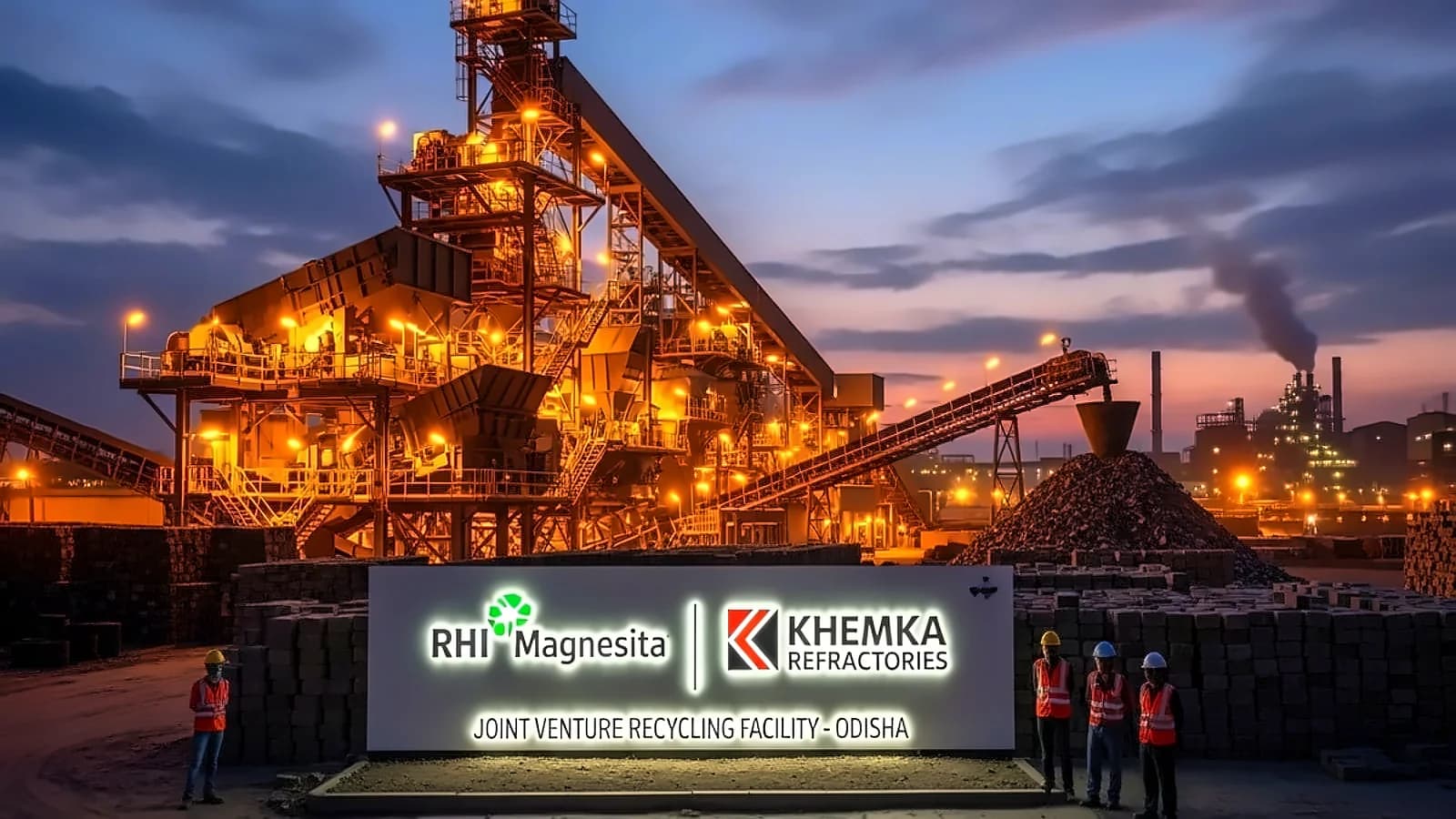
RHI Magnesita-Khemka Refractories joint venture for Odisha recycling plant
RHI Magnesita India posts ₹518.11 cr Q4 loss, recommends ₹2.50 dividend
The Quarter story
The two most recent quarterly results, compared side-by-side.
RHI Magnesita India strengthens pricing and balance sheet while navigating sharp volume and cash flow contractions.
Average Realisation rises from ₹73,237 in Q2 FY26 to ₹83,175 in Q1 FY27, confirming strong pricing power.
Cash conversion intensity falls from 38% in Q2 FY26 to 0.3% in Q1 FY27, indicating a severe cash trap.
EBITDA Margin improves from 10.7% in Q2 FY26 to 14.5% in Q1 FY27, reflecting better operational efficiency.
EBIT declines from ₹10,050 in Q3 FY26 to ₹97 in Q1 FY27, signaling sharp margin compression.
Net Debt shifts from ₹19,977 in Q2 FY26 to a net cash position of ₹-6,895 in Q4 FY26, strengthening the balance sheet.
Operating Cashflow drops from ₹28,926 in Q3 FY26 to ₹81 in Q1 FY27, pointing to a slowdown in cash generation.
Receivables intensity drops from 29% in Q2 FY26 to 25% in Q1 FY27, showing faster customer collections.
LTIF increases from 0.01 in Q3 FY26 to 0.13 in Q1 FY27, reflecting a spike in safety incidents.
Safety Training Hours increases from 13,000 in Q4 FY26 to 27,000 in Q1 FY27, highlighting a stronger focus on workplace safety.
EBITA falls from ₹12,149 in Q3 FY26 to ₹118 in Q1 FY27, indicating operational strain.
Company insights, generated from the most recent coverage.
Revenue growth of +16% with EBITDA margin of only 11.62% shows RHIM is scaling top line faster than it can convert it into profit — margin, not demand, is the swing factor.
All 3 covering analysts are on Buy with zero Hold or Sell — positioning is one-sided, so any margin disappointment has no cushion of bearish expectations.
Fresh institutional ownership replacing a single promoter-group holder should raise the free-float and index-tracking demand, but also removes a strategic anchor shareholder.