YouTube is implementing automatic AI-generated video detection systems starting in May 2026, as reported by Business Standard. The platform will automatically apply AI labels to videos when creators fail to disclose realistic AI-generated content, even if creators have not manually added disclosures. Creators will retain control over their content and can update disclosure settings through YouTube Studio if videos are incorrectly flagged. However, AI labels will remain permanent in certain situations, including videos created using YouTube's AI tools like Veo or Dream Screen, and videos containing C2PA metadata showing full AI-generation. Creators are still expected to manually disclose when realistic AI is used, and those who think their content was incorrectly identified as AI-generated can update the disclosure status in YouTube Studio. The rollout begins on mobile and will extend to desktop and smart TV surfaces in the coming weeks.
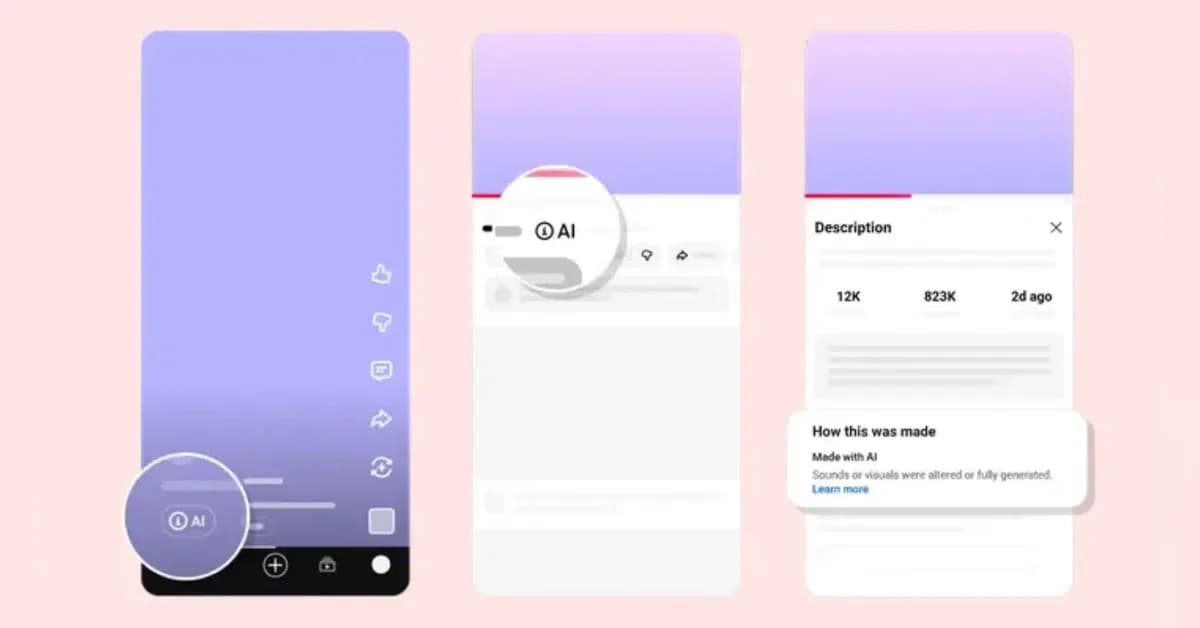
YouTube is moving disclosure labels for photorealistic and meaningfully AI-generated videos to more visible areas of the platform, according to Business Standard. For long-form videos, the AI label will appear just below the video player and above the description for content that is photorealistic and may fool people, rather than unrealistic content. For Shorts, the disclosure will appear as an overlay directly on the video. Videos that are animated, unrealistic, or only slightly altered using AI will continue showing disclosures inside the expanded video description instead of the main label placement. The company clarified that these labels will not affect monetisation or recommendations, with YouTube CEO Neal Mohan signaling in January 2026 that "managing AI slop" was a top priority for the year. The platform is also leveraging the C2PA content provenance standard, which embeds cryptographic metadata in media files indicating how they were created, and Google's SynthID watermarking technology feeds into this detection pipeline.
Alongside AI updates, YouTube has introduced custom discovery feeds that allow users to generate personalised recommendation feeds using prompts, as reported by Business Standard. Users can access the feature by tapping the 'Your custom feed' chip on the Home page, entering custom prompts, and selecting suggested prompts if needed. The generated feeds can be pinned to the top of the Home page as custom chips for quicker access. Some example prompts include 'Give me something different beyond my usual feed' and 'Help me unwind after work with guided meditations under 10 minutes'. The feature is currently rolling out in English for signed-in users in the US on YouTube mobile apps and desktop, with YouTube search and watch history must be turned on for the feature to work.
These updates come as AI-generated content becomes increasingly common on YouTube, with creators required to disclose realistic AI-generated content since 2024, according to Business Standard. The company stated that the goal behind these changes is to help viewers better understand the kind of content they are watching as AI-generated videos become more realistic online. YouTube emphasized that the labels are informational and are not meant to punish creators using AI tools responsibly, focusing instead on transparency and viewer understanding of content origins. The updated labeling applies to content that is photorealistic and may fool people, while disclosures for content that is "unrealistic, animated, or slightly altered" will continue to be tucked in the expanded description of the video. The new system flips YouTube's prior approach where voluntary disclosure rates were low, and labels that did exist were hard to find.