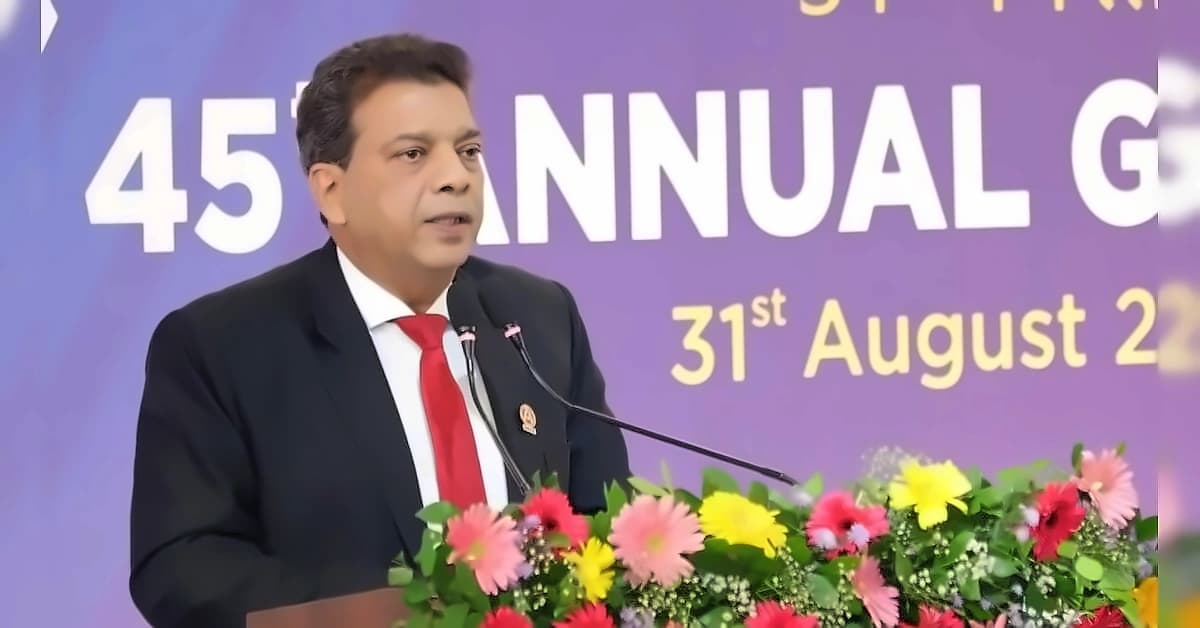
Meta Platforms has appointed Kunal Shah, founder of CRED, as the new global head of WhatsApp after investing ₹8,550 crore (around $900 million) in the Indian fintech startup as part of its Series H funding round. According to reports from Business Standard, Shah's appointment started with a cold email from Meta Chief Product Officer Chris Cox in the spring, seeking advice on picking the future leader of WhatsApp. Cox had been calling entrepreneurs and investors in places like India, Brazil and Mexico, countries where WhatsApp is a dominant part of business and culture, and Shah's ideas about the future of the app left an immediate impression. As reported by Bloomberg, Cox recalled that "He had an incredible set of answers," and at the end of the call, he asked Shah if they should discuss him doing it. Over the three-month hiring process that involved multiple trips for Shah to Meta's headquarters in California, including dinner at Zuckerberg's house, Cox developed a keen sense that Meta would benefit from someone who lives with WhatsApp in a way that few in the US can fully appreciate. "It's almost like speaking a language," Cox said of understanding the app's usage in markets like India, "There's a lot of intuition that comes with that that's hard to gather by having someone explain it to you or even learning it on a research trip." Shah will continue to be based out of Bengaluru, at least for the near future, this person added. Though he will travel to Meta's Menlo Park headquarters in the next few weeks for his leadership transition, he will mostly run WhatsApp's global operations from India itself, without completely ruling out a permanent move.
Miten Sampat, who has been associated with CRED since 2020 and led the company's strategy and finance functions, has been appointed as interim CEO following Shah's departure. According to The Times of India, Shah described Sampat as the executive who has been handling strategy and finance while also "suffering me since 2020." Sampat's appointment places one of the company's longest-serving senior executives at the helm while CRED's board evaluates the company's future leadership structure. Before joining CRED, Sampat worked across several leadership roles in technology, media and investment firms, including serving as business head at Times Internet's Times City business and chief strategy officer in 2014. As reported by The Times of India, Sampat has also worked as an angel investor and adviser, with PitchBook data showing investments in companies including Truva, GoCredit and FinRight. In his own message, Sampat reflected on his six-year journey at CRED, noting that the company had nearly one million members and processed around $750 million in total payment volume when he joined, compared to now serving 17 million members and processing $100 billion in total payment volume. The Meta deal marks a steep valuation reset from Cred's pandemic-era peak, when it raised capital from GIC and others at a $6.4 billion valuation in 2022. It made multiple attempts to raise funds before it closed a $72 million internal down round led by GIC in May last year which pegged the company's fair market value at $3.5 billion. In December, the company undertook an internal exercise that pegged Cred's fair value at $1.2 billion, though this represents a compliance document that sets the floor price rather than investor valuation. The pressure now shifts to interim CEO Miten Sampat, who must aggressively scale growth, capture market share, and bridge the gap to profitability to justify Meta's generous valuation.
Cred announced on Monday that tech giant Meta will invest ₹8,550 crore (around $900 million), in what is among the largest financing deals for an Indian fintech startup. The transaction comprises $400 million in secondary stake purchases and $500 million in primary capital infusion. Shah will step away from day-to-day operations at Cred, though he will remain a shareholder with his stake now less than 20%. The deal values Cred at ₹43,239 crore (about $4.5 billion) post-money, with Meta joining Cred's cap table as a minority investor with less than 20% shareholding and no access to the company's customer information. About $400 million of this consists of a secondary share sale, allowing existing investors like Peak XV and Tiger Global to book returns. The remaining $500 million, comprising primary capital, will be injected into Cred to accelerate its growth plans. Meta's goal of monetizing WhatsApp aligns with this strategic investment, as Indian consumers lead with an estimated 850 million users, making Shah's appointment particularly strategic for the platform's growth in this critical market. Meta's aggressive expansion in India is highlighted by its landmark $900 million investment in Cred, valuing the fintech firm at $4.5 billion. By acquiring this 20% stake alongside Shah's appointment, Meta gains a strategic foothold in two of India's top 10 UPI service providers, a space currently dominated by PhonePe and Google Pay. Meta's entry at $4.5 billion represents a modest uptick over the internal baseline—all without securing a board seat. Since its inception, Cred has raised nearly $1 billion from marquee global investors such as Tiger Global, GIC, and Ribbit Capital. Cred's deep integration into the premium consumer economy—it processes over 40% of India's credit card bills and manages a lending business with $2.5 billion of assets under management for 17 million monthly active users—now becomes the ultimate sandbox for WhatsApp's commercial ambitions.
Kunal Shah is a serial entrepreneur, angel investor, and fintech leader born on May 30, 1979, best known for founding CRED, a members-only credit-card bill payment rewards platform. Born in Ahmedabad and raised in Mumbai, Shah studied philosophy at Wilson College in Mumbai before enrolling in an MBA programme but choosing to drop out before completing it. His entrepreneurial breakthrough came in 2010 when he co-founded FreeCharge with Sandeep Tandon, enabling users to recharge mobile phones and pay utility bills while earning rewards. As smartphone adoption and digital payments accelerated across India, FreeCharge emerged as one of the country's most recognisable internet brands, with Snapdeal acquiring it in 2015 in a deal valued at around ₹2,800 crore, making it one of the largest startup acquisitions in India at the time. Following his exit from FreeCharge, Shah spent several years as an angel investor, backing more than 250 startups, including several unicorns, while also mentoring hundreds of entrepreneurs. As reported by Business Standard, Shah champions the startup and financial services ecosystem in India through angel investments, advisory positions, and positions in influential industry organisations. He has been an advisor to Sequoia Capital India (now Peak XV), Bennett Coleman and Co Ltd and was on the board of Pine Labs (a large Indian fintech). He has also served as chairman of the Internet and Mobile Association of India, the apex body for Indian internet companies. Shah's philosophy background may sound like an odd subject for a tech entrepreneur, but his family had gone bankrupt and he worked as a delivery boy and data-entry operator, with only philosophy classes held from 8 am to 10 am - a time slot that suited him. Shah has leveraged his experience into a large audience on X, formerly Twitter, where he often posts his views on tech, entrepreneurship and even philosophy to 1.1 million followers. Saahil Goel, managing director and CEO of Shiprocket, where Shah has invested, said his ability to simplify complex problems and push founders to think bigger always stood out. Chris Cox, Meta's Chief Product Officer, had this to say in an internal memo to employees: "The company was looking for a leader with an intuitive grasp of the immense, global product potential for WhatsApp, who could navigate the shifts that artificial intelligence will bring, and who has the seriousness to lead the world's largest communication service." Cox's note repeatedly highlights that founder instinct, describing Shah as "a serial founder and one of India's most respected entrepreneurs" and crediting him with bringing "immense entrepreneurial energy combined with a natural humanism."
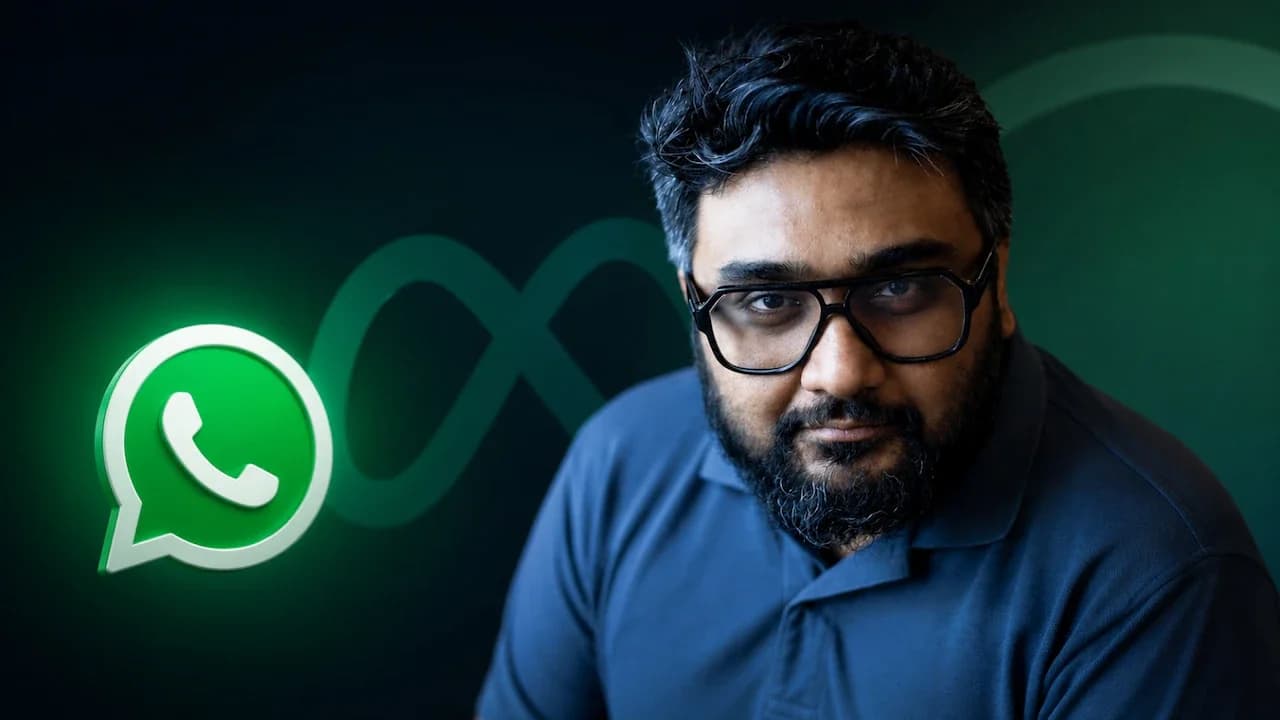
India represents WhatsApp's largest consumer base with over 850 million estimated users, making Shah's appointment particularly strategic for the platform's growth in this critical market. WhatsApp has evolved significantly in India from just a messaging app to offering comprehensive services including web WhatsApp, WhatsApp Pay, and other features. According to The Times of India, WhatsApp Pay has gathered pace after the removal of user-onboarding restrictions, processing more than 150 million monthly UPI transactions and capturing around 0.65% market share, according to NPCI data. However, it remains far behind PhonePe and Google Pay, which together account for nearly 79% of UPI transactions. Meta's decision comes as the company doubles down on India and steps up efforts to monetise the platform through payments, business messaging and AI. Business messaging has emerged as a key growth engine for Meta, with revenues from paid messaging services crossing a $2-billion annualised run rate in the Dec 2025 quarter. The company has also been pushing AI tools for businesses on WhatsApp, enabling merchants to automate customer interactions and sales. Meta's family of apps (FoA), which also includes Facebook, Instagram, Messenger, and Threads, saw March-quarter revenue rise 33% to $55.91 billion. Within this, FoA's 'other revenue' was up 74% at $885 million, driven primarily by WhatsApp paid messaging and subscriptions revenue, with the rest coming from advertising. WhatsApp's paid messaging business crossed a $2 billion annual run rate in the quarter ended December 2025. Another executive recalled publicly criticising CRED on social media several years ago, only to receive a request from Shah for a phone call to discuss the feedback, highlighting his willingness to engage directly with criticism. WhatsApp recognizes that India is its biggest market globally, so there is a great chance for Meta to build commercially monetizable products in India and take them to the rest of the world. Kunal's role is a testament to that, said an executive privy to the developments. "While it's come very far, the delta between WhatsApp today and its full potential is massive," Shah posted on X, "the delta between WhatsApp today and its full potential is massive."