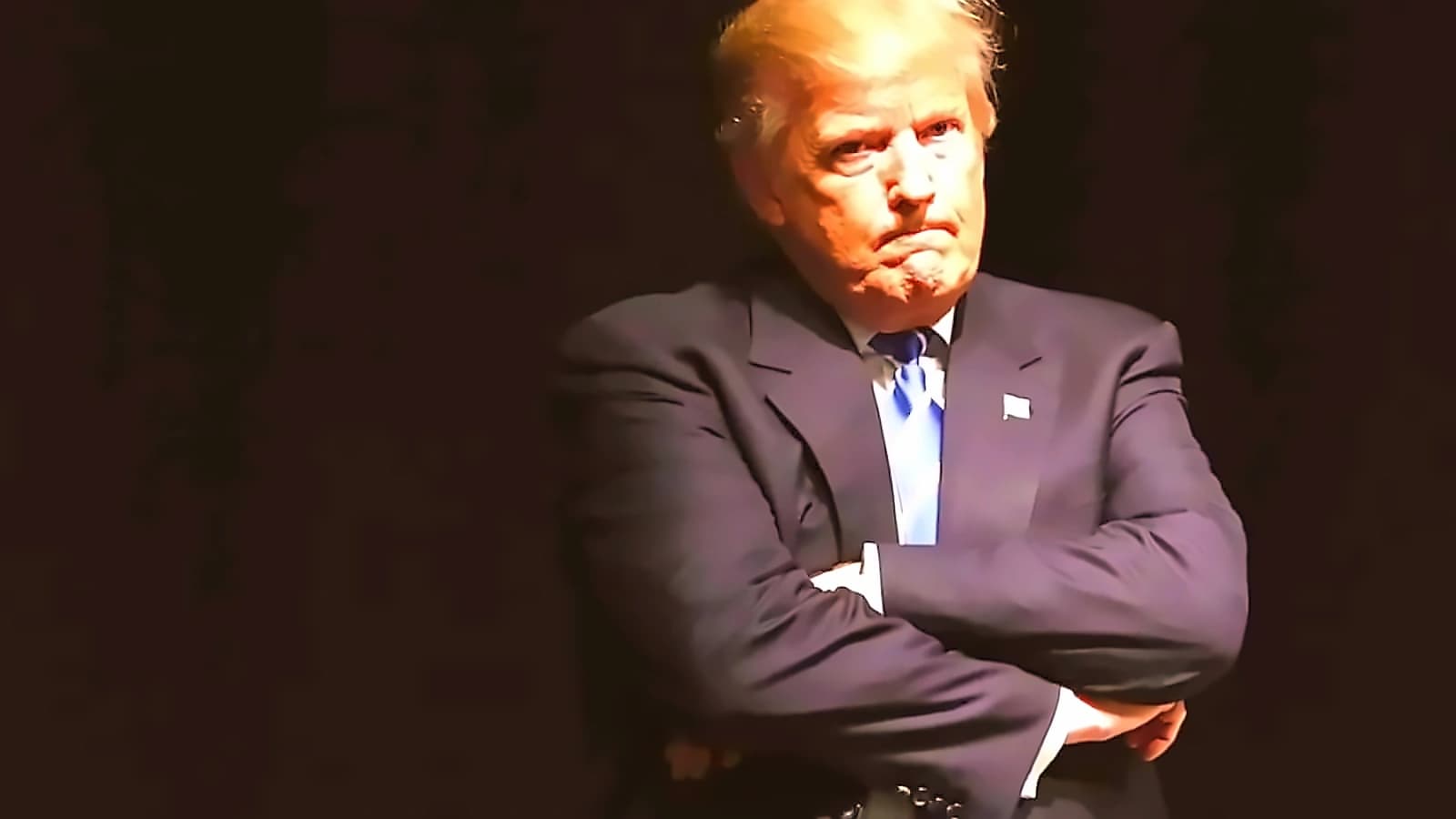
President Donald Trump dismissed calls for increased AI controls as a 'sick conspiracy' in a social media post on Monday, arguing that 'the only control or 'guardrails' that AI needs is a STRONG AND SMART (High IQ!) PRESIDENT, and the USA has that, in spades!' The president added that his administration had 'stopped AI 'people' from doing bad, or potentially bad, 'things,' like Dario (Anthropic!)' and warned of a 'SICK conspiracy going on against AI and Data Centers, and the only one that is happy about it is China.' Trump's statements came after the CEO of Anthropic, Dario Amodei, appealed at the weekend for the AI industry to 'slow down' development, warning that 'building too fast is reckless' and that a swarm of AI agents could cause hundreds of billions of dollars of damage by 'taking over the entire internet' in future. The president specifically criticized tech CEOs seeking regulation, posting on social media, 'when, in the History of Business, did anyone see the Leaders of an Industry call for Regulation that, if strongly implemented, will drive them into oblivion and bankruptcy?'
Nvidia shares fell 3.36% by market closing in New York City, making it the world's most valuable company, while Advanced Micro Devices (AMD) and Intel slid more around 5%. The tech-heavy Nasdaq Composite index closed lower by only 0.56% after recovering from early session lows, with the sell-off affecting major semiconductor suppliers globally. Arm Holdings fell 9.7% and ASML dropped 7.2%, while Micron Technologies tumbled 5.2% and CoreWeave, a key supplier of data centers and cloud computing to AI firms, fell 6.7%. The Philadelphia Semiconductor Index plunged 5.8%, its worst day since July, with Caterpillar, which is involved in the buildout of AI data centers, tumbling 4.2%. SoftBank Group fell 10.7% in Tokyo, while Samsung Electronics sold off by 5% and SK Hynix plunged more than 7.3% in Seoul. The market decline came after investors began pricing in a potential slowdown in AI development that would make it harder for the industry to pay for hundreds of billions of dollars in investments in AI infrastructure.
OpenAI CEO Sam Altman, Google DeepMind chief Demis Hassabis, and SpaceX boss Elon Musk all posted support for Amodei's essay on slowing AI development, titled 'We Must Pace the Frontier'. Altman told Fortune magazine Saturday that OpenAI would not be going public this year, stating 'Given everything happening with safety, right now would be an ill-advised moment to go public.' Altman added that he would match Amodei's commitment to embedding outside evaluators within his company to verify safety practices. The support from major industry leaders came as fears continue to grow over the rapid pace and lack of regulation in AI development. A cross-party group of UK MPs and peers identified a series of human rights risks posed by AI, arguing that no country in the world had laws sufficient to contain them. Meanwhile, China's Foreign Ministry overnight dismissed calls for a slowdown, with a spokesperson saying that 'fear-mongering' would only 'disrupt the process of global AI governance and serve no one's interests.'
Anthropic recently faced off in court after the US Department of Defense designated the tech company a supply chain risk in February. The Pentagon took this action after Anthropic refused to allow the military to use its AI models for tasks including surveillance or autonomous weapons. Anthropic then took the federal government to court, arguing that Defense Secretary Pete Hegseth had overstepped his authority. In August, a judge upheld Anthropic's complaint, ruling that the Defense Department's action was 'illegal and baseless'. This legal battle highlights the growing tensions between AI companies and government agencies over military applications of artificial intelligence technology.
House Speaker Mike Johnson, R-La, told reporters Monday that he expects Trump will have the AI companies potentially meet at the White House this week or next week, saying that the sit-down has yet to be scheduled. 'There will be a deliberate discussion about the responsibility of the companies to maintain safety, and what role, if any, the government has to play in that,' Johnson said, adding that legislatures can tend to respond problematically with 'red tape and hyper regulation' and that the loss of competitive edge on AI would be a national security concern. Vice President J D Vance told reporters Monday morning about AI, 'I don't think Americans should be scared of anything.' Vance, speaking as he prepared to fly to Kansas for a mid-term election campaign event, said the Trump administration is concerned about AI but wants to make sure it is regulating the technology smartly, warning that the US is in an 'AI arms race against China.' However, Vance expressed concerns about 'so many frontier AI tech companies kind of coming to the government and begging the government to regulate them', stating 'It feels a little bit to me like a bit of a Trojan horse.'