Amazon's Prime Day 2026 event is now in its final day, running until 11:59pm AEDT on Monday, July 13. The Tom's Guide Australia team is providing real-time live coverage, posting the best deals as they surface throughout the day. With only hours remaining, deal hunters have their last chance to score significant savings on thousands of products across Amazon's massive inventory. The event has delivered substantial discounts across categories including smartphones, laptops, home appliances, and consumer electronics, with many deals representing all-time low prices on popular items. Latest reports indicate that 62 last minute deals are still available through the weekend, with some retailers continuing to offer deal prices even after Amazon's official Prime Day ends.
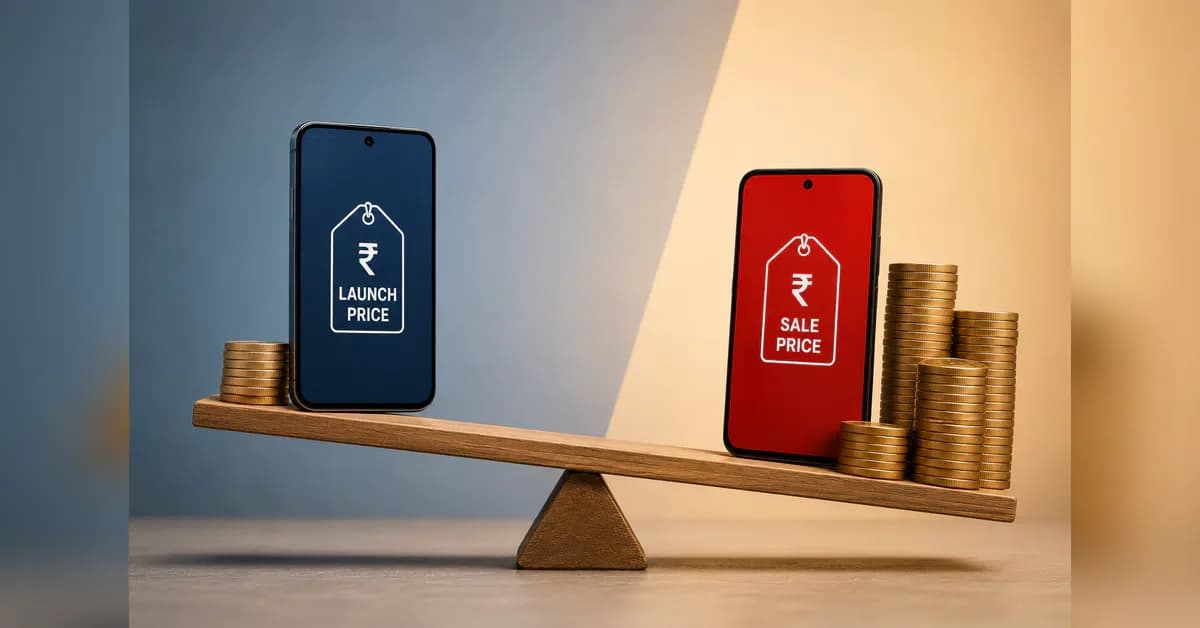
A comprehensive analysis of smartphone pricing during major sales events reveals that many discounts are merely reversals of earlier price increases rather than genuine savings. According to reports from Business Standard, a TechArc study of 50 smartphones across 10 brands found that 34 models (68% of the sample) were selling above their launch prices by June 2026, even before the sale season began. The study also found that the average smartphone on both Amazon and Flipkart continued to sell above its launch price even after the sales ended. This trend is evident across major brands including OnePlus, Samsung, Nothing, and Lava, where many headline-grabbing discounts turn out to be little more than rollbacks of earlier price increases. During Prime Day 2026, this pricing reality continues to influence consumer decisions, with many smartphone deals offering minimal real savings compared to launch prices.
OnePlus' current portfolio demonstrates the pricing trend clearly, with newer devices showing minimal real discounts. The OnePlus 15R (12 GB + 256 GB) launched at ₹47,999 before increasing to ₹54,999, and was available for ₹48,999 during Amazon Prime Day after a ₹3,000 bank discount. Against the revised list price, this appears as a 10.9% discount, but compared with the launch price, buyers still paid 2.1% more. The OnePlus 15 followed a similar pattern, launching at ₹72,999, later increasing to ₹85,999, and being offered at ₹81,999 after bank offers. The OnePlus Pad Go 2 launched at ₹26,999, rose to ₹28,999, and was offered at ₹26,499 during the sale, representing an 8.6% discount against the revised price but only 1.9% savings compared with launch. The exception is the OnePlus 13, which having already depreciated to ₹54,999 before the sale, well below its ₹69,999 launch price, was available for ₹49,999 during Prime Day, translating into a genuine 28.6% discount against launch.
Samsung's approach shows a more nuanced pricing strategy, with flagship devices delivering genuine discounts while budget models maintain higher prices. The Galaxy S25 launched at ₹80,999 and was listed at ₹56,999 on Flipkart, while the Galaxy S25+ launched at ₹99,999 and sold for ₹67,999. The Galaxy S25 Ultra was available on Amazon for ₹84,999 compared with its launch price of ₹129,999, representing the largest genuine discount at 34.6%. However, Samsung's budget portfolio shows different dynamics, with the Galaxy F36 launching at ₹17,499 before increasing to ₹21,999, and being listed at ₹17,999 during the sale. The Galaxy F70e launched at ₹12,499, later increased to ₹15,499 and was offered at ₹12,999 during Flipkart's sale. TechArc's analysis identified Samsung as the strongest performer on genuine discounts with an average real discount of 24.7% for flagship S-series models, though this conclusion does not extend to F-series and M-series devices where higher memory costs appear to have been passed on almost entirely to consumers.
The analysis reveals significant differences between sticker discounts and real savings across major e-commerce platforms. According to TechArc's findings, Flipkart's average sticker discount of 5.5% translated into a real discount of only 3.7% compared with launch prices, while Amazon's average sticker discount stood at 2.3% with average selling prices remaining 7.1% above launch levels. Only about 30-33% of smartphones on either platform qualified as offering genuine "real discounts," while around 40% of Amazon listings and 18% of Flipkart listings offered no real discount at all. The study found a clear relationship between earlier price increases and sale discounts, with devices experiencing modest price increases generally delivering genuine discounts, while phones seeing the largest price hikes continued to sell above their launch prices despite prominent sale banners. Newer models introduced after memory costs began rising first saw price increases that were only partially reversed during the sale, while older models that avoided those increases offered the biggest real savings.
The pricing trends are closely tied to developments in the global memory market, with memory manufacturers shifting capacity towards high-bandwidth memory for AI data centres. As reported by Business Standard, Micron has signed multi-year take-or-pay agreements extending to 2030, locking in pricing above historical levels. Navkendar Singh, associate vice-president at IDC India, indicated that the impact of higher memory costs is unlikely to ease before 2028 and could extend into 2029 or 2030. Smartphone brands adjusted prices during the first half of 2026 to reflect these higher component costs, with many of these increases already in place for months by the time Amazon Prime Day and Flipkart's GOAT Sale began, explaining why many headline discounts merely reversed earlier price hikes instead of taking devices below their original launch prices.