Pope Leo XIV's encyclical Magnifica Humanitas has evolved beyond philosophical debate to provide ethical guidance for AI governance in contemporary society. The Pope emphasizes that technology itself is not inherently negative, but the application and governance of AI pose potential risks. He warns against the concentration of power in the hands of a few corporations, advising that AI must serve humanity rather than dominate it. The encyclical draws a parallel to the past, invoking Rerum Novarum which grappled with labor rights in a capitalist landscape, suggesting similar need for empathy and ethical considerations as we navigate the unknowns of an algorithm-driven world. What is needed in this historic moment, Leo teaches, is a united global effort. No single company or country can solve the AI arms race alone, but if actors come together and agree to protect human dignity and the common good in the age of AI, they can collectively use their power to avert a crisis.
The encyclical faces significant diplomatic hurdles, with rising skepticism about multilateralism that Leo laments in the document. At a time when global coordination is most needed, confidence in organizations designed for this purpose — like the United Nations — is at a low point. As reported by National Catholic Register, "It would take an understanding that we can't afford to be blocked by ideology here," said Camosy. "The fate of the human race may be at stake." The effort is also a race against the clock, with AI progress hurtling forward at breakneck speed. "There's no way for us to see the future anymore – the horizon has become too short," said Green. "I talked to people who do planning at tech companies, and they said they used to plan for three years out, but now with AI, they only plan 18 months out, or even 12 months." Some experts suggest that the Church may be particularly suited to play such a mediating role, unlike national governments with their own temporal interests in AI.
The encyclical draws on Christian theological principles, particularly Saint Augustine's 5th-century analogy of the divine nature as Father (mind), Son (self-knowledge), and Spirit (self-love). As reported by Business Standard, the Pope argues that humans, created in God's image, share the ability to form self-understanding through self-knowledge and can love themselves, creating a relational consciousness. In contrast, AI systems do not meet these criteria for human-like consciousness, with the burden of proof on those claiming AI can engage in introspection or experience emotions. The encyclical's message comes as AI technology captivates attention, with the Pope asking readers to remember that AI tools are impressive but pedestrian compared to human beings' inherent dignity and grandeur.
The encyclical acknowledges both AI's enormous potential to improve human welfare and significant risks to human flourishing. As reported by Business Standard, the Pope warns of potential negative impacts including autonomous warfare, inequality exacerbation, privacy violations, mass unemployment, and reduced human connection. However, the encyclical also highlights AI's potential to accelerate pharmaceutical innovation, enhance healthcare and education accessibility, create jobs, and raise living standards. The Pope emphasizes that AI's creative intelligence must remain ordered toward the common good, justice, and care of the vulnerable. The document's message is particularly relevant as society continues to evolve in this digital age, with experts comparing the current AI race to the nuclear arms race that defined the 20th century. "To be on the most dramatic side possible, the survival of humanity [is at stake]," said Charles Camosy, a moral theologian at The Catholic University of America.
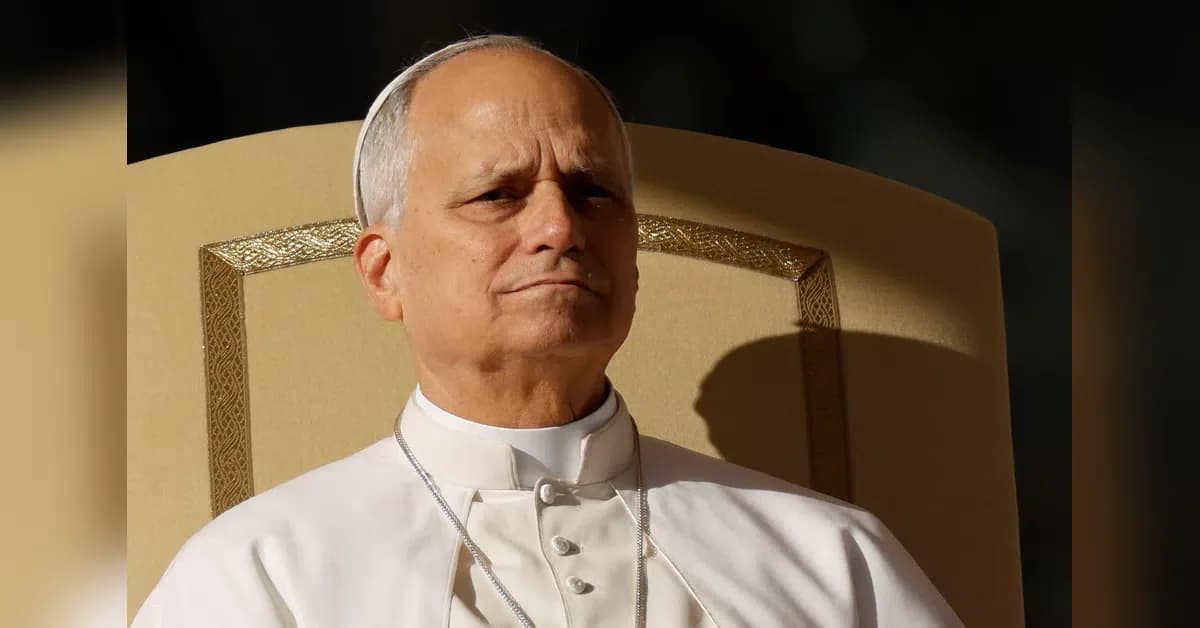
The encyclical has already raised awareness of AI dangers, with tech giant OpenAI now calling for "an international organization that helps coordinate leading AI efforts to reduce catastrophic risk," and other companies like Anthropic calling for a "global freeze" on AI advances. Vice President JD Vance has called Magnifica Humanitas "profound," while Anthropic co-founder Christopher Olah's presence at the May 25 launch helped generate interest in the Pope's perspective in Silicon Valley. "I have no idea what the origin of this interest is in AI, but I will say that I think he's exactly the right person for this," said Green, who called the Pope "the man of this moment." However, experts warn that the prospects of meaningful international agreements on AI look very poor. "Right now, it looks very poor," said Carozza of the chances of reaching such agreements. The biggest challenge remains China's reluctance to cooperate, with the Chinese government "absolutely not willing" to negotiate restraint, according to Green.