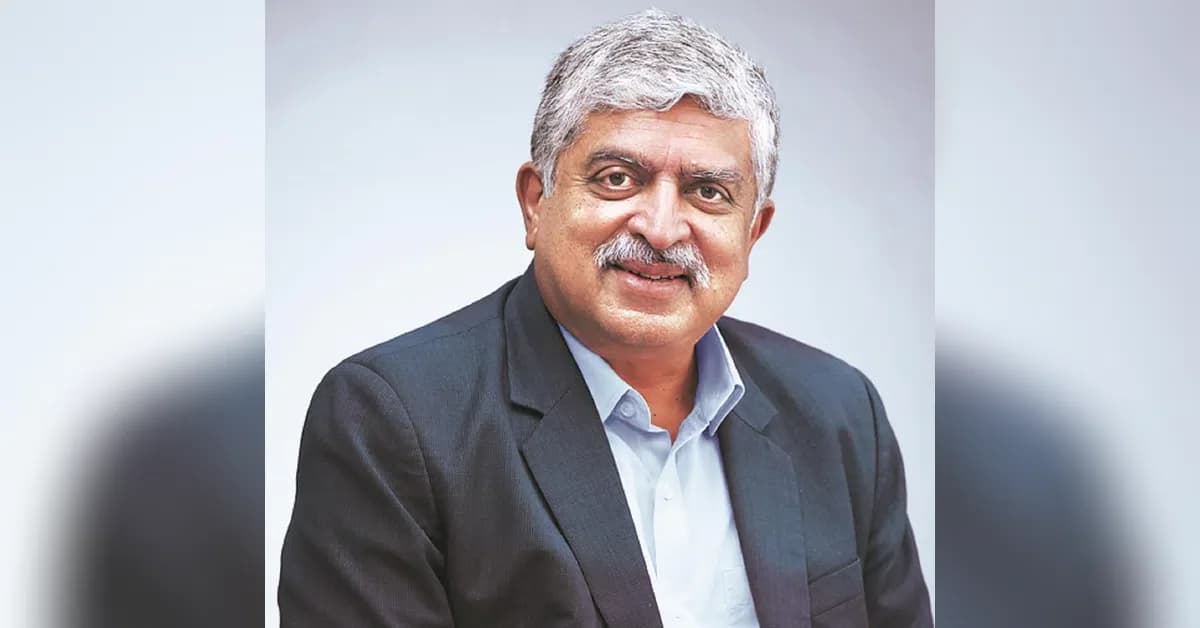
Nandan Nilekani, chairman of Infosys, emphasized that IT services companies like Infosys have a crucial role in bridging the AI deployment gap for their enterprise clients. According to reports from Business Standard and Rediff Moneynews, Nilekani stated at the company's 45th annual general meeting on Tuesday that the AI deployment gap in large enterprise clients is real and closing that gap represents the primary opportunity for the sector. He noted that while AI, generative AI, and agentic AI are improving productivity and efficiency, deployment and adoption across enterprises have proven more challenging than anticipated due to issues including change management and fragmented data. At the AGM, Nilekani addressed the existential question being raised about the industry's relevance, stating that "AI will not replace companies like ours. It will amplify those who move with purpose and adapt with speed." He explained to shareholders that "More than three years after GenAI was launched, Infosys is more relevant than ever before and well positioned for the decade ahead. While we embrace the best coding tools and improve our productivity, there is much more to do in the software development life cycle."
The chairman emphasized that the AI era requires fresh learning and new mental models, with Infosys systematically preparing its talent for this new era. As reported by Business Standard, Nilekani explained that the company is redeploying those released through productivity gains toward new areas of growth. In FY26, Infosys recruited over 20,000 college graduates and ended with a workforce of over 3,25,000 employees. The company recently unveiled its AI-first value framework to help global enterprises unlock AI value at scale, positioning Infosys to tap into an AI-first services opportunity of $400 billion by 2030. At the AGM, Nilekani added that "At Infosys, our purpose is to amplify human potential and create the next opportunity for people, businesses, and communities."
The chairman acknowledged that while companies embrace advanced coding tools and improve productivity, there remains significant work in the software development life cycle as context remains paramount in enterprise environments. As reported by Business Standard and Rediff Moneynews, Nilekani explained to shareholders that solutions must complement existing investments, demand rigorous testing, resilient architecture, and foundational cybersecurity. He emphasized that data governance must reflect an organization's obligations rather than external platform convenience, with the preference shifting toward building versus buying for software development. At the AGM, Nilekani pointed to the growing preference among enterprises for building software solutions rather than buying them off the shelf, creating even larger opportunities for IT services companies. He noted that "Our clients trust Infosys to bring hard-earned learning to help them navigate the complexities of enterprise AI. Infosys is fully prepared to deliver on that trust and help our clients navigate the next."
The AI revolution has created urgency for legacy modernization that nothing else has achieved, with clients moving to retire technical debt accumulated over decades. According to Business Standard and Rediff Moneynews, Nilekani explained that the AI revolution has made legacy modernization urgent, and clients are moving to retire technical debt accumulated over decades. The preference will be to build versus buy for software development, creating even larger opportunities for IT services companies. At the AGM, Nilekani highlighted that "The defining opportunity lies in integrating intelligent AI systems with mission-critical enterprise platforms. The greatest value will come from combining the world of models and agents with traditional transaction systems that continue to underpin enterprise operations. That convergence is where the next wave of opportunities will emerge."
Despite market concerns, Infosys delivered robust financial results in FY26 and maintains strong client relationships in the AI transformation journey. The company delivered $20.2 billion in revenues, growing 3.1% in constant currency, demonstrating resilience in the challenging AI transition period. Large deal TCV (total contract value) for fiscal 2026 was $14.9 billion, with 55% being net new. At a time when the BSE IT index has fallen more than 26% year-to-date (YTD), with Infosys stock declining 36% YTD, Nilekani had earlier described AI not as an opportunity risk but as an execution risk. Shareholders who spoke at the AGM expressed concerns not only over the company's stock performance and the limited impact of buybacks on investor sentiment, but also sought clarity from the board on the continuation of CEO and MD Salil Parekh and Infosys' investment roadmap to stay ahead in the AI age. The company's strong client collaboration is evident with Infosys already collaborating with 90% of its top 200 clients on their AI journeys.