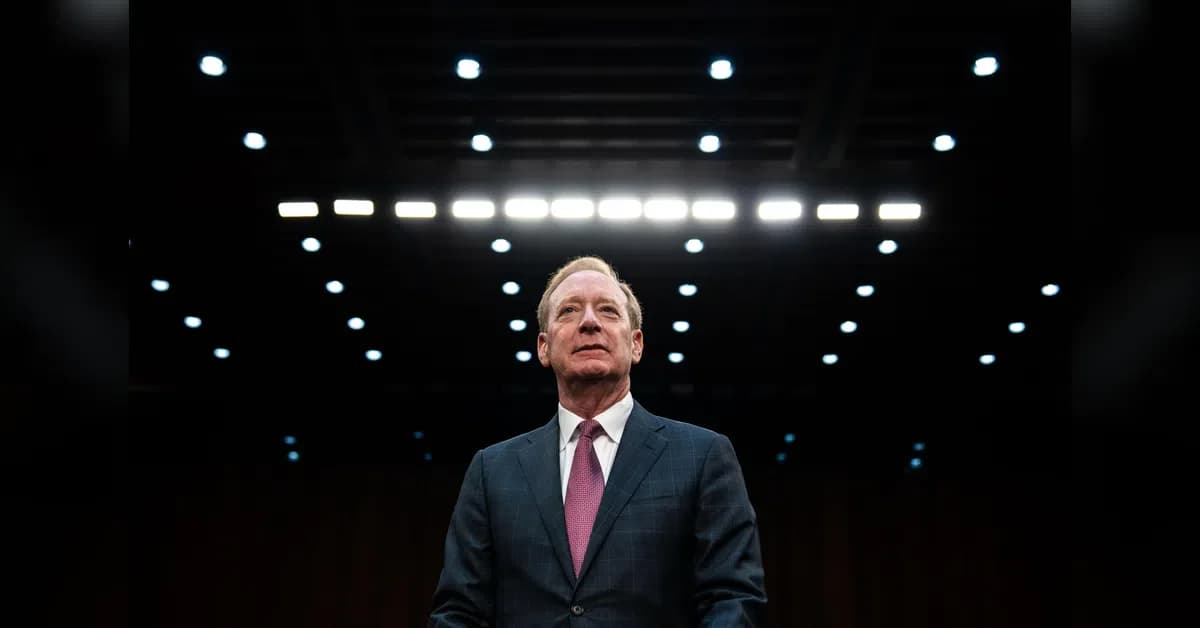
Microsoft Vice Chair Brad Smith experienced firsthand the growing concerns among young people about artificial intelligence's impact on their future during a recent visit to his alma mater, Princeton University. According to Smith's blog post, 'AI, jobs, and the next generation', the reactions of this year's graduates represent a powerful wake-up call for the tech sector. Smith noted that college campuses are among the best places to learn about emerging views on AI, as the youngest generation has historically led adoption of new digital technologies for the past half-century.
The most tangible expression of these concerns has intensified with the Class of 2026 making its displeasure with AI abundantly clear by loudly booing speakers touting the technology during commencement speeches. As reported by Smith, class officers rejected a popular design that had been created with AI assistance after responding to a student petition. Instead, graduates wore jackets labeled '100 per cent cotton' and '100 per cent human' to emphasize their preference for natural materials over artificial intelligence-generated designs. According to The Times of India, this rejection illustrates how human tastes shape market economics even as efficiency and productivity advance, with machines not buying products; people do.
Smith's analysis reveals that today's graduates are sending another powerful message beyond employment concerns - that the American Dream has always stood for more than better jobs and greater economic opportunity. As reported by The Times of India, Smith believes graduates are reminding the tech industry that the American Dream has been founded on the dignity of work and the critical role it plays in giving life purpose. He emphasizes that great countries are built on great economies and great jobs, and that great economies are built on great jobs. To those in the tech sector who seemingly want to pursue a future where computers replace jobs and AI becomes more capable than people, the next generation has offered a compelling response: 'not so fast'.
Smith's analysis reveals that while students and graduates recognize AI's benefits, they want to maintain human control over its role in society and the future of work. According to the Microsoft executive, 'They want the future to be determined by humans deciding the role of machines, not by machines deciding the role of humans'. This philosophy reflects a broader recognition that machines do not buy products; people do, demonstrating how human tastes continue to shape market economics even as efficiency and productivity advance through artificial intelligence. Smith notes that students and graduates recognize AI's benefits but want to keep AI in its proper place, rightly believing in the indispensable role of human agency.
For Microsoft, Smith emphasized that these student concerns have significant business implications beyond philosophical considerations. As reported in the blog, 'This isn't just philosophical. It's our business model'. Smith explained that 'Workers have been Microsoft's lifeblood from the start' and that if the world's people don't have jobs, neither does Microsoft. He added that 'if we're not doing our part to help people use technology to pursue better jobs, then we're not doing the job we were born to do', highlighting the company's commitment to human-centered technological solutions. The company is planning to lavish some $190 billion this year on capital spending, much of it for data centres and other infrastructure as part of its AI integration strategy. Meanwhile, CEO Satya Nadella has revealed that Microsoft is implementing comprehensive management tools for AI agents, including Agent 365 suite with Entra for digital identity and Purview for data labeling, as reported in the latest 'Possible Podcast' episode.