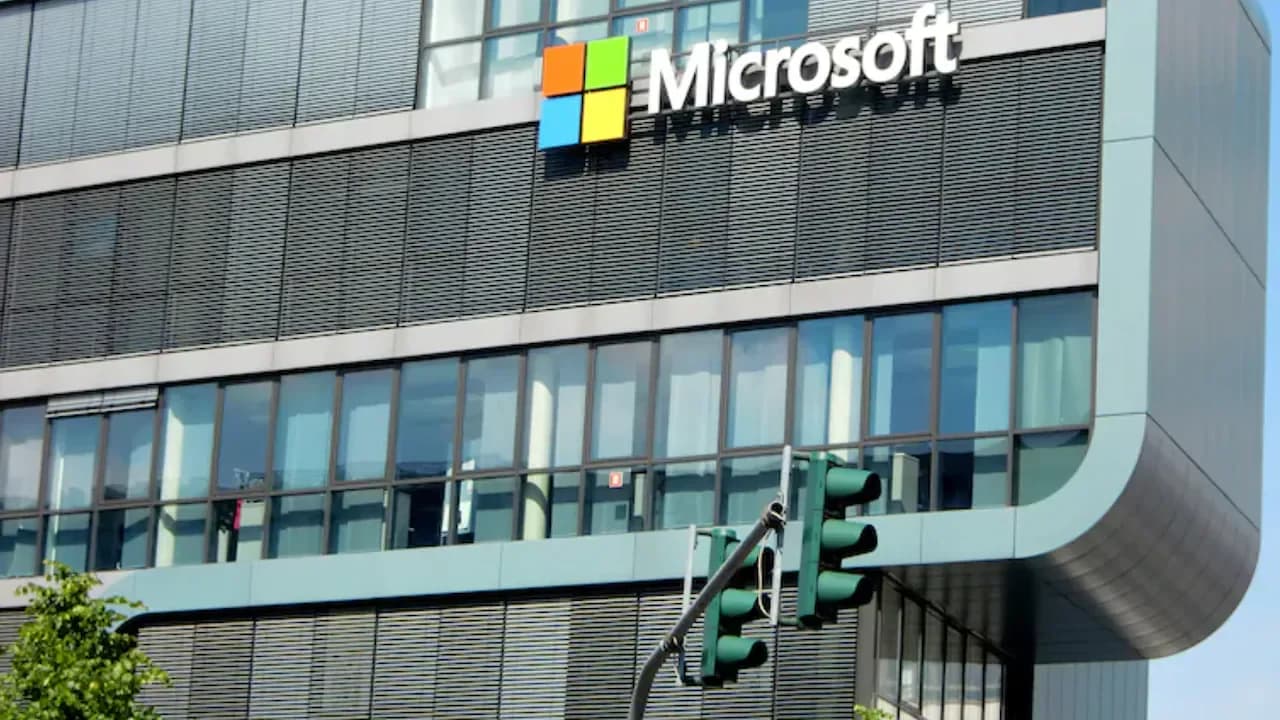
Microsoft has announced significant workforce reductions affecting 4,800 employees as part of its latest restructuring effort, representing 2.1% of the company's total workforce of approximately 228,000 employees. The layoffs come as the software giant spends heavily on artificial intelligence infrastructure and seeks to improve efficiency across its businesses. As per Reuters, this represents the latest in a wave of technology layoffs as Big Tech's AI spending, expected to exceed $700 billion this year, increases pressure on companies to demonstrate returns on those investments. Chief People Officer Amy Coleman acknowledged the unprecedented pace of technological transformation, writing that "the way technology is built, deployed, and used is transforming faster than at any point in my time here." In a memo to employees, Coleman stressed that "the roles eliminated today are not being replaced by AI" while acknowledging that AI is changing how work gets done. The company announced the cuts on Monday following a nearly 23% slump in its shares in the first six months of 2026, marking its worst first-half performance since 2022. According to The Economic Times, Microsoft shares fell more than 1% on Monday after the announcement, with the stock down 1.4% in trading. The cuts include about 600 jobs in Washington state, home to Microsoft's Redmond headquarters, which is down from 3,200 job reductions locally a year ago. However, as The Seattle Times reports, "Despite these changes, our overall presence in Washington state remains stable at 52,000 employees," with President Brad Smith confirming the company's continued commitment to the region.
The Xbox division is experiencing the most significant impact, with 3,200 jobs being cut through fiscal year 2027, representing approximately 20% of Xbox employees leaving the company. The division will implement a phased approach, with 1,600 roles being eliminated immediately on Monday, while the remaining 1,600 positions will exit over the next year. As Sharma noted in her email to division employees, "I recognize that a year-long restructuring creates additional challenges, unfortunately, it is not possible to make all the necessary changes in a single day." Sharma emphasized the urgency of the situation, writing that "Our business today is not healthy" and Xbox is operating at margins three to 10 times lower than comparable businesses. The CEO described Xbox's "accountability margin" as having fallen to 3% and annual revenue as having plummeted, stating "Going forward, this cannot continue." The company is implementing a comprehensive divestiture strategy across its gaming studios, with five of Microsoft's first-party development studios facing closure through forced sales or outright closures. According to Sharma's email to employees, Ninja Theory (Hellblade) and Undead Labs (State of Decay 3) will be sold to undisclosed buyers, though both studios will continue working on their current game projects, Senua and State of Decay 3, with Xbox. Double Fine (Psychonauts) and Compulsion Games (South of Midnight) will be spun out and return to private ownership under their founders, receiving runway funding and full ownership of their intellectual property catalogs. Arkane Studios (Blade) in Lyon, France, will begin a consultation process to "review potential strategic options" in the coming months, though this process will take longer due to stringent French labor laws. All five studios were purchased by Xbox under former CEO Phil Spencer's spending spree over the last decade, with Sharma noting that "in a typical year" Xbox was losing 64 cents for every dollar it invested in the business. "Excluding Activision Blizzard King, over the past five years, we have spent over $20 billion on ongoing investments in our content, platform and hardware subsidy, but our annual revenue has declined nearly half a billion during that time," Sharma said in her memo to employees. The Economic Times reports that the restructuring follows substantial investments in gaming, including Microsoft's $68.7 billion acquisition of Activision Blizzard, even after which Xbox has struggled to close the gap with Sony's PlayStation and Nintendo in console gaming. The company has also moved away from relying mainly on exclusive Xbox titles and is now taking more of its games to other platforms.
Microsoft is implementing a comprehensive divestiture strategy across its gaming studios, with five of Microsoft's first-party development studios facing closure through forced sales or outright closures. According to Sharma's email to employees, Ninja Theory (Hellblade) and Undead Labs (State of Decay 3) will be sold to undisclosed buyers, though both studios will continue working on their current game projects, Senua and State of Decay 3, with Xbox. Double Fine (Psychonauts) and Compulsion Games (South of Midnight) will be spun out and return to private ownership under their founders, receiving runway funding and full ownership of their intellectual property catalogs. Arkane Studios (Blade) in Lyon, France, will begin a consultation process to "review potential strategic options" in the coming months, though this process will take longer due to stringent French labor laws. All five studios were purchased by Xbox under former CEO Phil Spencer's spending spree over the last decade, with Sharma noting that "in a typical year" Xbox was losing 64 cents for every dollar it invested in the business. "Excluding Activision Blizzard King, over the past five years, we have spent over $20 billion on ongoing investments in our content, platform and hardware subsidy, but our annual revenue has declined nearly half a billion during that time," Sharma said in her memo to employees. The Economic Times reports that Microsoft is also spinning off four Xbox game studios to operate independently, with Xbox CEO Asha Sharma calling it the biggest restructuring in Xbox history. As part of the changes, Microsoft will separate four Xbox studios from the company, with Compulsion Games, known for South of Midnight, and Double Fine Productions, the maker of Psychonauts, becoming independent studios. Ninja Theory and Undead Labs will also be spun off as they continue work on Senua and State of Decay 3, with Xbox. The moves unwind part of the Activision Blizzard portfolio Microsoft built through its $69 billion deal three years ago, as reported by The Economic Times.
Microsoft is implementing a comprehensive workforce redeployment strategy alongside its layoffs, with President Brad Smith confirming the company has "redeployed about 600 Redmond-based employees into new jobs over the past year." Chief People Officer Amy Coleman emphasized that the company learned from last summer's mass layoffs, when employees felt blindsided by the changes, stating that "whenever possible, our priority is to place people into new roles aligned to the company's highest priorities and greatest areas of opportunity." The company launched the Microsoft Frontier Company, a $2.5 billion initiative to embed 6,000 engineers inside customers to deploy AI, which builds on last week's launch of this program. As Smith noted, "We'll continue to focus on redeployments. We're acutely sensitive to the important role that Microsoft plays in the region." The shift is reducing some traditional sales and consulting roles and resulting in more technical positions working directly with customers. "We're seeing that we need more engineering excellence in the customer space," Coleman said. According to The Economic Times, the cuts come at a time when large technology companies are under pressure to control costs while spending heavily on artificial intelligence. Microsoft, Amazon and Meta have all reduced jobs this year even as they continue to invest billions of dollars in AI infrastructure. The cuts include the deepest overhaul in Xbox's history, with approximately 3,200 gaming jobs to be shed over the coming fiscal year, four game studios being spun off or sold, and a fifth entering a review process that could lead to closure. The latest round also follows voluntary buyouts offered earlier this year to about 7% of Microsoft's US workforce, or around 9,000 employees, with more than one-third of eligible employees accepting the offer. Microsoft often trims roles near the end of its fiscal year in June as it resets spending plans for the next year.
Microsoft's workforce reductions come as the company faces mounting costs from its AI investment strategy. The company likely spent more than $140 billion on capital expenditures during its 2026 fiscal year, which ended on June 30, as reported by The Seattle Times. Despite strong growth in its Azure cloud business driven by AI demand, Microsoft has projected $190 billion in spending for 2026, increasing pressure to improve profitability. The company earlier this year offered voluntary buyouts to about 7% of Microsoft's US workforce, or around 9,000 employees, with more than one-third of eligible employees accepting the offer. Microsoft's shares fell around 1.5% in early trading following the announcement, reflecting investor concerns about the significant workforce reduction. The layoffs come after Microsoft's stock declined nearly 23% during the first half of 2026, marking its weakest first-half performance since 2022. Strong demand for AI has fuelled growth in Microsoft's Azure cloud computing business, which was the exclusive seller of OpenAI's models until April, though the mounting cost of building data centres to support those services has put pressure on cash flows. "Microsoft can only be a strong employer if it has a successful business," said Brad Smith, its president and vice chair, in an interview with GeekWire. "We have to adapt to change." The company's Azure cloud business has benefited from strong demand for AI services, with Microsoft being the exclusive seller of OpenAI's models until April. However, the cost of building data centres and running AI services has put pressure on cash flows, even as the company's Azure business continues to grow. The gaming reset lands as Microsoft shares have slid roughly 19% over the past six months, with investors weighing whether heavy AI spending is paying off amid broader pressure on tech stocks.