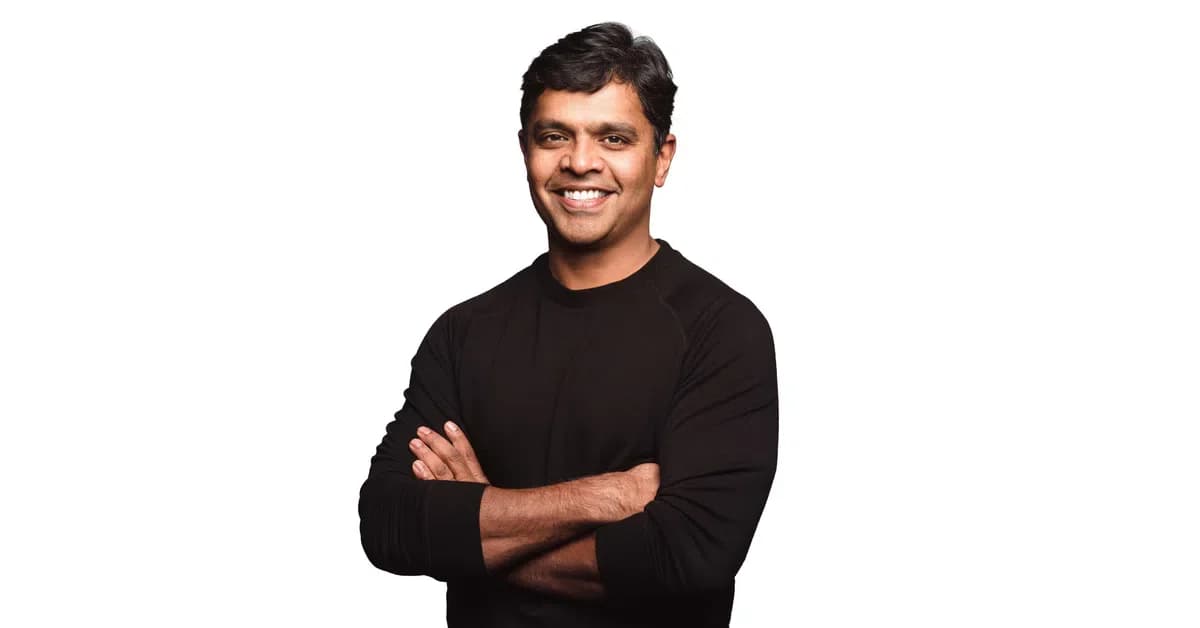
According to reports from Business Standard, Moneycontrol, and ET, Meta's VP Infrastructure Santosh Janardhan describes the company's latest data centre investment in Jamnagar as a 'homecoming' and a substantial financial commitment that reflects faith in India's technological trajectory. The investment is part of Meta's broader Project Waterworth initiative, with Janardhan emphasizing that a meaningful portion of Meta's revenue today runs on the company's own silicon, with significant work coming from teams in Bengaluru. The executive sees India as a key hub for AI-driven infrastructure growth, with the Jamnagar facility designed to support both existing products and future AI workloads. While Meta has had a presence in India for a long time, one of the bigger things they did last year was Project Waterworth, with India being a huge part of it. As reported by Business Standard, Janardhan explains that the data centre is more than just a financial commitment - it's a show of faith in the ingredients that we think India is getting right. In his latest interview with ET, Janardhan reveals that he was in Jamnagar with Aakash Ambani yesterday and the work there is underway at record speed, referring to the 168 megawatts data centre deal with Reliance Industries. In his Moneycontrol interview, he emphasizes that the AI race is fundamentally an infrastructure race, where infrastructure has become as central and strategically important as a product or a feature would be.
As reported by Business Standard, Moneycontrol, and ET, Janardhan identifies several key factors making India an attractive destination for Meta's infrastructure investments. These include India's unique demographics with deep digital penetration and strong mobile adoption, effective leapfrogging of an entire generation of technological change, and substantial latent talent in engineering. The executive also highlights India's technology-favoured government approach, enabling digital services like train ticket purchases and government document access through platforms like WhatsApp. He notes that companies require regulatory clarity and policy stability, which India is providing, creating confidence for long-term infrastructure investments. Janardhan emphasizes that all the stars are aligned for this investment, stating that we want to be part of India's growth story. In his ET interview, he specifically mentions that India has a tech-forward government, which is refreshing, focused on digitising India and willing to lean in and partner with us. He reveals that Meta's growth and the country's digital growth happened simultaneously, with almost all graphs going up and to the right - that's a rare phenomenon.
According to the interview with Business Standard, Moneycontrol, and ET, Meta's compute needs are experiencing an order-of-magnitude increase due to AI implementation, requiring completely different operational approaches. Janardhan explains that Mark Zuckerberg's vision of enabling personal superintelligence for everyone across work, personal interests, and entertainment requires massive scale that fundamentally changes how infrastructure is operated. The company is building its own silicon specifically optimized for Meta's workloads, moving away from commercial chips that serve broad customer ranges. This approach allows for deeper vertical integration and more customized services at enormous scale across billions of users. Janardhan tells ET that the company has an opportunity to build arguably the biggest infrastructure build-out in the history of the planet, with Meta's global infrastructure head emphasizing that data centres in India serve a broader global network rather than just the local market. In his ET interview, Janardhan reveals that he oversees Meta's $115-$135 billion annual spending on AI compute, leading CEO Mark Zuckerberg's ambitious 'Meta Compute' initiative to build tens of gigawatts of capacity this decade and hundreds of gigawatts or more over time.
As reported by Moneycontrol and ET, Meta's global infrastructure head emphasizes that data centres in India serve a broader global network rather than just the local market. The Jamnagar facility is part of Meta's worldwide data centre fleet that collectively serves users everywhere, with content feeds built from data gathered globally and delivered instantaneously. India has an exploding demographic that's becoming more affluent, deepening digital penetration, and a large audience for Meta's family of apps, which intersects with classical infrastructure ingredients like land, water, and green power. India serves as an infrastructure provider, including data centres, POPs, MegaPOPs, edge networks, silicon work, and software engineering, with substantial existing infrastructure already built out. Janardhan notes that a meaningful part of Meta's revenue today already runs on the company's own custom silicon, with a team in Bengaluru contributing heavily to these efforts. In his ET interview, he explains that he doesn't like to think of data centres as being built for one specific purpose - can we train there? Yes. Can we do inference there? Yes. Can we serve the family of apps there? Yes. All of those are possibilities, encouraging people to think about data centres as the factories of today that take in data and compute and output intelligence.
As reported by ET, Meta's Bengaluru engineering hub plays a crucial role in developing proprietary silicon, with teams there undertaking highly specialised work that "the rest of the world frankly can't do". Janardhan reveals that a meaningful portion of Meta's revenue comes from silicon that the company designs itself, with video transcoding, news feed ranking and advertising workloads already running on Meta's chips. The next generation of chips will be focused on AI and large language model inference, with the company expecting to continue investing across multiple silicon platforms while expanding in-house capabilities. Meta has Project Waterworth, which is the world's longest and most sophisticated subsea cable system, with India being a huge part of that initiative. Janardhan explains that about 5-10 years ago, Meta's focus was on enabling traffic in India, but what is unique about India is that Meta's growth and the country's digital growth happened simultaneously. He notes that India is one of the few countries where Meta has mega PoPs in the sense that edge networks alone don't cut it - we needed to cache local content differently than the rest of the world.
According to Business Standard, Moneycontrol, and ET, the Jamnagar facility has capacity for expansion up to 1 gigawatt, with Reliance serving as a partner but not in an exclusive capacity. Janardhan notes that infrastructure investments are made over 15-20 years and require confidence in long-term stability, making India's regulatory environment particularly attractive. The facility is designed with flexibility and optionality to support various AI workloads including training, inference, and future applications. The executive emphasizes that Meta's approach focuses on non-technical skills like resilience and adaptability when hiring, as AI serves as a force multiplier rather than job eliminator. In his ET interview, he reveals that Meta increased its annual capex guidance to $125 billion-$145 billion from $115 billion-$135 billion in April, with the company's Meta Compute initiative tasked with building tens of gigawatts of capacity this decade and hundreds of gigawatts or more over time. He emphasizes that in AI, there is a term called 'pipe cleaning' - doing your first zero-to-one project, learning what works, getting all the ingredients right and then scaling - that's how Meta is approaching this project.