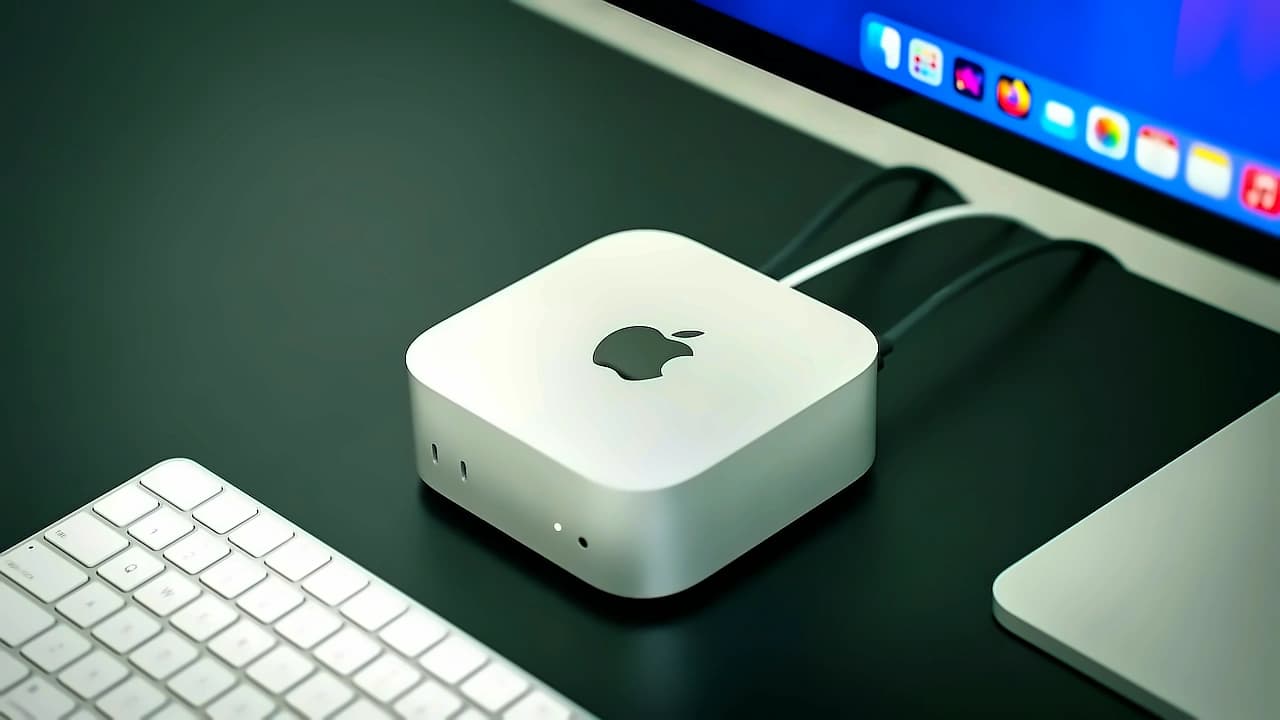
Apple's upcoming Mac mini M6 has surfaced in a Geekbench listing ahead of its retail launch, demonstrating the chip's performance capabilities. According to reports from Geekbench, a 12-core M6 chip paired with 32GB of memory logged scores of 4,610 in single-core and 20,676 in multi-core testing under the internal model name Mac18,5. The listing shows 32GB of memory, the maximum configurable amount for the base M6, and macOS 27.0 build 26A428. The system reports a 2+4+6-core cluster split (two super cores, four performance cores, and six efficiency cores), matching the three-tier CPU structure Apple detailed at the chip's launch in August. Against Apple's outgoing 10-core M5, for which Geekbench recorded a median single-core score of 4,195 and multi-core score of 17,072 across five benchmark runs, the M6 listing represents roughly 10% single-core gain and 20% multi-core gain. This performance is in line with Apple's own claim of up to 1.2 times faster multi-threaded performance than the M5.
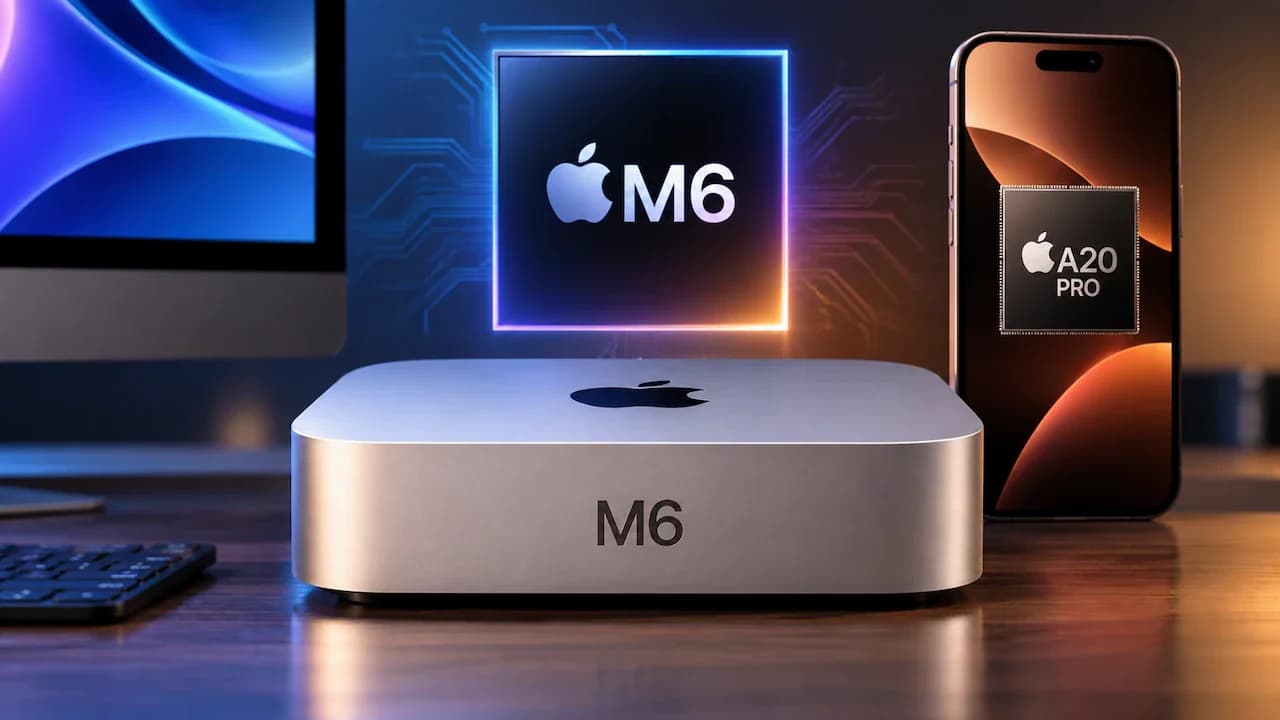
Despite Apple's marketing of the M6 as its fastest single-threaded chip, the A20 Pro powering the iPhone 18 Pro Max actually posted a higher single-core score on the same Geekbench 6 scale - 4,725 versus the Mac mini's 4,610, representing a roughly 2.5% edge in the phone's favor. As reported by Geekbench, this gap may be explained by the A20 Pro's fastest cores running at 4.93GHz compared to the M6's 4.79GHz. The M6's single-core gains are more modest at 7-10% over the M5, with the chip running at 4.79GHz versus the M5's 4.61GHz. An unverified leak from Baidu Tieba user littletree_666 suggests the M6's Super core retains the same 10-wide decode design as the M5, while the A20 Pro uses a redesigned, cut-down Super core with 9-wide decode, trading some decode width for higher achievable clock speeds. The same source claims tight decoder timing and thermal limits in passively cooled devices like the iPhone factored into Apple's decision to separate the A-series and M-series core designs this generation.
The Mac mini's multi-core performance demonstrates clear advantages over the iPhone's chip architecture. According to Geekbench data, the M6 more than doubled the A20 Pro's output - 20,676 versus 12,575 - putting the desktop chip roughly two-thirds ahead in multi-core processing. This performance gap is attributed to the M6's 12 cores versus six on the A20 Pro, combined with the Mac mini's additional thermal headroom for sustained workloads. The M6's architecture includes two high-speed super cores, four performance cores, and six efficiency cores for different processing needs. The A20 Pro's multi-core score of 12,575, limited by its lower core count and thermal headroom, remains well behind the M6's performance despite the iPhone's higher single-core capabilities.
The latest M6 chip introduces significant AI processing enhancements beyond its core performance improvements. As reported by Gadgets 360, the new M6 is Apple's first chipset fabricated using the 2nm process technology, featuring a Dual 16-core Neural Engine that delivers up to 2x peak compute compared to previous generations. The system framework is capable of automatically utilizing both Neural Engines simultaneously for faster execution of AI models. The new Apple Silicon M5 Ultra SoC represents Apple's first chip to feature the new Quad-Die architecture, marking a significant advancement in Apple's silicon manufacturing capabilities. These new chipsets support Wi-Fi 7 and Bluetooth 6 connectivity, ensuring the latest wireless standards are integrated into Apple's latest desktop offerings.