Apple has launched its upgraded Mac Mini and Mac Studio devices, which began shipping this week, targeting corporate customers for AI-intensive tasks. According to reports from Reuters, these devices are being positioned as an alternative to costly cloud-based AI computing, with some configurations costing nearly ₹16 lakh. Apple Chief Hardware Officer Johny Srouji emphasized that customers do not face a "cost per token" once they own the machine, distinguishing the hardware approach from recurring cloud charges. The company is making an unusual pitch to corporate buyers: "They are cheaper than renting data centres." The launch comes as businesses increasingly evaluate whether AI workloads can be handled locally rather than through data centres operated by companies such as OpenAI and Anthropic. The new Macs are aimed at more intense AI tasks such as writing code or carrying out complex business work without paying for "tokens" from cloud leaders such as OpenAI or Anthropic.
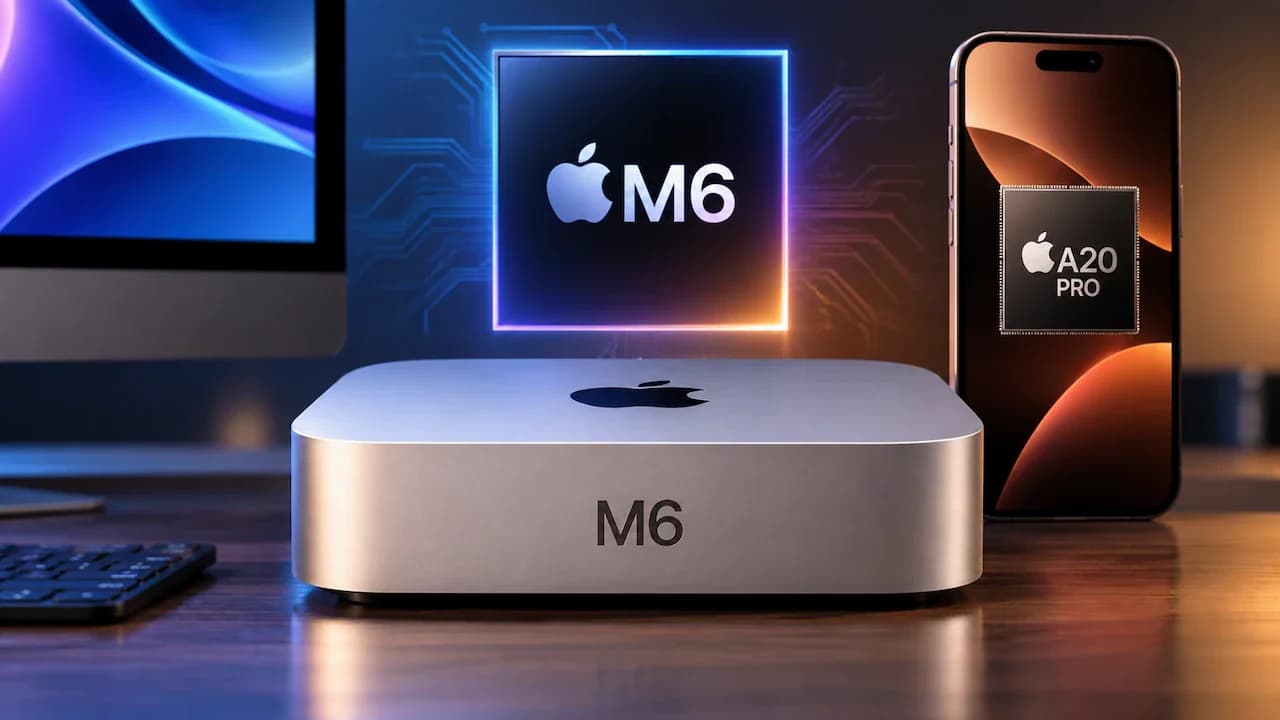
Apple's latest generation Macs are delivering exceptional AI performance that extends beyond cost savings. As reported by recent testing, the M6 Mac mini and M5 Ultra Mac Studio can run AI jobs significantly faster than previous generations, with the M5 Ultra offering 5x the memory bandwidth of competing Nvidia and AMD devices. The machines are future-proofed for the next 2-3 years according to recent benchmarking, with the M6 Mac mini being particularly well-suited for running always-on AI agents like Perplexity Computer, Hermes, or variants of OpenClaw. The Mac Studio starts at $2,499 with a path up to a 512GB-memory M5 Ultra configuration, while Nvidia's DGX Spark is priced around $4,699 as of August 2026. The Mac Studio offers four times the unified memory of Nvidia's box, with 512GB versus 128GB LPDDR5x on the DGX Spark. Apple's unified memory architecture combines computing and memory more closely than traditional PC designs, while chip-to-chip networking using RDMA over Thunderbolt enables scalable AI workloads. Apple's first 2nm process node and first quad-die design respectively, with the M6 debuting inside a new Mac mini with a 12-core CPU, 12-core GPU, and dual 16-core Neural Engine, while the M5 Ultra features a quad-die design stitching four dies into a single package with 50% more memory bandwidth than its predecessor.
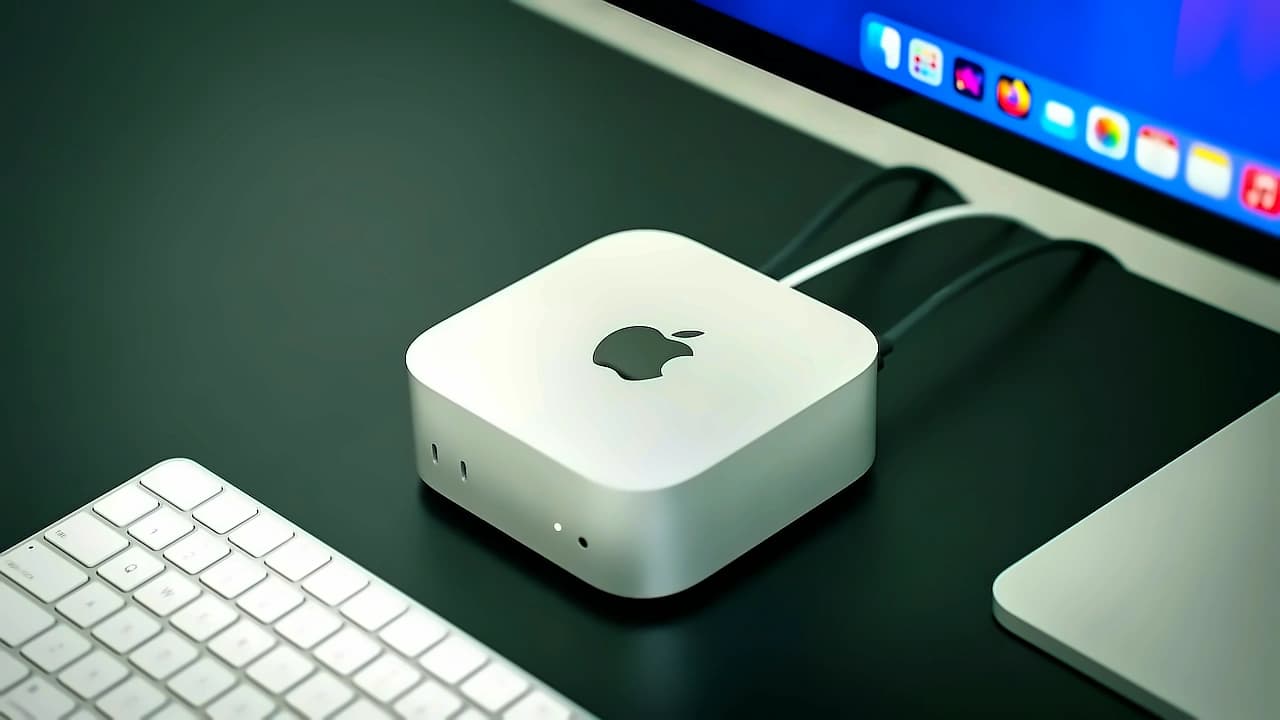
The Mac Studio comes with system-wide AI tools that run directly on the device, including automatic proofreading and grammar correction, AI assistance using Write with Siri, and smart content summaries. Natural language search is now available throughout the system, with more complex conversations and image edits using the cloud for beefier AI processing. According to recent testing, since none of the data leaves your machine, it's a lot more private and secure, which is critical for working with PII and sensitive data. This privacy aspect is particularly valuable for applications like scanning home security cameras and health data, where users wouldn't trust sending data to today's leading AI providers. Apple demonstrated four Mac Studios strung together to run an AI model with a trillion parameters to find and fix a graphics coding bug, running off one wall outlet instead of requiring a data centre. The Mac Studio's 36-core M5 Ultra processor, 80-core GPU, 256GB of unified memory, and 4TB of storage make it capable of running incredibly potent models, with the ability to cluster systems via Thunderbolt 5 connection for even greater power and memory scaling.
The launch positions Apple directly against established players in the corporate AI computing market. According to Reuters, Apple's strategy competes with Microsoft and Nvidia in the corporate AI computing space, with the company making a genuine strategic pivot from selling chips as laptop processors to positioning them as alternatives to renting GPU clusters. The Mac Studio's $18,299 maximum configuration can quickly pay for itself through cost savings, with one CTO reporting that for each engineer, their company is spending 1.5x their total compensation in token costs, potentially reaching $15,000 to $20,000 per month in cloud-based AI expenses. Apple hopes its experience squeezing performance out of battery-powered devices like iPhones will help it take a bite out of Microsoft's home turf, though it faces a steep challenge with Apple having about 4.6% of the enterprise desktop market versus 91.3% for Windows, according to IDC's Linn Huang. However, Apple has found itself in a strong position for AI desktops, thanks to its longstanding obsession with saving power and the close connection between computing and memory that Nvidia and others have only recently shifted towards. The Mac Studio's $18,299 maximum configuration can quickly pay for itself through cost savings, with one CTO reporting that for each engineer, their company is spending 1.5x their total compensation in token costs, potentially reaching $15,000 to $20,000 per month in cloud-based AI expenses.
The technical foundation for Apple's AI ambitions traces back to Apple's decision in 2020 to combine computing and memory into a unified memory architecture aimed at extending battery life. This design choice, which Nvidia and others have only recently begun to emulate, turned out to make Macs unusually well-suited for AI inference workloads. Apple started selling out of Mac Minis as OpenClaw, an open-source agentic AI tool, gained traction in markets including China. The unified memory architecture allows model weights that would normally require multiple professional GPUs to be loaded entirely into memory, with the latest Mac Studio's M5 Ultra offering up to 512GB with 1.2TB/s bandwidth. According to The Information, Mac product line revenue grew 29% year over year in the most recent quarter, and Mac Mini shipping delays stretched beyond a month during peak demand periods. Apple is considering developing AI servers for external customers, potentially in configurations with two or four M8 Ultra chips using Nvidia's NVLink interconnect technology, though any such product would not reach the market before 2029. The Mac Studio's $12,000+ price point represents a significant premium over the $899 Mac Mini, reflecting the substantial performance and memory upgrades that make it suitable for enterprise-level AI workloads.