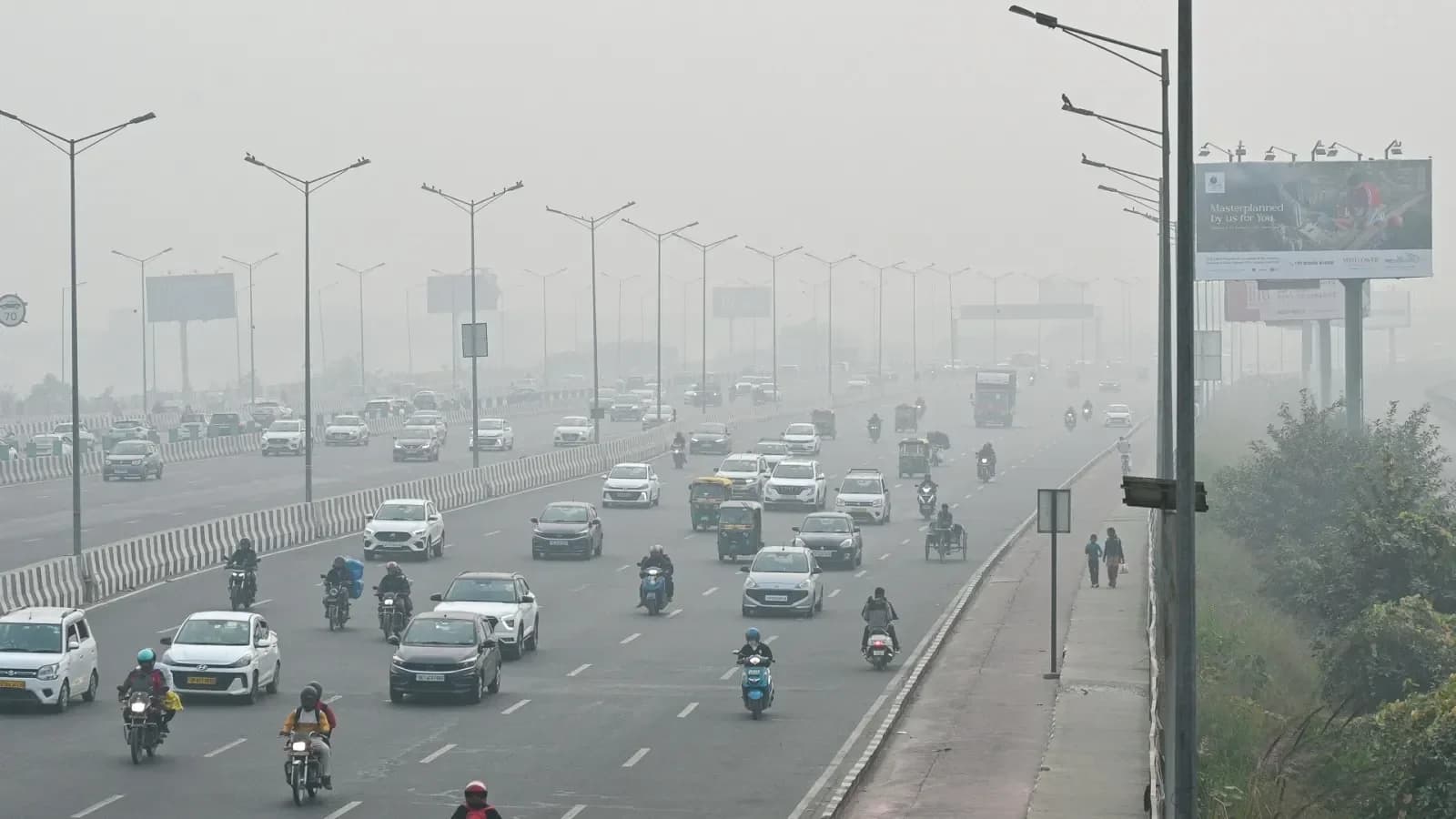
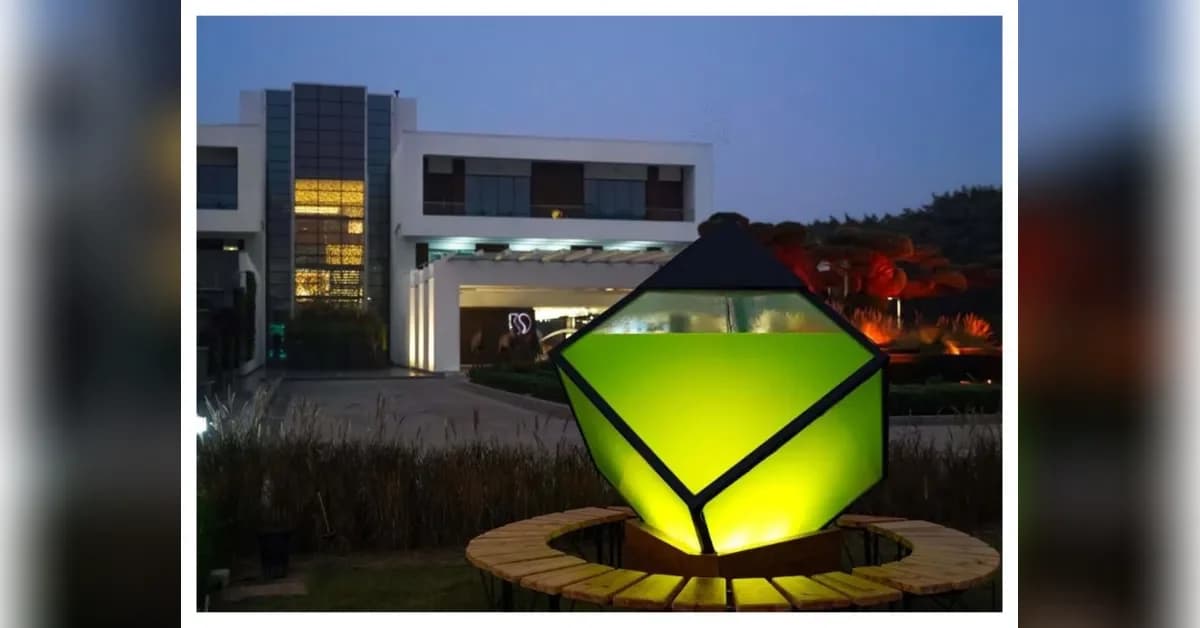
Researchers at the Council of Scientific and Industrial Research-Central Institute of Mining and Fuel Research (CSIR-CIMFR) have developed the Smart Algal Liquid Tree (SALT), a mobile air-purification system designed for polluted urban areas where conventional tree planting is difficult. According to reports from PTI, the patented technology has already been installed at the CSIR-CIMFR campus in Dhanbad and at Northern Coalfields Limited in Singrauli, Madhya Pradesh, where it has received encouraging feedback. Unlike earlier fixed liquid-tree installations, SALT is designed to be mobile, allowing deployment in different urban and industrial locations. The system is mostly designed for places where conventional plantation is difficult because of a shortage of space. As per Rediff Money, the device houses microalgae in water inside an enclosed unit where through photosynthesis, the algae continuously absorb CO2 from the surrounding air and release oxygen, helping improve air quality.
The process is similar to photosynthesis, where air containing carbon dioxide comes into contact with the algae-based system, and microalgae absorb carbon dioxide during photosynthesis while releasing oxygen as a by-product. SALT can operate with artificial light, allowing the biological process to continue even when sunlight is unavailable, and the unit can run on solar power as well as electricity. Besides removing carbon dioxide, the system also helps reduce dust and can operate round the clock using natural or artificial light. According to Rediff Money, unlike a real tree, the device houses microalgae in water inside an enclosed unit through photosynthesis, continuously absorbing CO2 from the surrounding air and releasing oxygen.
The mobile unit is fitted with sensors that display air quality, carbon dioxide levels, temperature, humidity and particulate matter, providing real-time monitoring capabilities. The system is designed to run on solar as well as electricity and doubles as a public utility by providing shaded seating for four to eight people and charging points for mobile phones and laptops. Vetrivel Anguselvi, senior principal scientist at CIMFR who led the project, stated that the primary purpose is to combat poor air quality in densely populated and space-constrained urban areas where there is little or no room to plant large trees. The technology is intended for use in industrial areas as well as public places such as schools, airports, railway stations, bus terminals, shopping malls, parks and theatres. As per Rediff Money, the system is fitted with sensors that display air quality, carbon dioxide levels, temperature, humidity and particulate matter, providing comprehensive environmental monitoring capabilities.
According to PTI, the technology is intended for use in industrial areas as well as public places such as schools, airports, railway stations, bus terminals, shopping malls, parks and theatres. CSIR-CIMFR sees potential for the system at transport hubs, industrial sites, educational institutions, shopping centres, parks and other crowded public spaces. The institute is also exploring commercial production of the device and working to make it affordable enough for possible use in residential areas and localities facing severe air pollution. Unlike conventional trees, the enclosed algae-based system does not require soil, is less affected by urban pollution and pests, and requires minimal maintenance. CIMFR officials said discussions are underway for commercial production of the device, with efforts being made to price it affordably so that it can also be used in homes and localities facing severe air pollution.