A US federal judge in Mississippi has cancelled a civil trial and disqualified all four attorneys after discovering both legal parties used AI to write their briefs. Judge Sharion Aycock removed all four lawyers from the contract dispute, levied financial penalties, and barred two attorneys from practicing in the Northern District of Mississippi for two years after finding AI-generated research containing fake legal citations. As reported by The New York Times, the judge noted this presents an 'unusual scenario' where both litigants' attorneys engaged in similar sanctionable conduct, stating the court is 'yet again burdened with addressing AI hallucinations court filings'. This incident highlights the growing global challenges that India's new AI court regulations may face as legal systems worldwide grapple with AI-generated content in judicial proceedings.
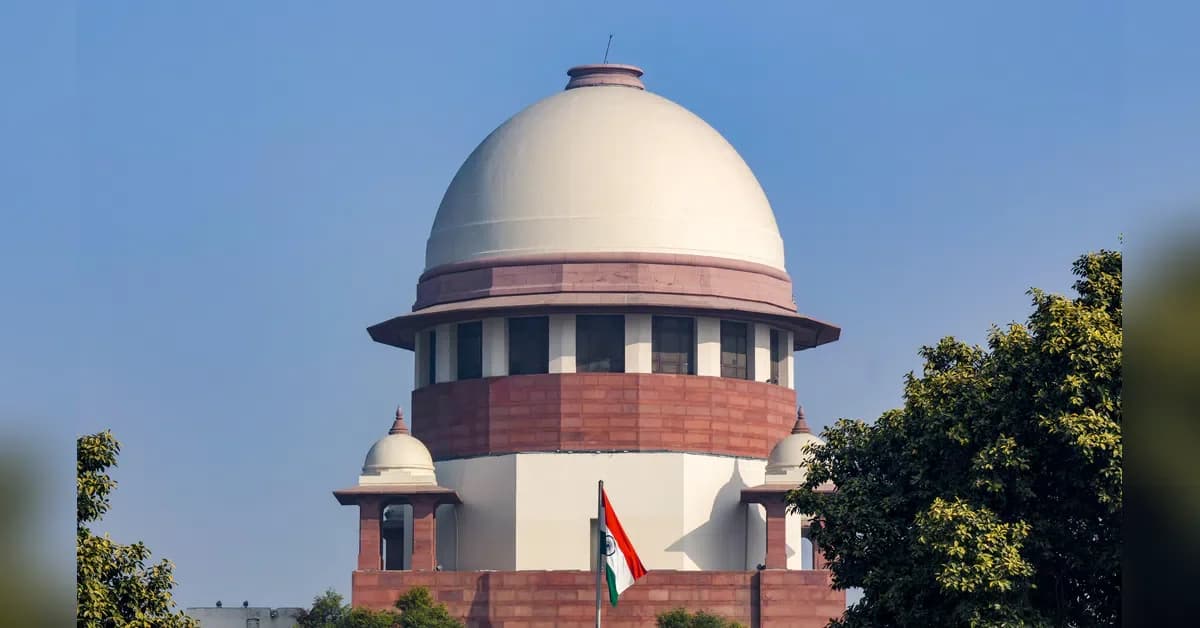
The Supreme Court of India has issued draft 'Regulations for Use of Artificial Intelligence (AI) in courts' this month, establishing a 35-page framework that applies to all judicial, adjudicatory and administrative functions across the Supreme Court, high courts, subordinate courts, tribunals and statutory commissions. The regulations permit AI use in case management (including identification of defects in new filings), cause list preparation, hearing scheduling and docket prioritisation, while strictly forbidding AI from determining judicial outcomes, pronouncing judgments, imposing sentences, or assessing witness credibility. The framework emphasizes that 'no judicial outcome shall be reached through Algorithmic Decision-Making alone' and that 'human judicial authority shall be the determinative authority in all adjudicative decisions'. Seeking comments and suggestions from stakeholders by June 20, the regulations expressly permit AI for automated transcription of proceedings, translation of legal documents into regional languages, legal research assistance, and guided chatbots to help litigants navigate court procedures.

The Supreme Court currently operates AI-assisted tools including Supace (Supreme Court Portal for Assistance in Courts Efficiency) for legal research and Suvas (Supreme Court Vidhik Anuvaad Software) for translating judicial documents into at least 18 Indian languages. As reported by Business Standard, other countries have adopted similar technologies, with Singapore using generative AI assistants for self-represented litigants and Estonia employing AI-assisted systems for transcription and document analysis. China has implemented comprehensive 'smart courts' that leverage machine learning to automate legal research, draft documents, and verify verdict accuracy. The draft regulations specifically permit AI use in administrative functions such as case filing, cause-list preparation, scheduling, issuing notices, maintaining records, and computing fees.
The draft regulations establish clear distinctions between AI assistance and judicial authority, with AI prohibited from determining judicial outcomes, pronouncing judgments, imposing sentences, assessing witness credibility, predicting criminal behavior, evaluating bail eligibility, or assigning risk scores to litigants. According to the regulations, 'the use of AI in court processes shall at all times remain strictly subservient to human judgment and judicial authority' and 'every AI System shall function solely in an assistive capacity and shall not supplant or compromise the independent exercise of judicial authority'. The framework requires that AI-generated output must be treated as advisory and remain subject to independent human review due to the limitations of AI tools. Recent incidents involving lawyers submitting AI-generated documents with fictitious case citations have highlighted the risks of unverified AI content, with 224 'fake cases' cited in Canadian courts in 2024 alone, as reported by The Globe and Mail.
The framework establishes a permanent 'Apex Body' at the Supreme Court comprising judges, technical experts, cybersecurity specialists, academicians and government representatives to ensure oversight. The regulations emphasize that 'no personal data of any person shall be used to train, test, or refine any AI System without the prior approval of the Appropriate Authority' and that 'where applicable, in compliance with applicable data protection law'. The draft regulations expressly permit AI to be used for a range of judicial and administrative functions, subject to approval and human supervision. Wagner noted that AI should 'never be used in the analysis of the facts and the law with a view to obtain a judgment', with the final responsibility for ensuring real law and actual jurisprudence falling to self-regulating law societies in each province.