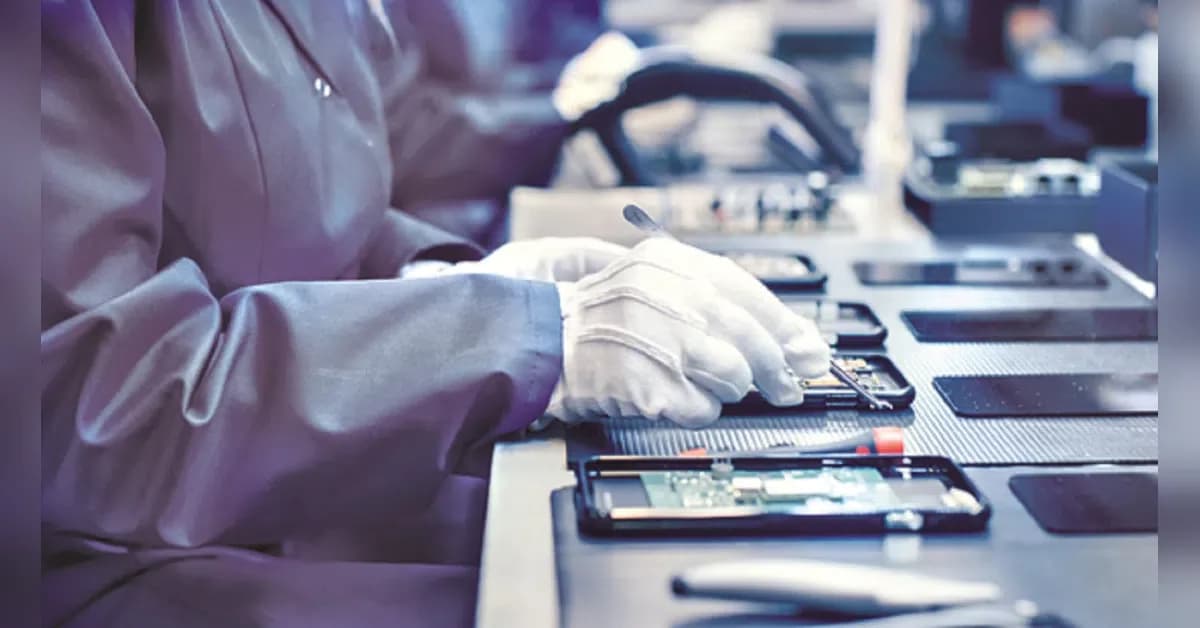
India's electronics manufacturing sector has witnessed exceptional growth over the past decade, with production rising over six-fold to around ₹12 lakh crore in FY25 from about ₹1.9 lakh crore in FY15, according to Union Minister of State for Electronics and IT Jitin Prasada. The transformation has been driven by targeted policy interventions under the Centre's Atmanirbhar Bharat vision, aimed at building a complete electronics value chain—from finished goods to components, sub-assemblies and capital equipment. Mobile phone production jumped 28-fold to ₹5.45 lakh crore during this period, while mobile phone exports saw the sharpest rise, increasing 127 times to ₹2 lakh crore, transforming India from a net importer in 2014 to a net exporter with over 300 manufacturing units now operational. The growth has been so significant that smartphones have now become India's top export item in 2025, surpassing traditional exports such as refined petroleum products and cut diamonds.
The Production-Linked Incentive (PLI) scheme for large-scale electronics manufacturing, launched in 2020, has played a crucial role in this transformation. Against a target investment of ₹7,000 crore, actual investments reached ₹17,519 crore—2.5 times the target, while production and exports exceeded targets by 36% to ₹11 lakh crore and 27% to ₹6.2 lakh crore, respectively, till February. The scheme has generated around 1.85 lakh direct jobs, achieving about 92% of its target of 2 lakh. As a result, India has emerged as the world's second-largest mobile phone manufacturer, with the sector supporting around 12 lakh jobs, both direct and indirect. The government has also expanded focus to IT hardware manufacturing through PLI 2.0 scheme, achieving production of ₹18,863 crore and investments of ₹872 crore so far.
India is transitioning from electronics assembly to full-scale manufacturing as the Electronics Components Manufacturing Scheme (ECMS) drives domestic component production. According to reports from The Economic Times, India exported ₹38.5 billion worth of electronic goods in FY2025, but imported ₹36.8 billion worth of electronic components in just the first half of that year. Nearly 40% of component imports came from China, highlighting the dependence on foreign suppliers. The country has been assembling electronics rather than manufacturing them, with 80-85% of components inside mobile phones being imported, while value addition remained a thin 15-18%. This strategic pivot toward deep manufacturing and value addition represents a fundamental shift in India's electronics policy framework, with domestic value addition currently estimated at 18-20% and initiatives helping deepen this further.
The Electronics Components Manufacturing Scheme has attracted investment commitments worth ₹1.15 lakh crore against a target of ₹59,350 crore, with an estimated employment potential of 1.4 lakh jobs, according to Minister Prasada. As reported by The Economic Times, the government has cleared 29 more proposals under ECMS, bringing fresh investment of ₹7,104 crore and projected production of ₹84,515 crore. These 29 proposals alone will create over 14,000 direct jobs. The overall ECMS numbers now include 75 total approved applications, ₹61,671 crore total expected investment, and 65,040 total expected direct employment. The Union Budget 2026-27 enhanced the ECMS outlay to ₹40,000 crore, signaling serious government commitment to scale. The newly approved projects span 16 categories of products across sub-assemblies, bare components, supply chain items, and capital equipment, demonstrating the comprehensive nature of India's component localization strategy.
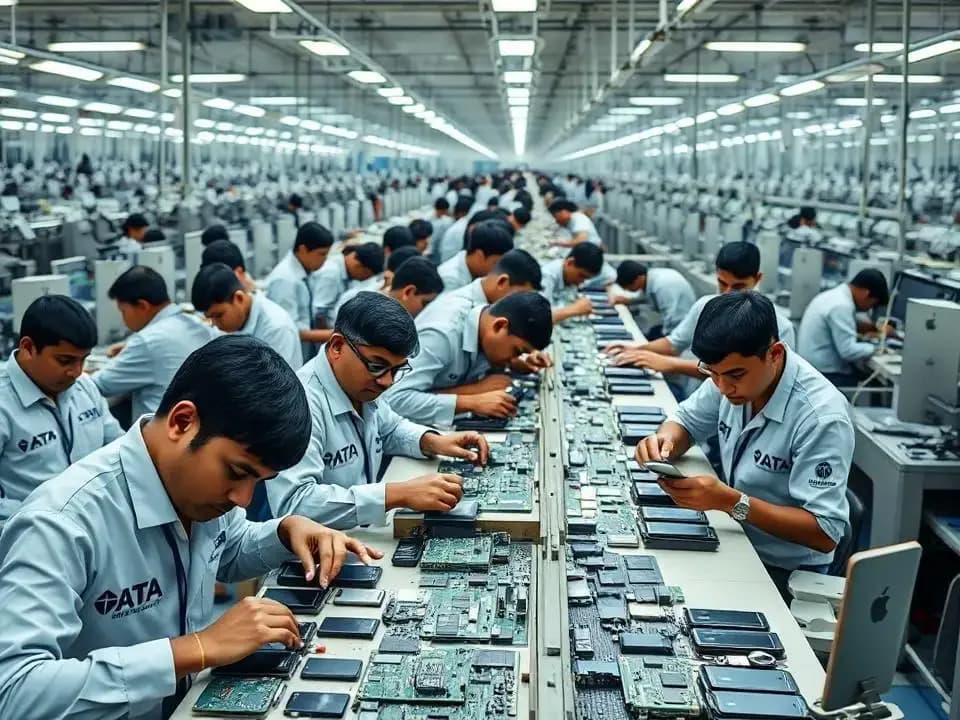
The 29 new ECMS approvals cover 16 product segments, including display modules from Dixon Display Technologies and Wangda Technologies, connectors from Molex India, Amphenol FCI, and SFO Technologies, Li-ion cells from Munoth Lithium Battery, and flexible PCBs from Syrma Strategic Electronics. According to The Economic Times, three firsts stand out: India's first SMD passive plant for tantalum-based capacitors, first flexible PCB plant, and the first rare earth permanent magnet facility manufacturing from rare earth oxides with fully indigenous technology. Lohum Cleantech's ₹700 crore project is expected to meet about 25% of India's domestic demand for rare earth permanent magnets, which are critical for electric vehicle motors, wind turbines, defence electronics, and clean energy technology. The approvals also include India's first SMD passive plant for tantalum-based capacitors, the first flexible PCB manufacturing facility, and the first rare earth permanent magnet project, marking significant milestones in the country's electronics manufacturing journey.
The scheme emphasizes strategic manufacturing priorities with four priority areas: in-house design capability, domestic supply chain with buyer-seller linkages, Six Sigma quality programmes, and workforce development with 4-5 training centres with 5,000 trainees each. As reported by The Economic Times, localisation targets include 50% of PCB demand to be met domestically, 61% of Li-ion battery demand, and 100% of relay demand with surplus for exports. The PLI scheme for mobiles demonstrated execution capability, with smartphone import dependence dropping from 78% in 2014-15 to practically zero today, and India overtaking China to become the top smartphone exporter to the US in the September 2025 quarter. The latest approvals reflect a clear policy shift toward deep manufacturing and value addition, with companies increasingly facing compliance obligations tied to local sourcing norms and emerging "buyer-seller" ecosystems encouraged by the government.