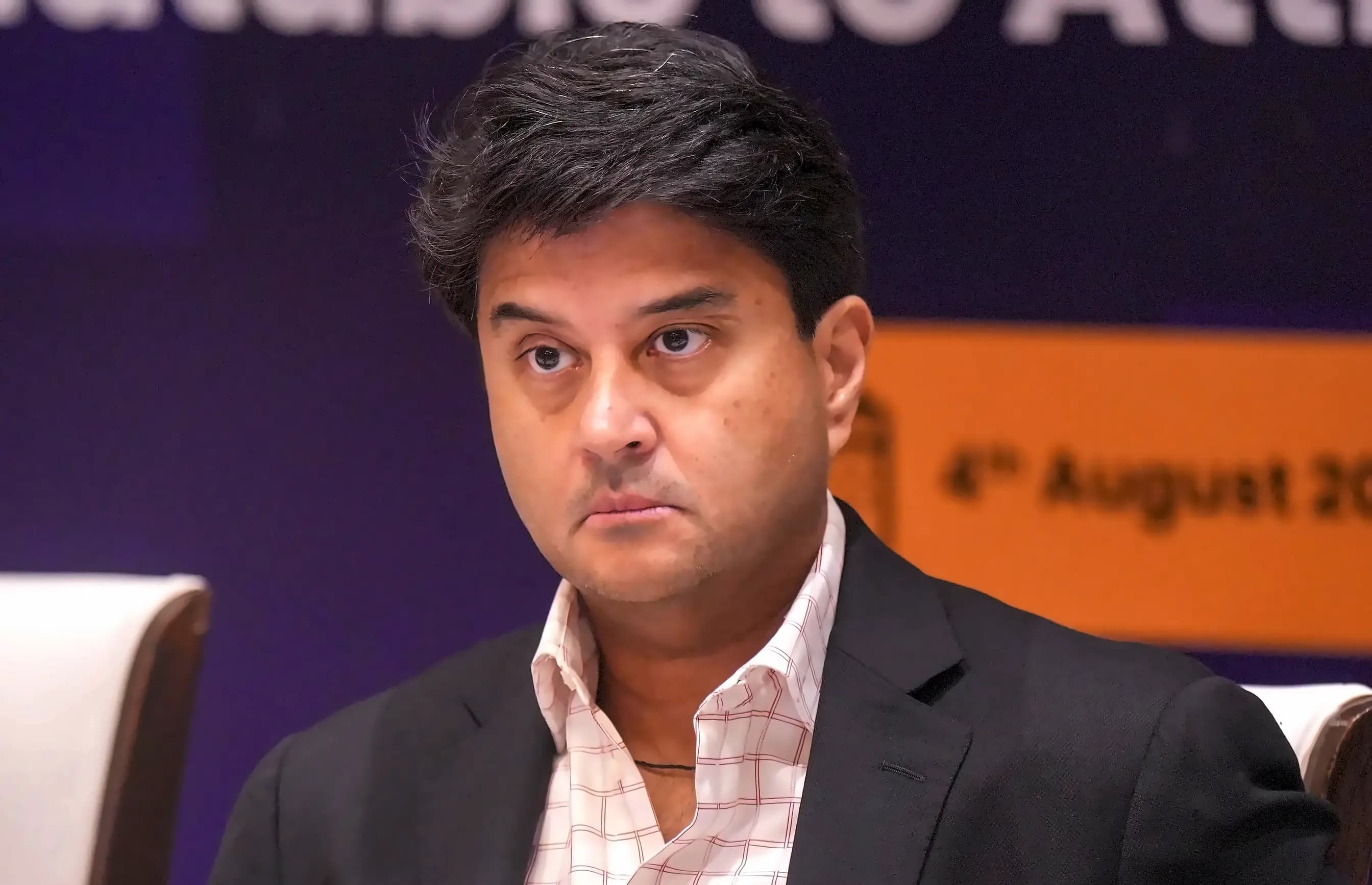
Union Communications Minister Jyotiraditya Scindia announced India's ambitious goal to lead the world in 6G mobile technology and become a designer of global technology standards at the Global Fintech Fest 2026. Speaking on Thursday, Scindia declared that India had moved from being a market for technology to becoming a maker of technology, emphasizing the country's evolution from a technology consumer to a technology innovator. As per Scindia, India was behind the world on 4G but marched with the world on 5G, and commits to leading the world on 6G. He highlighted that India's 6G mission has already started with the Bharat 6G Alliance working towards contributing to global standards, positioning the country strategically in the global 6G landscape.
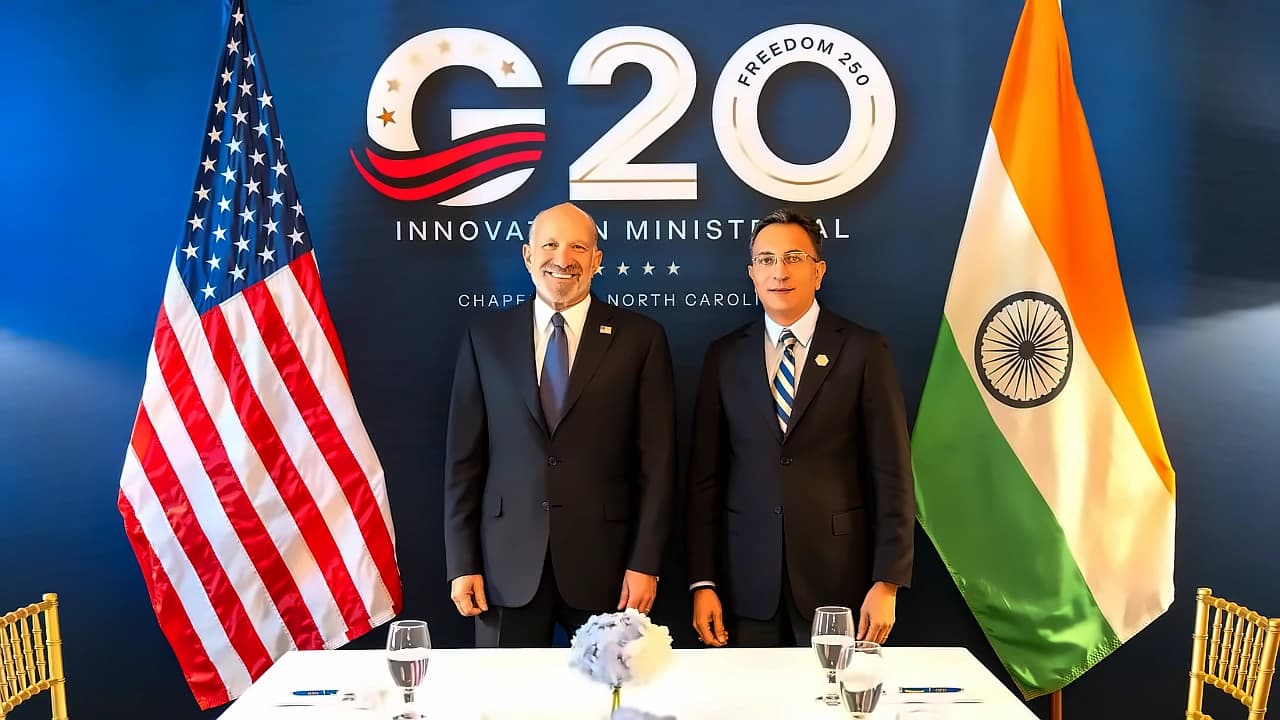
India has officially joined the United States and 26 other countries in the 'Call to Action for 6G Leadership and Security' initiative, according to the US Department of Commerce. This partnership represents a significant step forward in global telecommunications infrastructure collaboration, with India now positioned alongside major economies in shaping the future of wireless technology. The agreement was finalised following a bilateral meeting between US Commerce Secretary Howard Lutnick and Union Minister of State for Commerce and Industry Jitin Prasada on the sidelines of the G20 Innovation Ministerial. As per the US Department of Commerce, "Secretary Lutnick met with Minister Prasada… to discuss the future of 6G… we are pleased to announce that India has joined the US and 25 other countries in the effort to ensure that next generation networks reflect our shared security interests, strengthen our competitiveness, and drive innovation in 6G."
The announcement was made during the G20 Innovation Ministerial, where Union Minister of State for Commerce and Industry Jitin Prasada led the Indian delegation at the meeting held on September 1 and September 2 in Chapel Hill, North Carolina. As reported by the US Department of Commerce, Secretary Lutnick met with Prasada to discuss the future of 6G, with both sides exchanging views on strengthening cooperation across Semiconductors, AI and Data Centres. The bilateral discussions also covered encouraging more US investments in ISM2.0, proposing strengthening AI technology partnerships, and sharing mechanisms for AI safeguards. According to the Ministry of Electronics and IT, Prasada was accompanied by Ajit Kumar, Joint Secretary, Ministry of Electronics and Information Technology (MeitY), senior officials from MeitY, Department of Science and Technology (DST) and Department for Promotion of Industry and Internal Trade (DPIIT), as well as officials of the Embassy of India in the US. As per Prasada on X, "Semiconductors. AI. Data centres. These are critical building blocks of the emerging digital economy."
India has achieved remarkable progress in telecommunications infrastructure, with 5G capability now covering 99.9% of districts and serving 85% of the population through more than 500,000 5G Base Transceiver Stations (BTS). The country has invested over ₹4.5 lakh crore in telecom infrastructure development. Scindia highlighted that India has become the 'cheapest data capital of the world', with data costs falling dramatically from ₹287 per gigabyte to ₹9 per gigabyte. He emphasized that the country's digital infrastructure is driving fintech growth, with the mobile phone becoming "the new bank branch" and the telecom network becoming "the new financial highway." The next phase of fintech development will focus on connecting intelligence with opportunity through convergence between 5G, BharatNet, Aadhaar, UPI, fintech and AI.
India's participation in the US-led initiative complements its existing Bharat 6G Mission, which aims to make India a frontline contributor to 6G technologies by 2030. The government's Bharat 6G Vision, released in March 2023, is based on affordability, sustainability and ubiquity, with the Bharat 6G Alliance (B6GA) bringing together Indian industry, telecom service providers, academia, national research institutions and standards organisations. The B6GA has signed MoUs with international 6G research alliances including the US Next G Alliance, Europe's 6G-IA, Finland's 6G Flagship, South Korea's 6G Forum, Japan's XGMF, the NGMN Alliance and 6G Brasil for collaborative research and standardization. As per the government, the Bharat 6G Vision seeks to position India as a global leader in 6G by 2030, while the Bharat 6G Alliance builds an ecosystem involving industry, academia, research institutions and standards organisations. India has also contributed to the International Telecommunication Union International Mobile Technology (IMT) 2030 framework, including the inclusion of "Ubiquitous Connectivity" as one of the six 6G usage scenarios.
Scindia stressed the critical importance of greater digital security in the evolving technology landscape, emphasizing the shift from detecting fraud after it happens to preventing it by anticipating risks before money leaves an account. The minister's vision encompasses India's transformation from a technology market to a technology designer and builder, with the framework's emphasis on open, interoperable, secure, resilient, AI-supported and resource efficient 6G networks providing a structured approach to international collaboration. This dual approach allows India to leverage both domestic technology development through Bharat 6G Mission and international government cooperation through the US-led initiative, positioning the country strategically in the global 6G landscape while maintaining its commitment to indigenous innovation and development.