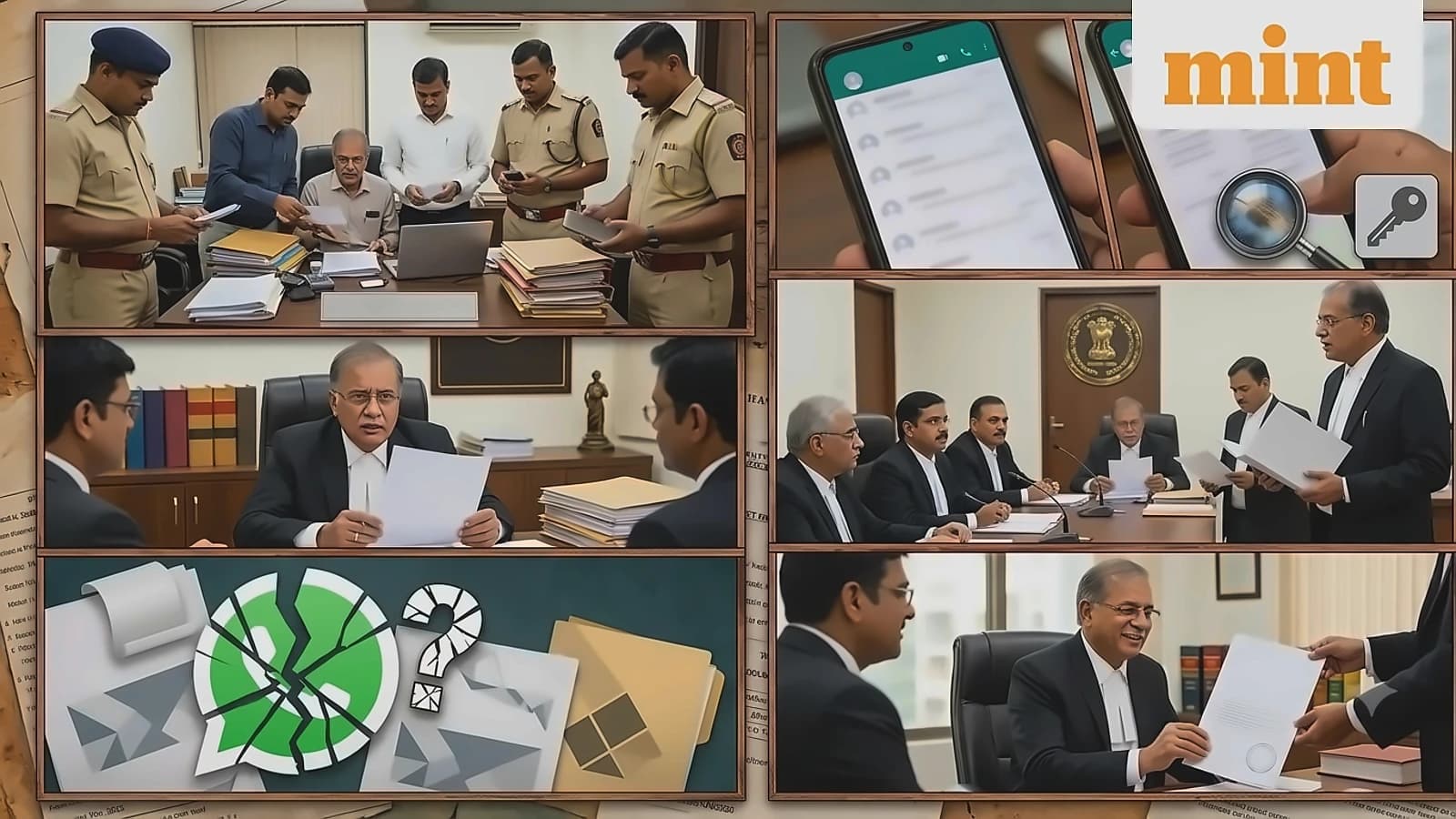
The Delhi High Court on Friday rejected Telegram's plea challenging the Centre's temporary ban on the messaging platform, finding that the government had provided sufficient reasons to justify the blocking order. A vacation bench, which heard the matter for two consecutive days, reserved the judgment on Thursday after hearing extensive arguments from senior advocate Dhruv Mehta (appearing for Telegram) and Attorney General R Venkataramani and Solicitor General Tushar Mehta (representing the Centre). Telegram had moved the Delhi high court requesting for an urgent hearing after the Centre blocked the platform until June 22, 2026 under Section 69A of the Information Technology Act, citing concerns over exam-related paper leak networks. The court observed that the extent of illegal activity on Telegram would need to be examined before deciding on interim relief, with Justice Karia asking "how can we stop the rights of 150 million people just because one set of citizens is appearing in examinations."
The Centre vehemently argued before the high court that Telegram has all the potential of getting misused by miscreants, with Solicitor General Tushar Mehta highlighting the platform's unique technical architecture. As per the latest arguments, "In Telegram, one account user can create 40 bots. While in case of WhatsApp, it's one bot per user. They have multiplicity encouraging architecture and then the bots can further multiply." Mehta explained that "bots are machines; they can further multiply. As per the report, Telegram can offer bot infrastructure which can disseminate information in bulk. This feature is unique as it permits creation of sophisticated networks with minimal human oversight." The law officer justified the decision, stating "This platform operates through the cloud. Even if they block it and someone does mischief, law enforcement agencies cannot reach the actual user." Attorney General R Venkataramani added that "This platform, because of its architecture, is a Frankenstein. If a country like ours cannot take preventive action, then where do we go?"
The temporary Telegram restriction triggered a sharp surge in VPN downloads as users sought ways to bypass the block and continue using the service. According to Moneycontrol citing app intelligence firm Appfigures, downloads of the top 100 VPN apps in India reached 919,000 on June 17, marking the highest single-day VPN download count recorded in the country since at least the start of 2025. The spike extended beyond major providers, with downloads across the VPN category in India rising 10 per cent day-on-day on June 17, reversing a decline seen over the previous two weeks. Proton VPN recorded a 113 per cent jump in downloads on Apple's App Store in India, while Turbo VPN saw an 85 per cent increase. The surge was large enough to reshape app store rankings, with Proton VPN climbing from 18th to fifth place in Apple's Utilities category and rising from eighth to second position in Google Play's Tools category within two days.
Users also began exploring alternative messaging platforms as the restriction took effect. According to Appfigures, downloads of Signal surged 72 per cent on Apple's App Store and 322 per cent on Google Play, while Viber's App Store downloads rose 216 per cent. One of the major beneficiaries was iMe, a messaging application built around Telegram's infrastructure, with its daily downloads on Google Play jumping from roughly 827 to more than 50,000 immediately after the restriction was announced. The trend suggests users were not only searching for ways to access Telegram but also evaluating backup communication platforms in case restrictions persisted, highlighting how familiar many users have become with VPN technology and alternative messaging apps.
The Centre has told the Delhi High Court that Telegram acknowledged limitations in proactively detecting channels allegedly involved in the NEET-UG 2026 paper leak, according to an affidavit filed in the matter concerning an interim ban on the messaging platform. The government said the Ministry of Electronics and Information Technology (MeitY) received multiple complaints alleging misuse of Telegram to circulate leaked NEET examination material and facilitate related fraudulent activities. As per the latest affidavit, the National Testing Agency (NTA) identified several Telegram channels, groups and bots that were allegedly being used to disseminate leaked question papers and examination content. The Centre noted that it did not immediately move to block Telegram and instead adopted what it described as the "least restrictive measure." As part of this approach, government officials held a meeting with Telegram representatives on June 3, 2026, during which authorities raised concerns over Telegram's alleged failure to proactively detect and curb channels involved in the circulation of leaked examination papers. Apart from restricting access to Telegram, the government has directed the platform to disable its message-editing feature in India for previously posted messages until 30 June. The Delhi HC bench stated that "the government empowered to direct blocking of access to Telegram, adding, order is least restrictive, not disproportionate."
The controversy stems from a serious governance deficit within the National Testing Agency (NTA) rather than a technology issue, as revealed by a swift investigation by the Central Bureau of Investigation (CBI). According to Business Standard, the crisis initially erupted when a teacher highlighted significant similarities between a guess, or mock, exam paper circulated on social media and the actual question paper. The investigation revealed that this overlap was courtesy a Pune-based chemistry professor and paper setter who was on the NTA panel and had access to confidential examination material. He proceeded to hold special coaching sessions in which he dictated the questions and answers to select students mobilised by other NTA-empanelled subject-matter experts through contacts in coaching centres in Rajasthan. The Central Bureau of Investigation probe into the paper leak has been ordered and the re-examination is scheduled for June 21, 2026. On May 12, the National Testing Agency (NTA) had cancelled the National Eligibility-cum-Entrance Test (Undergraduate), or NEET-UG, held on May 3 for medical admissions amid allegations of paper leak. More than 2 million students appeared for the medical entrance examination this year, with the original NEET-UG examination held on May 3 at more than 5,000 centres across the country.