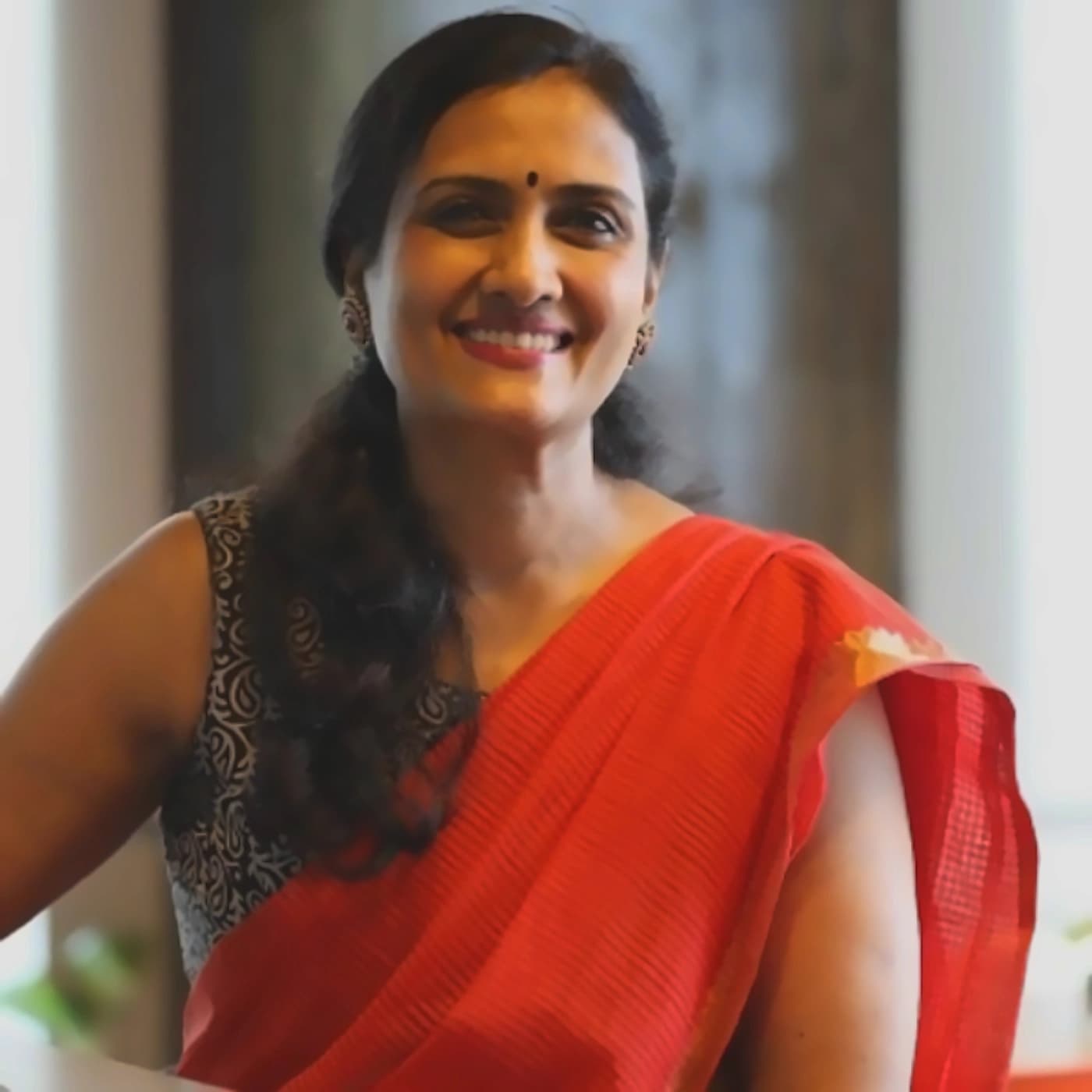
AMD's Indian operations have evolved into a massive engineering force of more than 11,000 people, representing every business unit within the chipmaker. As reported by Business Standard, Jaya Jagadish, Country Head & Senior VP, Engineering at AMD India, recalls starting the CPU group with just 25 people more than two decades ago, initially handling design checks and implementation work. The company developed its own expertise by hiring talented engineers with strong aptitude for learning and training them internally. India now houses one of AMD's five CPU design centres worldwide, with the other four located in the US. The local teams have delivered advanced CPU designs and chiplets for the next generation of EPYC server and PC products, along with chiplets for Instinct AI processors.
Jaya Jagadish, senior vice-president of design engineering and country head at AMD India, has raised significant concerns about women leaving the semiconductor workforce at entry-level positions. Speaking at the 'Women Shaping the Electronics and Semiconductor Industry' session at Semicon India on Friday, Jagadish emphasized that "If women enter our industry, but disappear from the leadership pipeline, we really have not solved the problem." According to reports from Business Standard, Jagadish noted that women remain a minority in the industry despite their presence in entry-level roles.
Jagadish argued that diversity extends beyond social responsibility to become a critical innovation strategy for the semiconductor industry. As reported by Business Standard, she stated that "When you are solving problems of this scale and complexity, you want the widest possible pool of talent and ideas. So, diversity is not just a social responsibility, it is an innovation strategy." The industry needs more women to access the best talent, broadest perspectives and the most diverse ways of solving problems, according to her remarks at the industry conference.
Jagadish challenged industry leaders to rethink how they measure progress in gender diversity initiatives. According to Business Standard, she asked industry leaders to "measure progress not just by the number of women they hire, but by how many women they develop, promote and empower to lead." This shift in focus would ensure that companies are not just hiring women but actively developing their capabilities and providing opportunities for advancement to leadership positions.
Despite strong STEM enrollment, significant gaps persist in workforce representation. Government data cited in January 2026 showed that women accounted for 43 per cent of total enrolment in STEM disciplines in higher education in India under the AISHE 2021-22 data, but women represented only 18.6 per cent of the STEM workforce engaged in research and development. Technology sector data from a 2025 CII report reveals similar trends, with women accounting for 36.4 per cent of the overall technology workforce and 40 per cent of non-managerial roles, but representation declining to 28.2 per cent among managers, 18.1 per cent among senior managers and 20.5 per cent at the corporate executive level. However, women who reach management positions show strong progression rates, with promotion from manager to senior manager at 9.1 per cent compared to 7.5 per cent for men, and promotion from senior manager to corporate executive at 7 per cent for women against 5 per cent for men.
The changing technology landscape is creating new routes into leadership as AI reshapes traditional engineering roles. Anuradha Natarajan, Head of Technology Strategy and Engineering Operations at Altimetrik, emphasized that "The leadership requirement is therefore shifting from technical depth alone towards the ability to identify business problems that technology can address and lead organisations through the resulting transformation." The skills required are broadening to include strong AI literacy, systems thinking, domain expertise, product orientation, data-driven decision-making and understanding of responsible AI, alongside communication and stakeholder influence. Sudha KV, Vice President at Dell Technologies, noted that "Some of the best engineering happens when we stop looking at technology as the answer and start looking at the problem solving for the customer as the opportunity," placing engineers closer to customer requirements and commercial context.