The Digital Communications Commission (DCC) has approved a comprehensive framework for satellite communication services in India, clearing the way for commercial launches. According to Moneycontrol, the commission has approved a 5% of adjusted gross revenue (AGR) spectrum usage charge for satellite communication services, with a 4% charge applicable to operators serving rural areas. The decision, taken at a meeting last week, comes nearly eight months after Trai submitted its response in December to queries raised by the DoT on satellite spectrum. The government has agreed to assign spectrum for five years, with an option for a two-year extension, providing regulatory clarity for satellite broadband operators. However, as reported by Business Standard, the DCC approval now requires Cabinet approval in addition to security clearances, creating an additional hurdle for commercial operations.
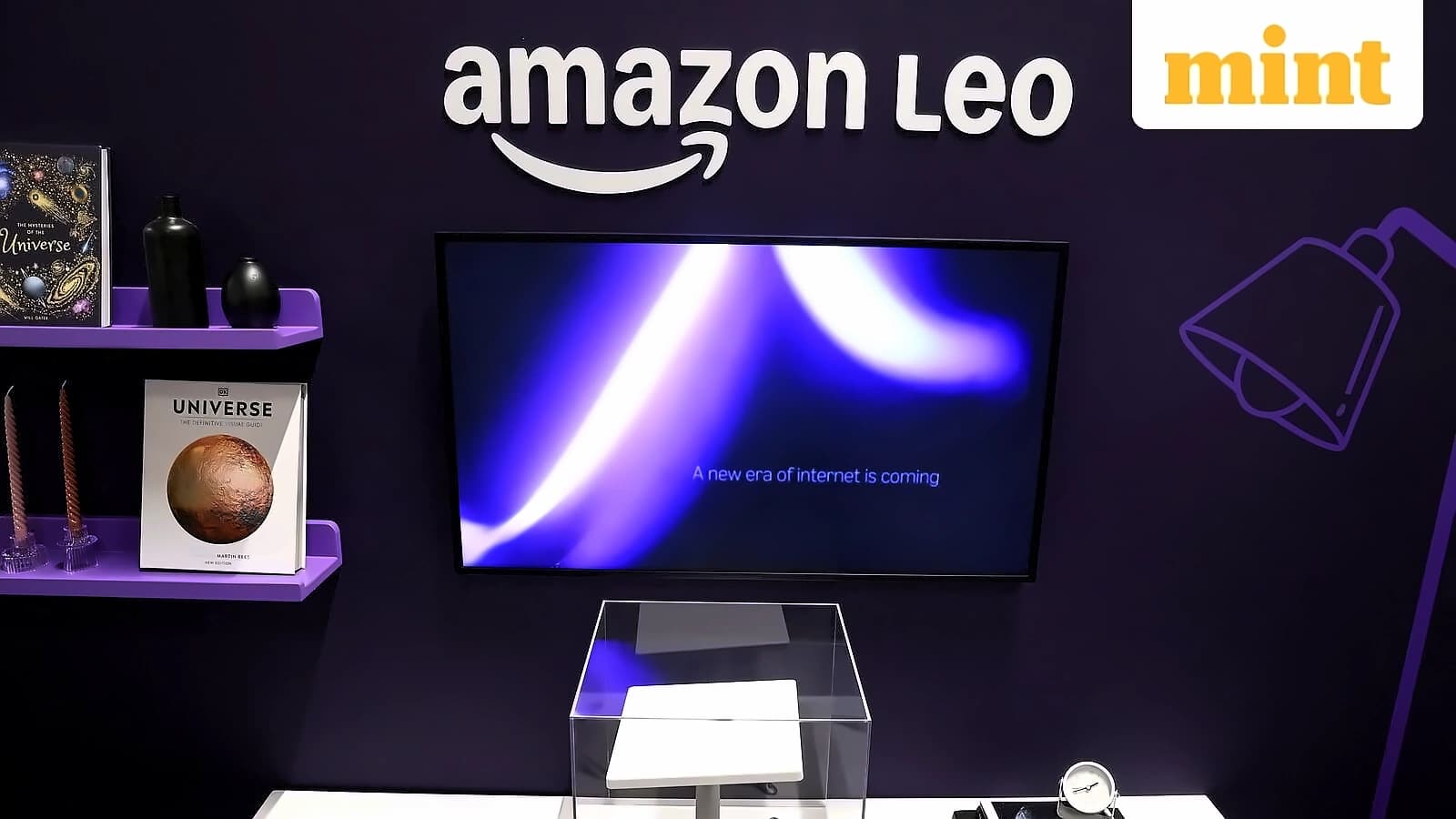
Amazon Leo, the fourth company in India's satellite internet race, must reapply for a fresh license under new regulatory framework. According to government officials and industry executives, the company's application for the global mobile personal communications by satellite (GMPCS) license is now cancelled due to a newly notified authorization regime. As reported by Mint, the government official stated that "the application of Amazon Leo, which was under work in progress for the global mobile personal communications by satellite (GMPCS) licence, and of any other company, which was under process for any telecom service, stands cancelled. The companies will now have to reapply fresh for authorization."
While the DCC decision provides clarity on spectrum pricing and allocation, security approvals remain the critical hurdle for commercial launches. As reported by Moneycontrol, final approvals for companies holding Global Mobile Personal Communication by Satellite (GMPCS) licenses remain contingent on security demonstrations and resolution of concerns raised by the Ministry of Home Affairs (MHA) and other agencies. The companies have spent months responding to concerns raised by the DoT, MHA and other agencies, with Starlink facing an additional hurdle due to its 100% foreign direct investment structure. The Elon Musk-led company has also reapplied to India's space regulator, IN-SPACe, for approval of its next-generation satellite constellation, seeking authorization for nearly 30,000 low-Earth-orbit satellites. According to Business Standard, Eutelsat OneWeb reportedly wrote to the government recently seeking security approval for its low-earth orbit satellite constellation, citing that many of its satellites were close to the end of their operational lives and any further delay could make them useless.
Currently, only geostationary orbit (GSO)-based fixed satellite networks such as Hughes and Nelco are permitted to offer services in India, and they pay spectrum charges of around 3-4% of AGR. According to Moneycontrol, the government will now finalize pricing and other modalities for non-GSO players including Elon Musk-owned Starlink, Eutelsat OneWeb, Jio Satellite and Amazon Leo to enter India's satellite broadband market. The DCC rejected Trai's proposal for per-subscriber charges, citing difficulties in distinguishing between rural and urban users, and also rejected subsidizing fixed satellite terminals for rural subscribers through the Digital Bharat Nidhi (DBN). As reported by Business Standard, the policy and regulatory aspects of satellite communications have moved slowly and at times in a disjointed manner, with the Trai recommendations on commercial satellite internet services issued in May last year, but some companies were given licenses much earlier to offer satellite broadband.
Amazon Leo, formerly known as Project Kuiper, is the satellite internet service developed and operated by Kuiper Systems LLC, a subsidiary of Amazon. As reported by Mint, the company is deploying its first-generation broadband satellite system and already has more than 390 satellites in orbit. According to the company's website, it will come up with a constellation of up to 5,105 low earth orbit satellites designed to deliver direct-to-device connectivity to customers globally, with deployment beginning in 2028. The high-speed and low-latency internet service is expected to be a game changer for India's communication landscape, especially in remote and rural areas with poor connectivity, with potential far-reaching implications in sectors such as online healthcare and education.