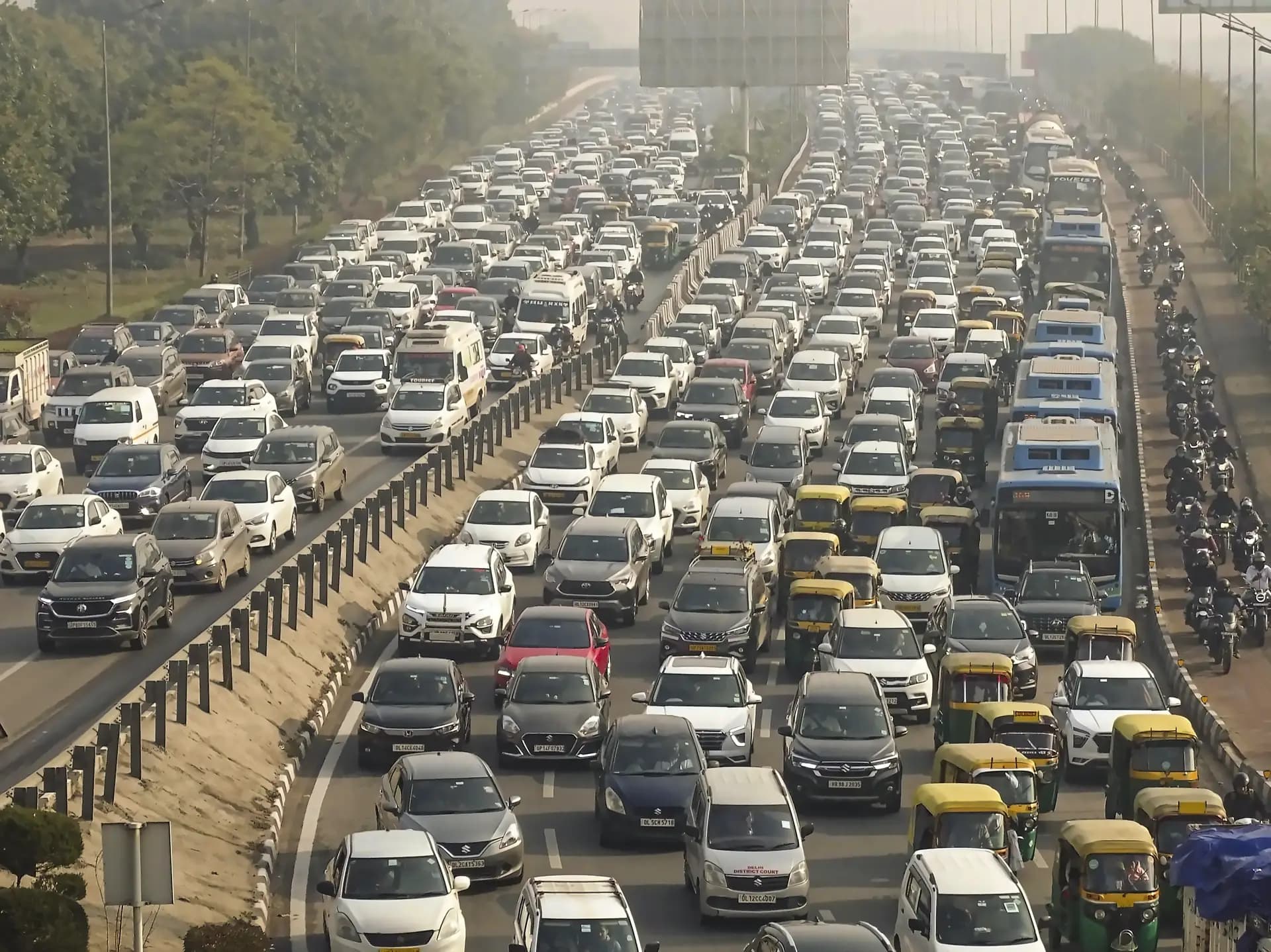
Artificial intelligence is revolutionizing traffic enforcement across global cities, with Dhaka becoming a pioneer in AI-powered traffic management. According to recent reports, in April, Dhaka police linked traffic cameras to AI software designed to automatically detect violations, marking a significant shift from manual control. The system uses traffic-monitoring camera feeds with software identifying offences ranging from signal and lane violations to illegal parking, demonstrating how AI can transform urban mobility management. City police spokesman N.M. Nasiruddin confirmed the system recorded about 800 traffic violations in a single day, with police prosecuting at least 300 vehicles since implementation.
Dhaka's traffic challenges have been severe, with the city ranked as the 'slowest city' in the world by the US National Bureau of Economic Research, achieving an average speed of just 4.8kph according to a World Bank and Bangladesh University of Engineering and Technology study. As reported by multiple sources, traffic officer Sergeant Nazim Uddin noted that before AI introduction, drivers treated traffic signals and police as obstacles, with officers often confronted by vehicles refusing commands. The AI system has changed driver behavior significantly, with motorist Hannan Rahman Jibon receiving an automatic ₹1,600 fine after running a red light, stating he is now more careful due to cameras installed across the city.
The visual monitoring landscape is undergoing a fundamental transformation as artificial intelligence and edge computing enable cameras to understand moving images in real-time and trigger actionable alerts. According to reports from Business Standard, this evolution represents a shift from passive surveillance to active, proactive monitoring across multiple sectors including banking, retail, and logistics. The technology allows cameras to analyze, interpret and predict activity rather than simply recording information, creating a new paradigm for visual monitoring systems. CMS Info Systems processes more than a million alerts daily from over 350,000 cameras across 50,000 sites, demonstrating the massive scale of AI-powered monitoring deployment.

Rajiv Kaul, executive vice chairman and CEO of CMS Info Systems, emphasizes that "Vision AI is becoming a critical infrastructure. India is late to it, and that is the opportunity." As reported by Business Standard, Kaul advocates for India to architect this technology as sovereign infrastructure - maintaining control over the chipset, models, command centre, and data through Indian companies. The technology addresses specific industry challenges including fuel pump monitoring and footwear retail applications, while quick-service restaurants benefit from real-time cash-counter monitoring and footfall counting. Dhaka's system targets only motor vehicles currently, with police considering how to regulate the city's vast fleet of pedal rickshaws.
In Dhaka's control room, analyst Sharmin Afroze monitors live traffic feeds plugged into the AI system, where violations are checked by humans before fines are issued. The system faces technical challenges including blurred or too small number plates that are difficult to identify, though police are working with the road transport authority to address these issues. Hasib Mohammed Ahsan, a professor at Bangladesh University of Engineering and Technology, emphasizes that long-term success depends less on technology and more on consistent enforcement and rule adherence. The CMS HawkAI system provides centralized, real-time oversight across warehouses and continuously monitors CCTV cameras, demonstrating how AI-powered surveillance can transform urban management across multiple sectors.