The Central Board of Direct Taxes (CBDT) has made substantial progress in clearing its tax appeal backlog during FY26, disposing of over 2.24 lakh appeals against 1.79 lakh fresh appeals filed, resulting in a net reduction of over 34,000 pending appeals. According to Business Standard, CBDT Chairman Ravi Agrawal highlighted that around 6,000 departmental appeals were withdrawn following the revised monetary thresholds announced in Budget 2024-25. However, Finance Minister Nirmala Sitharaman cautioned that the pace of disposal remains inadequate, noting that over 5.4 lakh first appeals still remain pending. As reported by The Alley for Indian Chartered Accountants, Sitharaman emphasized that while disposing of 2.24 lakh appeals against 1.79 lakh fresh appeals had helped reduce the pendency, the remaining backlog was still too high, stating 'We should pause here… We still have 5.4 lakh appeals. It cannot be that the cases keep mounting and you're clearing at some pace which will take a century to clear'.
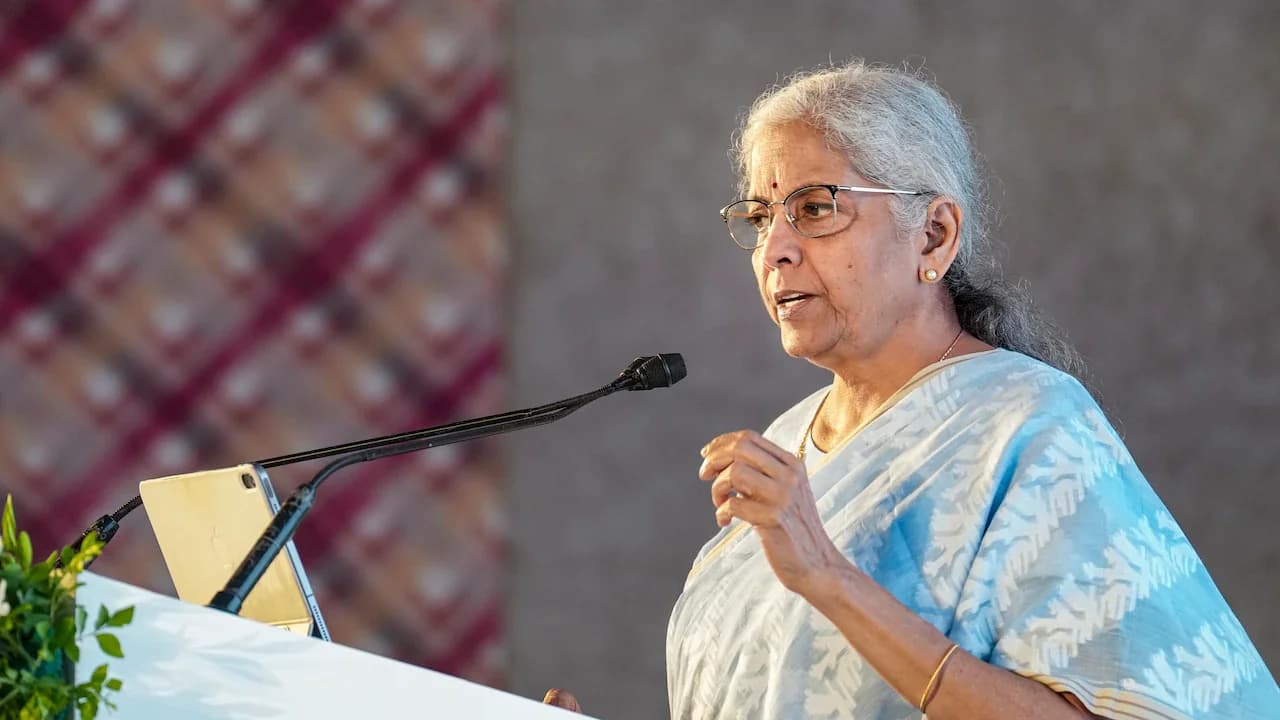
Addressing the 167th Income Tax Day celebrations, Sitharaman emphasized that the department must strengthen litigation management and prevent disputes as the remaining backlog continues to impact tax administration. As reported by The Alley for Indian Chartered Accountants, she stated that 'We should pause here… We still have 5.4 lakh appeals. It cannot be that the cases keep mounting and you're clearing at some pace which will take a century to clear' and urged the CBDT to undertake another review to ensure the backlog does not continue to grow. The Finance Minister called for a shift from merely managing litigation to preventing disputes through greater tax certainty, noting that implementation of the Income Tax Act, 2025, should be accompanied by consistent guidance and continuous engagement with taxpayers, professionals and industry. She outlined seven principles for the department going forward — deepening voluntary compliance, simplifying taxpayer experience, strengthening tax certainty, harnessing technology responsibly, building institutional excellence, strengthening public trust, and embracing continuous improvement.
On taxpayer services, CBDT Chairman Ravi Agrawal reported significant improvements, with nearly all verified income-tax returns for Assessment Year 2025-26 processed. Out of nearly 8.6 crore verified returns, only around 1.5 lakh remained pending, while of 3.82 crore verified refund cases, just 1.47 lakh were pending due to ongoing risk assessment. The department achieved a 90.3 per cent disposal rate for appeal-effect orders during FY26, disposing of 5.68 lakh orders out of 6.29 lakh. On grievance redressal, the department disposed of 94 per cent of nearly 77,765 CPGRAMS grievances and resolved 95 per cent of over 3.43 lakh e-Nivaran grievances. The virtual assistant Kar Saathi recorded 38 lakh hits, while the department conducted 304 physical outreach programmes and 11 Samvaad sessions on the Income Tax Act, 2025. As reported by The Alley for Indian Chartered Accountants, the department has also conducted 12 sessions on the new income-tax forms to ensure smooth transition.
On international taxation, CBDT Chairman Ravi Agrawal announced that the department signed 220 Advance Pricing Agreements (APAs) during FY26, taking the cumulative number of APAs to 1,035 by March 2026. The department is expanding its digital capabilities significantly, with the virtual assistant Kar Saathi recording 38 lakh hits. Revenue Secretary Arvind Shrivastava described the implementation of the Income Tax Act, 2025, as a landmark reform, noting that the new law reduced the number of sections from 819 to 536, chapters from 47 to 23, rules from 511 to 333, and forms from 399 to 190. As reported by The Alley for Indian Chartered Accountants, Shrivastava emphasized that the new law was preceded by extensive public consultation and nationwide taxpayer outreach, ensuring comprehensive stakeholder engagement.
Sitharaman also called for specialized training of tax officers in artificial intelligence, data analytics, forensic accounting, international taxation, transfer pricing, digital assets and cybersecurity to prepare the department for emerging challenges. According to The Alley for Indian Chartered Accountants, she highlighted that tax certainty was critical for improving ease of doing business and India's attractiveness as an investment destination. The Finance Minister's remarks came as the department continues to focus on deepening voluntary compliance, simplifying taxpayer experience, and building institutional excellence while embracing continuous improvement in its operations.