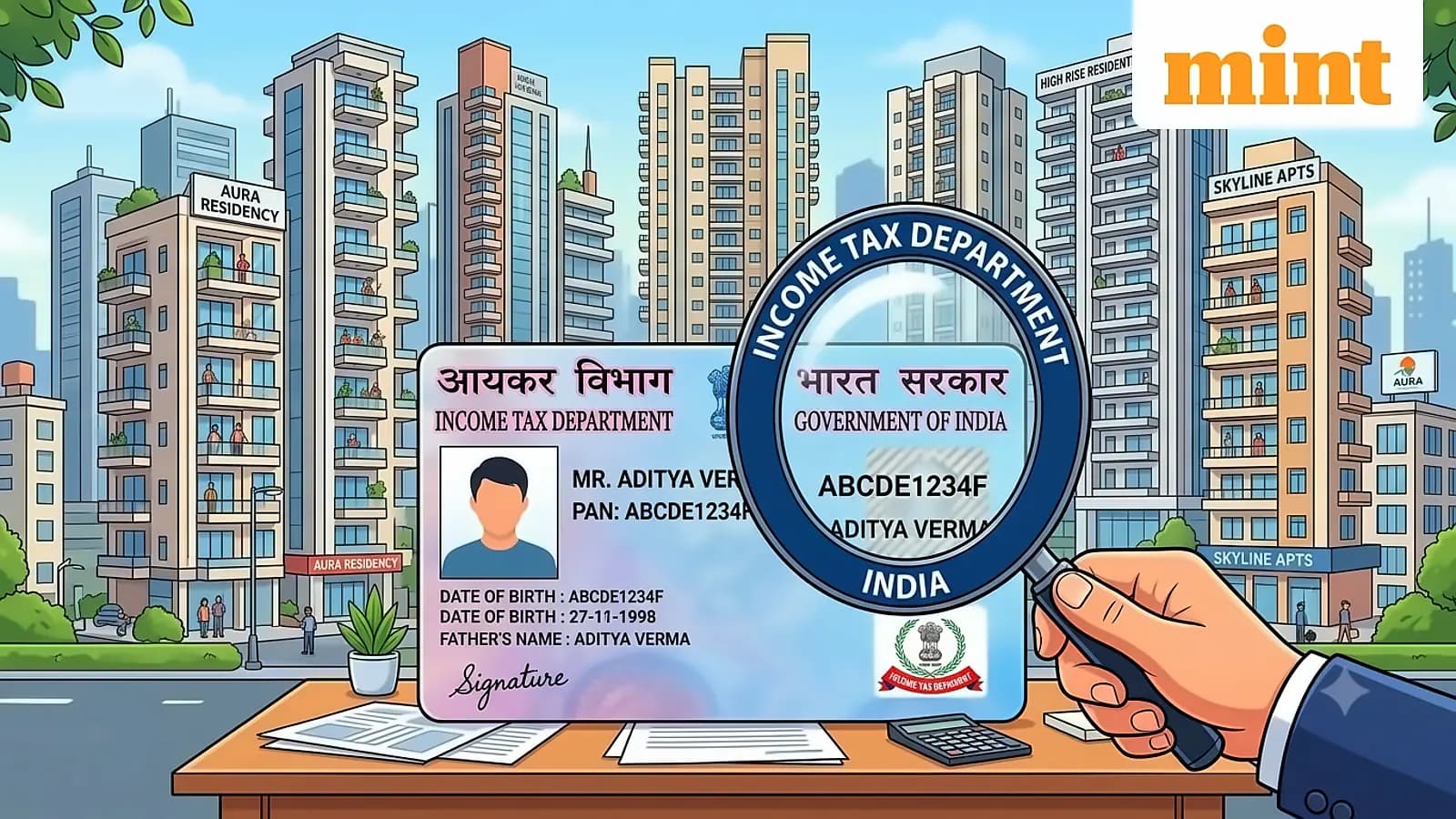
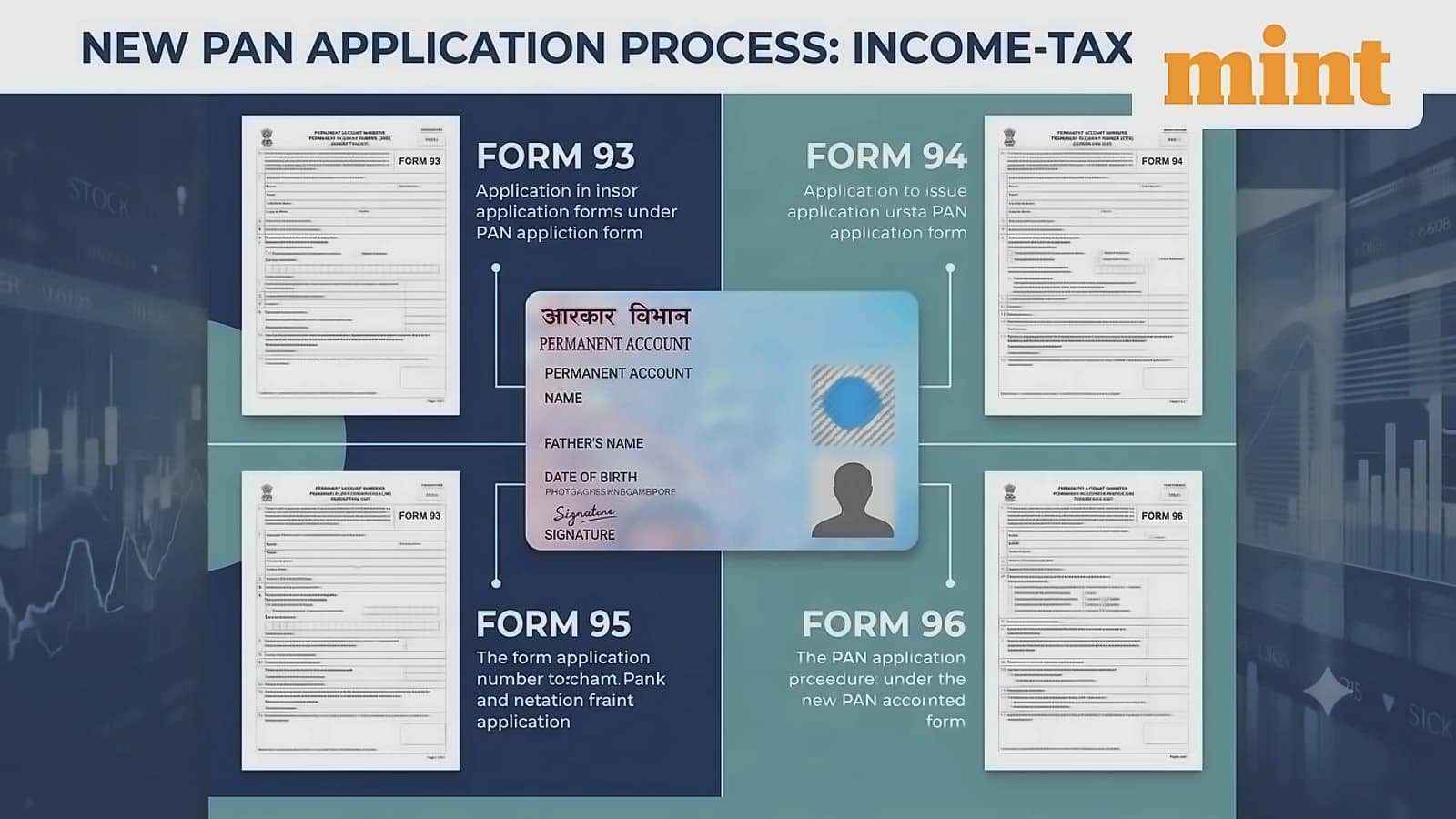
The Income-tax Act, 2025 has introduced four category-specific PAN application forms effective April 1, 2026, replacing the earlier Forms 49A and 49AA under the 1961 Act. According to reports from Mint, the new forms are Form 93, 94, 95, and 96, each designed for specific applicant categories based on citizenship and entity status. Form 93 is for individuals who are Indian citizens, Form 94 covers Indian companies and other entities formed in India, Form 95 applies to individuals who are not Indian citizens, and Form 96 is for entities formed outside India.
Any person or entity required to file an income tax return or undertake specified financial transactions prescribed under the Income-tax Rules must apply for PAN. As reported by Mint, applicants must submit proof of identity such as a valid passport, proof of address such as an Aadhaar card, and proof of date of birth or incorporation such as a birth certificate or certificate of incorporation, as applicable. The specific documents required depend on the applicant category and the form used. Applications can be submitted online through authorized portals of Protean eGov or UTIITSL, or by visiting their PAN application centres.
According to the Income-tax Department FAQs reported by Mint, the following fees apply for physical PAN card dispatch: ₹107 for dispatch to an Indian address and ₹1,017 for dispatch to an address outside India. For e-PAN applications, the fee is ₹72 for applications submitted at TIN Facilitation Centres or PAN Centres, and ₹66 for online applications through paperless modes including e-KYC, e-Sign, scanned-based e-Sign, or Digital Signature Certificate (DSC).
Applicants can track their application using the acknowledgement or reference number on the designated portal. As reported by Mint, the new forms are available under the 'Downloads or PAN' section of the authorized service providers' websites (Protean eGov or UTIITSL). Domestic companies and limited liability partnerships (LLPs) can apply through the Ministry of Corporate Affairs' Common Application Form, while foreign portfolio investors (FPIs) can use the Securities and Exchange Board of India's corresponding facility.
From October 1, 2026, eligible resident individuals and HUFs purchasing immovable property from non-residents can use their PAN to report and pay TDS without obtaining a separate TAN solely for the transaction. According to the Income-tax Department guidelines, buyers must ensure tax deducted is deposited within 30 days of the end of the month in which tax is deducted, and Form 141 should be filed within one month of the end of the month. The new Form 141 Schedule E process represents a meaningful procedural improvement, though it does not eliminate the requirement to make proper deductions or ensure proper filing of forms.