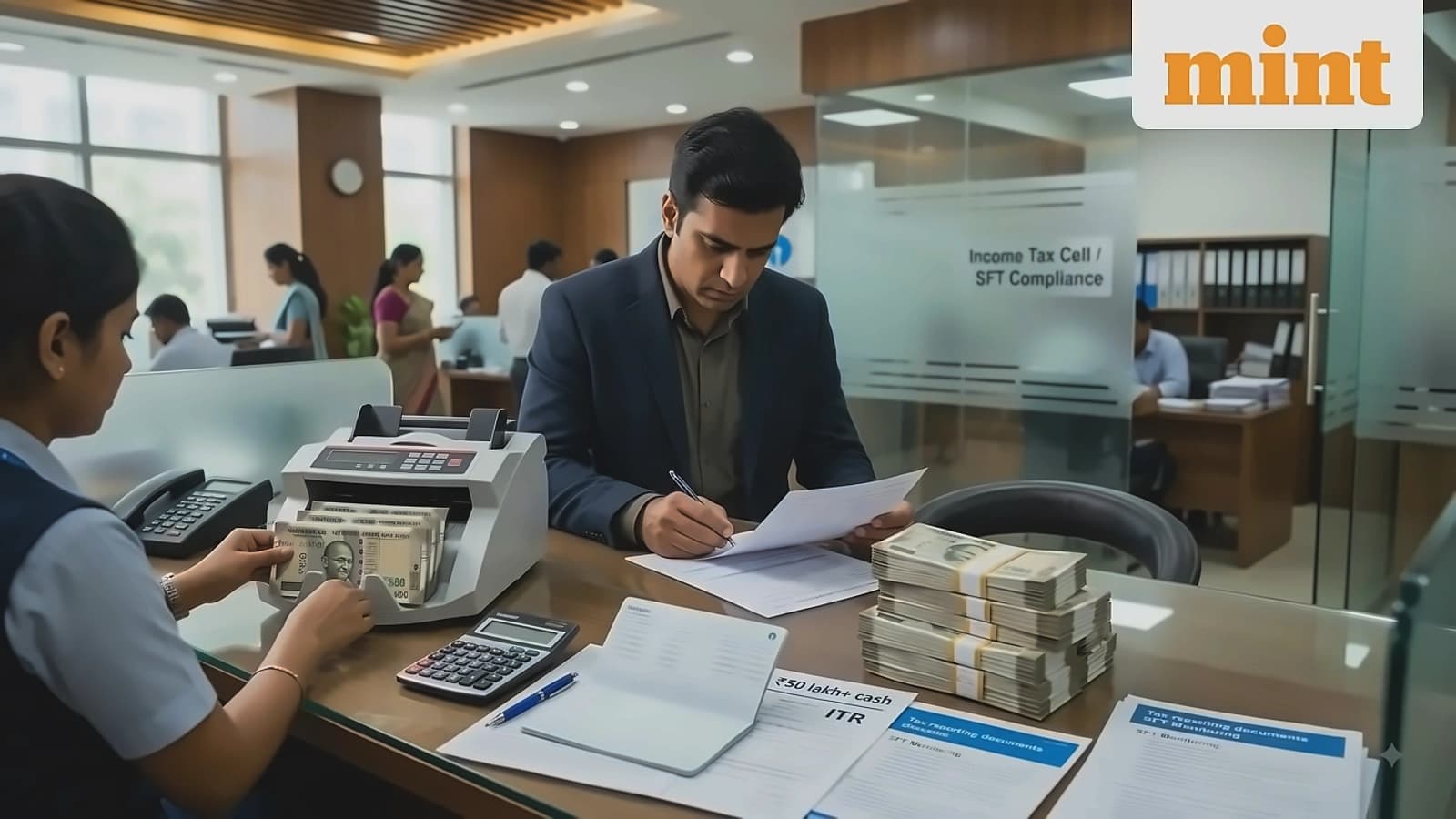
The Delhi bench of the Income Tax Appellate Tribunal (ITAT) has established a crucial precedent by ruling that the Income Tax Department cannot make tax additions solely on the basis of documents recovered during searches on third parties. According to reports from Mint, the Tribunal emphasized that such additions must be backed by independent evidence proving the alleged transaction actually took place. This ruling came in the case of Dolly Sabharwal vs Deputy Commissioner of Income Tax, where the department sought to tax alleged interest income running into crores after relying on a handwritten calculation sheet recovered during a search on another person. The Mumbai ITAT has reinforced this principle in Sanjeet Kumar Kedarnath Gupta v. Income Tax Officer, where it deleted a ₹90 lakh addition made under Section 69A after finding that the allegation was based solely on loose papers recovered from a third party.
The dispute relates to Assessment Years 2018-19, 2019-20, 2020-21 and 2022-23. As reported by Mint, for AY 2018-19, Dolly Sabharwal filed her income tax return declaring an income of ₹4.23 lakh. During a search conducted under Section 132 on another individual, the Income Tax Department recovered a loose sheet containing interest calculations on an alleged loan of about ₹6.62 crore purportedly advanced by Sabharwal. Based on these handwritten calculations, the Assessing Officer concluded that the taxpayer had received interest income that was not disclosed in her return, adding around ₹1.48 crore as unexplained money under Section 69A, taking her assessed income to over ₹1.52 crore.
According to Mint reports, the taxpayer denied receiving any interest, while the alleged borrower also denied making any interest payment. Even the person from whose premises the document was recovered stated that the calculations were merely notional and did not represent actual financial transactions. In the Mumbai case, the taxpayer had jointly purchased a commercial unit for ₹50 lakh from M/s Roshni Enterprises through banking channels, with every payment duly documented. The taxpayer denied making any cash payment beyond the registered consideration and argued that the seized papers belonged to the builder, he neither authored nor possessed them, and no cash was found with him.
As reported by Mint, the Tribunal dismissed all four appeals filed by the Income Tax Department, holding that the additions could not be sustained merely on the basis of a document recovered from a third party. The ITAT observed that the loose sheet was not found in the taxpayer's possession and that both the taxpayer and the alleged borrower had consistently denied any payment or receipt of interest. More importantly, the department had failed to produce any independent evidence, such as bank statements, accounting records, cash trail or other material, to establish that the alleged interest transaction had actually taken place. In the Mumbai case, the Tribunal highlighted that no money was found in the taxpayer's possession, the taxpayer was neither the author nor custodian of the seized documents, and there was no corroborative evidence of any cash transfer.
According to Mint reports, the ITAT also relied on its earlier ruling in the connected case involving the alleged borrower, where additions based on the same loose sheet had already been deleted. The Tribunal agreed that presumptions available under Sections 132(4A) and 292C of the Income Tax Act generally apply only to the person from whose possession the documents are seized and cannot automatically be extended to another taxpayer. The ruling reinforces that while documents recovered during a search may justify further investigation, they cannot, by themselves, form the basis of tax additions. The Supreme Court's ruling in K.P. Varghese v. ITO was cited, reiterating that the burden of proving taxability lies on the Revenue, and a taxpayer cannot be asked to prove a negative, namely that no cash payment was made. The decision makes clear that if the department seeks to invoke Section 69A, it must establish a direct link between the taxpayer and the alleged undisclosed payment through independent evidence such as financial records, admissions, digital communications or other corroborative material.