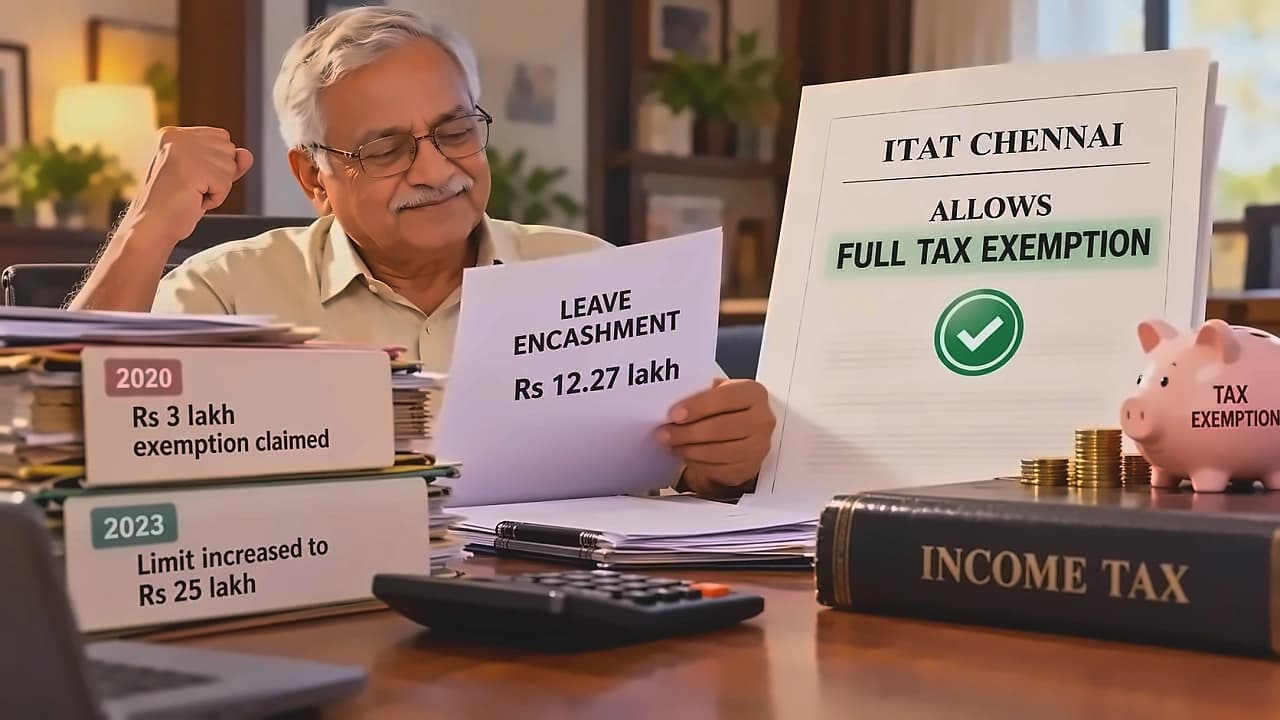
The Income Tax Appellate Tribunal (ITAT), Chennai, has ruled in favor of enhanced leave encashment tax exemption for pre-2023 retirees in a significant decision. According to reports from The Economic Times and Mint, the Tribunal's order dated June 12, 2026 found that CBDT Notification No. 31/2023, which raised the leave encashment exemption limit from ₹3 lakh to ₹25 lakh for non-government employees, can be applied retrospectively. The ruling came in the case of Vattikundala Prabhakara Rao, a retired ONGC employee who received ₹19,05,997 as leave encashment during FY 2019-20. As per Mint, the ITAT noted that both PSU and private-sector retired employees can benefit from the enhanced exemption limit, including those who had already paid tax on leave encashment exceeding ₹3 lakh.

The ITAT's decision has significant financial implications for affected retirees. As reported by The Economic Times and Mint, the Tribunal directed the Assessing Officer to allow the entire leave encashment of ₹19,05,997 as exempt under Section 10(10AA)(ii). The ruling specifically addresses the case where the Centralised Processing Centre, Bengaluru, had restricted exemption to ₹3,00,000, bringing the balance amount to tax. The enhanced exemption limit represents a ₹22 lakh increase from the previous cap, providing substantial relief to retirees who were taxed on leave encashment above ₹3 lakh for assessment years before 2023-24. According to Mint, the higher limit of leave encashment tax exemption applies to the period of earned leave in the credit of the employee at the time of retirement whether on superannuation or otherwise.
The ITAT's decision was based on legal principles of justice and precedent. According to The Economic Times and Mint, the Tribunal cited the Supreme Court's decision in Collector, Land Acquisition v. Mst. Katiji, which held that 'substantial justice should prevail over technical considerations'. The ITAT observed that the increase from ₹3 lakh to ₹25 lakh was 'a significant upward revision after nearly two decades and is clearly aimed at aligning the benefit available to non-government employees with that available to government employees'. The ruling noted that provisions which are beneficial in nature and intended to remove hardship are to be construed liberally, particularly where no vested right of the Revenue is adversely affected. As per Mint, the Tribunal emphasized that it is a settled principle that provisions which are beneficial in nature and intended to remove hardship are to be construed liberally and, in appropriate cases, applied retrospectively, particularly where no vested right of the Revenue is adversely affected.
The ITAT found 'considerable force' in the assessee's contention that denying enhanced exemption to employees who retired before the notification date would create 'an unjust and artificial distinction between similarly placed employees retiring before and after the date of notification'. As reported by The Economic Times and Mint, the Tribunal noted that the explanatory memorandum to the notification stated 'It is hereby certified that no person is being adversely affected by giving retrospective effect to this notification'. The ruling means that non-government retirees who were taxed on leave encashment above ₹3 lakh for assessment years before 2023-24 may file revision or appeal claiming the enhanced exemption, though they should first consult legal or tax experts for proper guidance. According to Mint, the ITAT found considerable force in the assessee's contention that denying the enhanced exemption to employees who retired before the notification date would create an unjust and artificial distinction between similarly placed employees retiring before and after the date of notification, which would defeat the very purpose of the amendment.