The Income Tax Appellate Tribunal (ITAT) Jaipur has rejected a taxpayer's ₹20.67 lakh capital loss claim on selling her Mercedes, ruling that a personally used car is not a capital asset under Section 2(14). According to reports from Mint, the tribunal held that a car used for personal purposes qualifies as a personal effect and is excluded from the definition of a capital asset under Section 2(14) of the Income-tax Act, 1961. The ruling was pronounced on 28 September 2026 in ITA No. 312/JPR/2026 for assessment year 2023-24. The tribunal emphasized that showing a vehicle as a fixed asset in the balance sheet does not establish business use, and a taxpayer cannot automatically claim a capital loss on selling a car merely because it is recorded as a fixed asset in the balance sheet.
The taxpayer had claimed a long-term capital loss of ₹20,67,120 on the sale of a Mercedes in her income-tax return, arguing that the vehicle was a capital asset because it was reflected under fixed assets in her balance sheet. As reported by Mint, she also maintained that she had never claimed depreciation on the car. However, the assessing officer found that the taxpayer had treated the vehicle as a personal asset in her own tax computations. The taxpayer had not claimed depreciation on the car and had disallowed car loan interest of ₹32,614 and repairs and maintenance expenses of ₹68,404 as personal expenditure. In her response to the tax department, she had also confirmed that these expenses were personal.
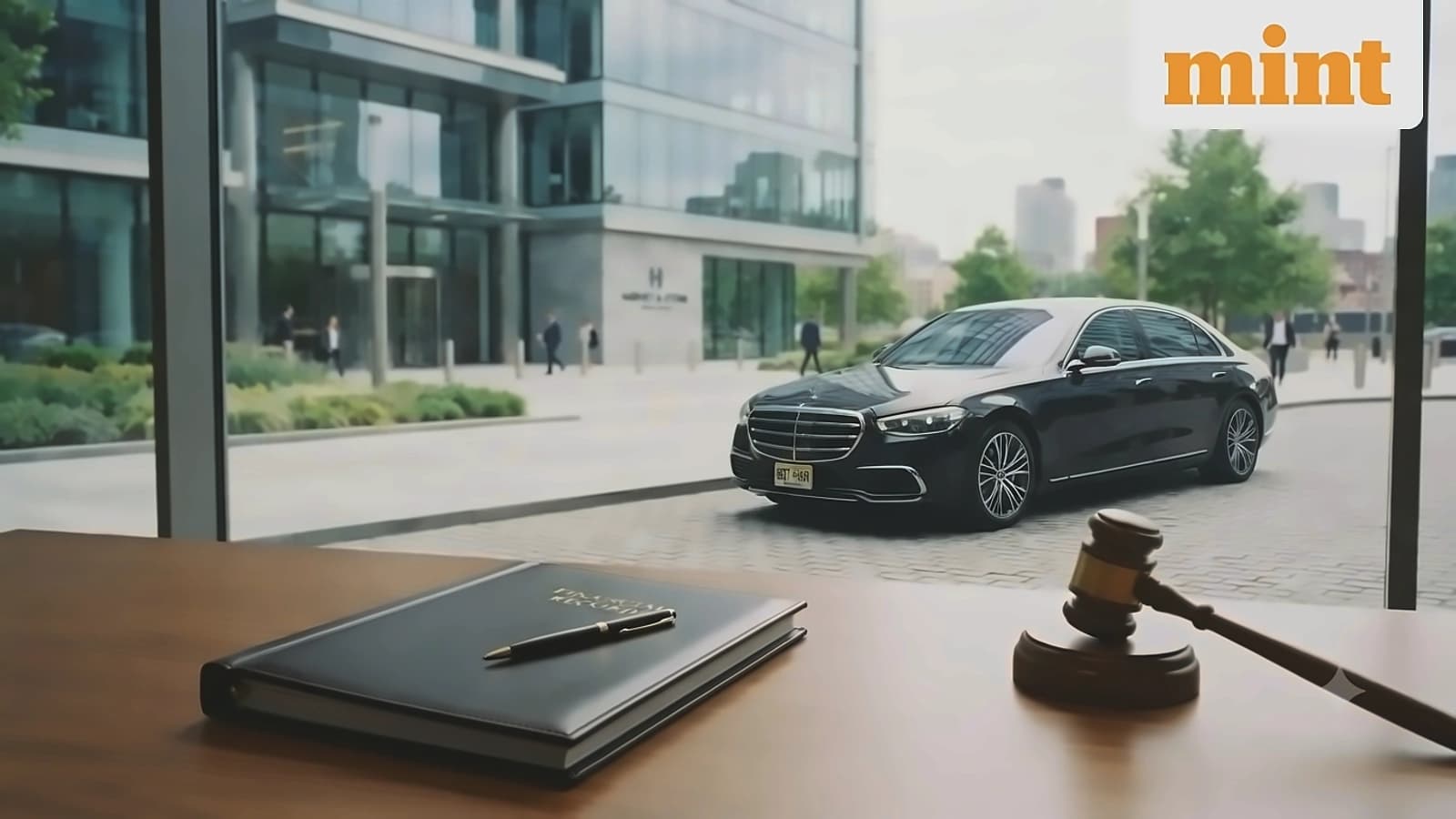
The tribunal held that accounting classification alone could not determine whether an asset qualified as a capital asset under income-tax law. According to Mint, the tribunal relied on the Supreme Court's ruling in H.H. Maharaja Rana Hemant Singhji vs CIT, which explained that personal effects are articles intimately and commonly used by the taxpayer. The tribunal observed that 'Accounting treatment cannot prevail over the admitted user of the asset'. Section 2(14) excludes personal effects, including movable property held for personal use, from the definition of a capital asset. The exceptions include jewellery, archaeological collections, paintings, sculptures and other works of art, but a motor car does not fall within these exceptions.
The ruling draws an important distinction between business assets and personal assets, as reported by Mint. The tribunal distinguished earlier judicial decisions concerning the sale of business assets where depreciation had not been claimed, noting that those cases dealt with the computation of capital gains or losses on assets that were already established as business or capital assets. In Agarwal's case, the fundamental question was whether the Mercedes qualified as a capital asset in the first place. The tribunal held that since the vehicle was a personal effect, its sale could not generate an allowable capital loss, and pointed out that such a gain would not be taxable as capital gains either if the car had been sold at a profit. The tribunal emphasized that neither capital gains nor capital losses can arise from the sale of a personal car.
ITAT accordingly upheld the disallowance of ₹20.67 lakh and dismissed the taxpayer's appeal, as reported by Mint. The tribunal emphasized that the ruling establishes that personal cars cannot generate capital losses, regardless of their accounting treatment or whether depreciation has been claimed. This decision sets a precedent for similar cases involving personal vehicle sales where taxpayers may have claimed capital losses based solely on accounting classification. The tribunal's approach ensures that the fundamental nature of the asset - whether it is used for personal or business purposes - determines its tax treatment, not merely its accounting classification.