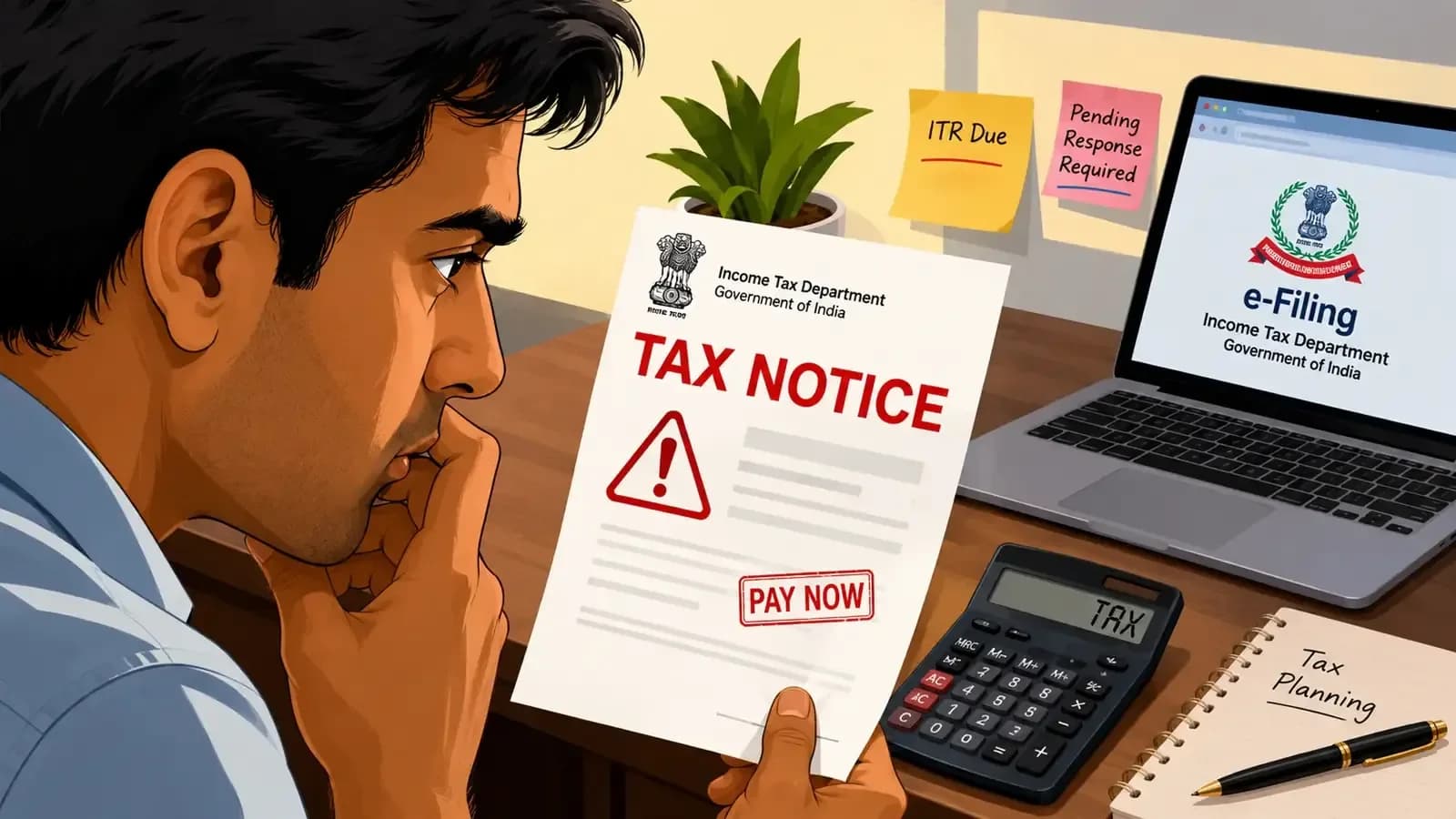
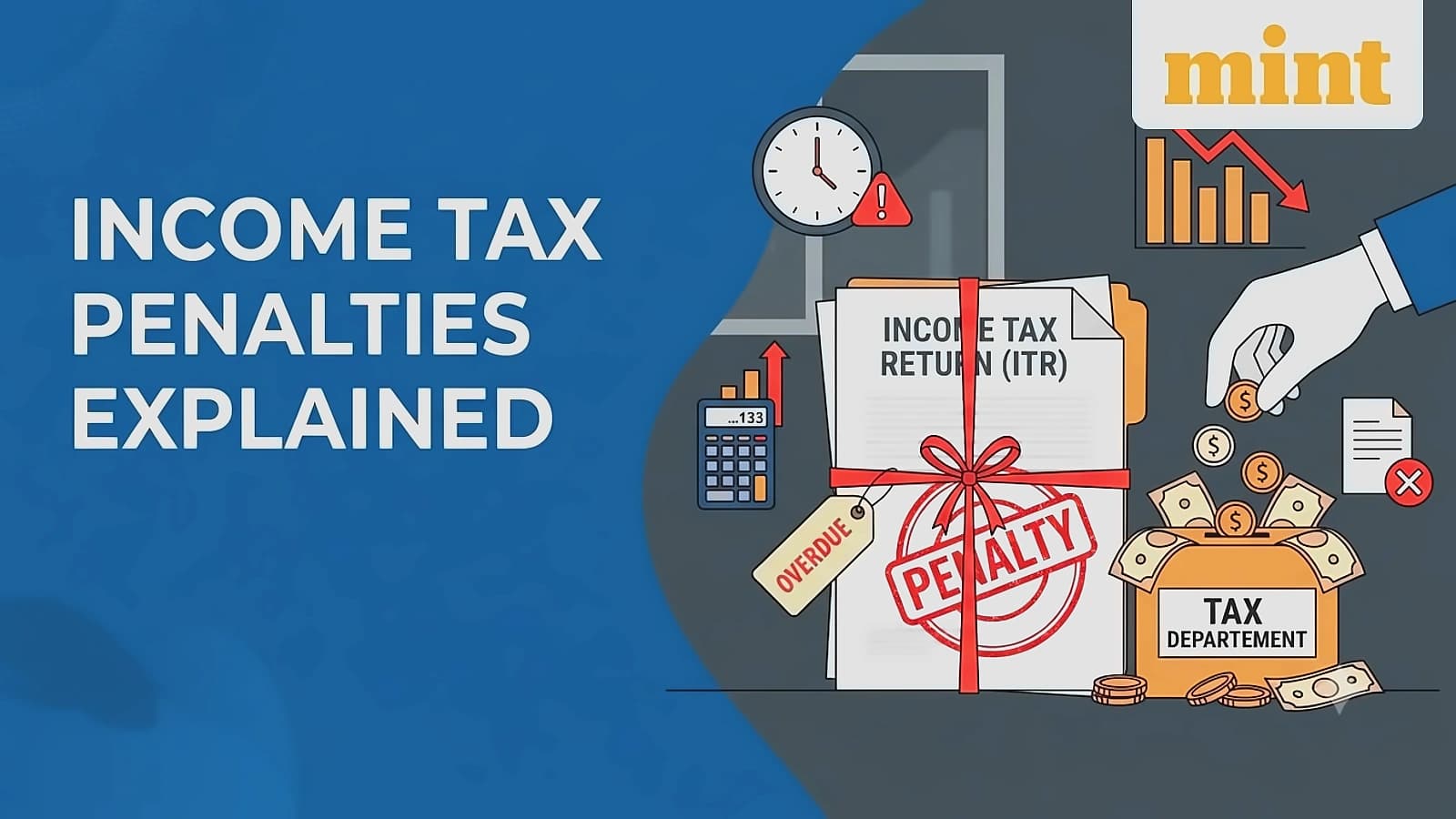
When taxpayers fail to pay tax demands within the specified timeframe, they become 'assessees in default' under Section 221 of the Income Tax Act. According to Gaurav Makhijani, Managing Partner at MGA, if taxpayers fail to pay within 30 days or a shorter period approved by a Joint Commissioner, interest and penalty are imposed. The penalty structure includes interest at 1% per month on outstanding tax demand from the due date until full payment, plus a penalty up to 100% of tax arrears that is not automatic but depends on case facts and circumstances. Under the new Income Tax Act 2025, these provisions become sections 411 and 412, with no significant changes to the penalty framework.
Under-reporting of income involves declaring lower income than assessed by authorities due to omissions, incorrect claims, or computational errors, while misreporting involves deliberate concealment or falsification of facts. As reported by Makhijani, misreporting includes suppressing income, claiming bogus expenses, or failing to record transactions. Examples include recording false entries in books of account, claiming bogus expenses, and failure to report international transactions. Because misreporting involves deliberate tax evasion attempts, it attracts significantly higher penalties than under-reporting.

According to Suraj Singh, Founder of SD Singh & Associates, under-reporting of income attracts a penalty of 50% of tax payable on the under-reported income, while misreporting of income results in a higher penalty of 200% of tax payable. These provisions are contained in Section 439 of the new Income Tax Act, which replaced the previous law. The Income Tax Department introduced these penalties to effectively penalize taxpayers evading taxes through deliberate misreporting.
The Income Tax Department has introduced significant changes to ITR forms for Assessment Year 2026-27, requiring investors to disclose NBFC and HFC fixed deposit interest under Schedule OS. As reported by Livemint citing tax experts at Taxmann, the updated ITR-2, ITR-3, ITR-5, and ITR-7 forms now explicitly require taxpayers to report interest income from Non-Banking Financial Companies, Housing Finance Companies, and other corporates under the 'Others' column of Schedule OS. This represents a meaningful departure from previous forms where such income was left to taxpayer interpretation, with the new forms clearly specifying where this income belongs.
Taxpayers can avoid penalties in certain circumstances through immunity provisions. As reported by Makhijani, for under-reporting cases, taxpayers must pay tax and applicable interest in full and not file appeals against assessment orders within one month from receiving the order. For misreporting cases, the new Finance Budget 2026 introduced an option to take immunity by paying 100% additional tax payment. He provides an example where a taxpayer owes ₹10 lakh tax with 200% penalty (₹20 lakh), can pay ₹10 lakh tax plus ₹10 lakh additional to get immunity and avoid litigation costs.
When taxpayers continue defaulting after penalty and interest are levied, tax authorities can initiate recovery proceedings under Section 270A. According to Makhijani, these proceedings grant wide powers including attachment of bank accounts, recovery directly from banks, and attachment and sale of movable or immovable property. While prescribed procedures must be followed, these measures are commonly taken in cases of persistent non-payment, making continued default a serious matter for taxpayers.