The Delhi High Court has stayed the operation of a Central Board of Direct Taxes (CBDT) clarification that denied income tax exemption on certain allowances to Supreme Court and High Court judges who opted for the new tax regime. According to reports from Business Standard, the interim protection came on a petition filed by the Delhi Tax Bar Association, which challenged the CBDT's Office Memorandum dated September 12, 2025. The petitioner argued that members of the Delhi Tax Bar Association regularly advise High Court and Supreme Court judges on taxation matters and were therefore directly concerned with the legality of the CBDT's clarification and its implications for judicial independence.
The association contended that restricting the tax exemption to only judges under the old tax regime undermined statutory safeguards governing judicial service conditions and raised concerns relating to judicial independence. As reported by Business Standard, Senior Advocate Sachit Jolly, appearing for the association, argued that the CBDT clarification violates Articles 125 and 221 of the Constitution, which protect the salaries and allowances of Supreme Court and High Court judges from being varied to their disadvantage after appointment. The petitioner further contended that the CBDT Office Memorandum wrongly treated these statutory exclusions as exemptions that become unavailable under the concessional tax regime.
The dispute centres on allowances that are excluded from taxable salary under Section 22D of the High Court Judges (Salaries and Conditions of Service) Act, 1954, and Section 23D of the Supreme Court Judges (Salaries and Conditions of Service) Act, 1958. According to Business Standard, these include rent-free accommodation, conveyance allowance, sumptuary allowance and leave travel concession. The CBDT memorandum stated that these exemptions would continue only for judges who remain under the old tax regime, while judges opting for the new tax regime under Section 115BAC(1A) of the Income-tax Act, 1961, would have these allowances treated as part of their taxable income. Another grievance raised before the Court was that the income tax return utility under the new regime did not provide any specific field enabling judges to claim the statutory exclusion.
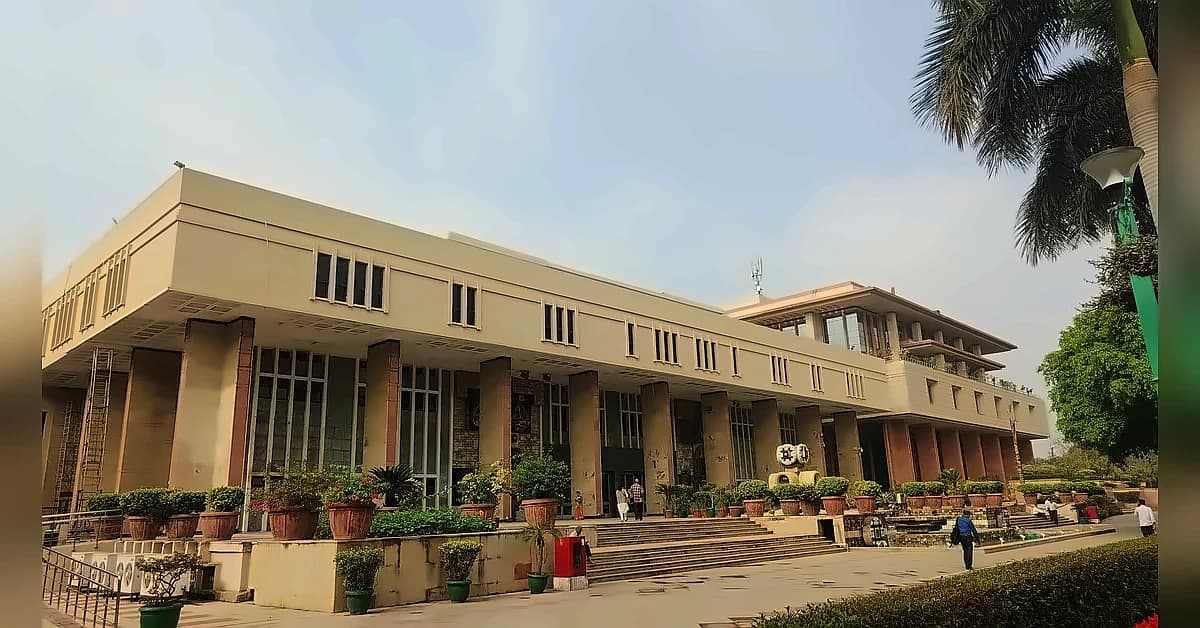
Hearing the matter, a Division Bench comprising Justices Dinesh Mehta and Rajneesh Kumar Gupta made an unusual disclosure regarding their own tax positions to avoid any perception of personal interest. As reported by Business Standard, Justice Rajneesh Kumar Gupta informed that he had already filed his income tax return under the new regime without claiming the disputed allowances, while Justice Dinesh Mehta stated that he intended to file his return under the old regime so that the outcome of the case would not personally affect his decision. The High Court observed that Section 22D contains a non-obstante clause overriding the provisions of the Income-tax Act, including Section 115BAC. The Court made an important prima facie observation that the statutory language does not merely exempt the allowances from tax; rather, it excludes them altogether from the computation of income under the head "Salaries." Consequently, an amount that is never included in taxable income cannot be treated as an exemption or deduction that is prohibited under the new tax regime.
The Delhi High Court has prima facie held that statutory allowances granted to High Court and Supreme Court judges may continue to remain outside the ambit of taxable salary even under the new income tax regime. According to Business Standard, the Court directed that judges of the Supreme Court and High Courts may file or revise their income tax returns under the new regime by reporting the disputed allowances under the category "Receipts not in the nature of income" within the "Exempt Income" section of the e-filing portal. The Court further ordered that such returns shall not be processed until further orders, thereby protecting the concerned judges from any adverse consequences while the legality of the CBDT's Office Memorandum is examined. The matter has been directed to be listed for further hearing on September 3, 2026.