The Central Board of Direct Taxes (CBDT) has amended Income-tax Form 161 through the Income-tax (Sixth Amendment) Rules, 2026, notified on 8 October 2026. According to reports from Mint and Zee News, the notification, numbered 134/2026, states that Rule 231 has been amended by inserting the words 'or waiver' after 'imposition'. The amendment provides taxpayers with the option to seek a waiver of the penalty imposed due to misreporting of income and in other cases, with the revised Form 161 applicable from October 8, 2026. The amended rules came into force on the date of publication (9 October) in the official gazette, as per the latest CBDT notification.
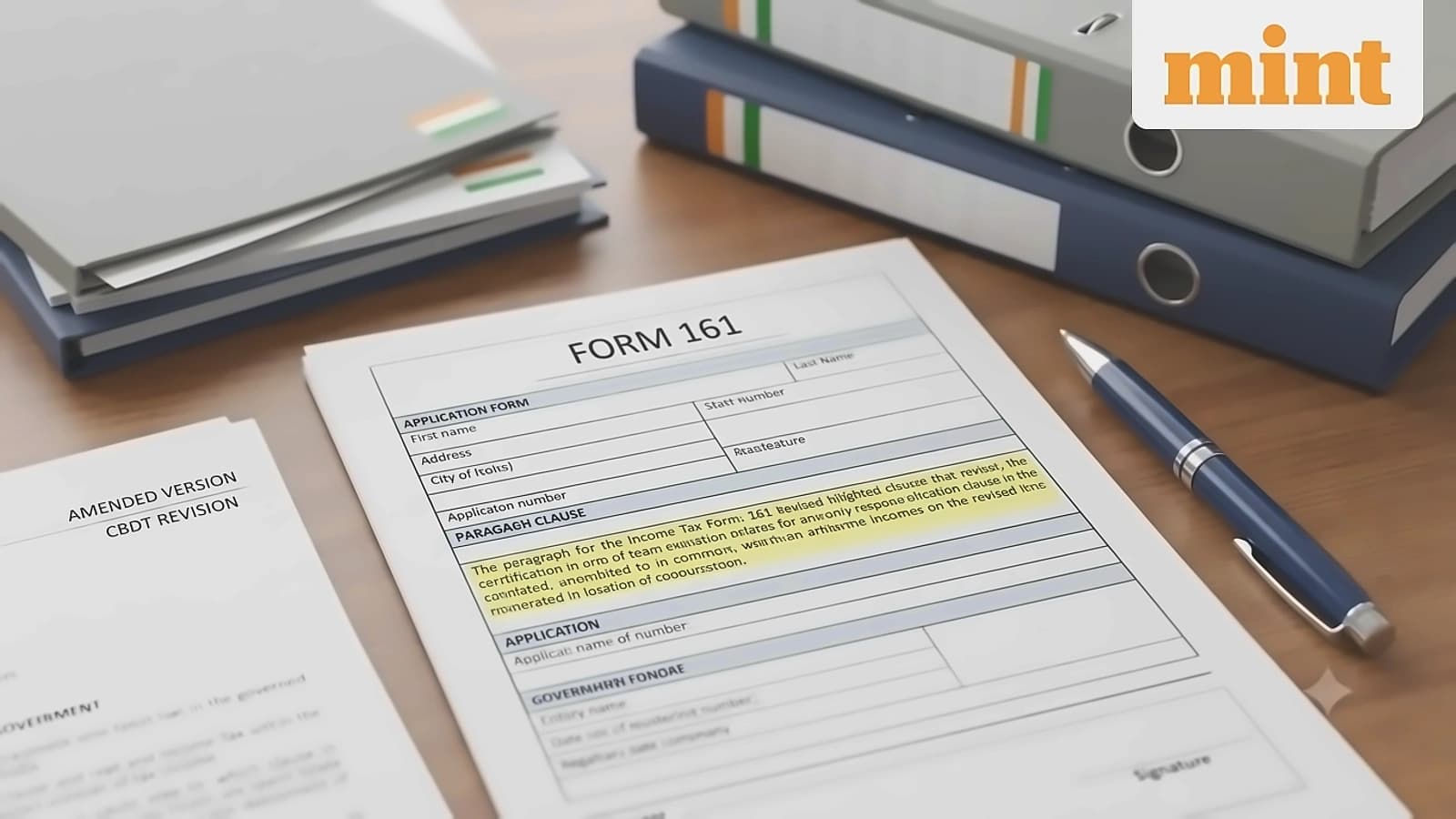
As reported by Mint and Zee News, Isha Sekhri, Founder of Isha Sekhri & Associates LLP, explained that the notification now amends Rule 231 of the Income-tax Rules, 2026 by inserting 'or waiver' after 'imposition'. The revised wording in Rule 231 now explicitly includes 'waiver', which allows taxpayers to seek relief even in cases where a penalty has already been imposed. The substituted Form 161 is more comprehensive, requiring details of the penalty orders already passed and evidence of payment of 'additional income-tax', which is a prerequisite for the waiver. The revised form is titled 'Application for seeking waiver of penalty under Section 440(2) of the Income Tax Act 2025' and is divided into personal information, assessment and payment details, and verification sections. According to Surana, the revised Form No. 161 enables eligible taxpayers to apply for such relief, including in specified cases involving misreporting of income, which were previously excluded from the scope of immunity. The new amendment may help taxpayers resolve tax disputes at an earlier stage, reduce litigation and avoid potentially higher penalty liabilities.
According to the latest CBDT notification, the revised Form 161 requires applicants to provide comprehensive personal details, including name, Permanent Account Number (PAN), address, mobile number and email ID. The form seeks detailed assessment or reassessment order information, including the tax year, section under which the order was passed, Document Identification Number (DIN), date of order, date of service and due date for payment specified in the notice of demand. The form separately records under-reported income arising from misreporting under Section 439(11)(a) to (f), misreporting under Section 439(11)(g), and under-reported income not arising from misreporting. As per Zee News, applicants must provide payment details, including the BSR code, date of deposit, challan serial number and amount paid. The revised form requires taxpayers to furnish the necessary particulars of the assessment, under-reported income, tax liability and payments made, along with a declaration confirming that no appeal has been filed. The verification section requires applicants to declare that no appeal has been filed and undertake not to file an appeal before the expiry of the period specified in Section 440(5).
The revised Form 161 provides for additional income-tax calculations in lieu of penalty, with specific rates for different misreporting categories. According to Zee News, where the penalty relates to misreporting of income covered under Section 439(11)(a) to (f), the taxpayer must pay additional income-tax equivalent to 100% of the tax payable on the under-reported income. In cases covered under Section 439(11)(g), the additional income-tax payable is 120% of the tax on the under-reported income. The form requires applicants to report tax and interest payable on assessed income and tax payable on under-reported income under the specified categories, and applicants must calculate the total additional income-tax and the total amount payable for the waiver. The waiver is not available if proceedings under Chapter XXII have already been initiated, and taxpayers must pay the entire tax and interest demanded within the specified time in the demand notice, pay the prescribed additional income tax in lieu of penalty, and not file an appeal against the assessment or reassessment order. The revised form requires taxpayers to sign the application and declare that the information furnished is true to the best of their knowledge and belief.
As reported by Mint and Zee News, taxpayers must file Form 161 within one month from the end of the month in which they receive the assessment or reassessment order. The Assessment Officer (AO) must decide within three months from the end of the month of receipt and cannot reject the application without a hearing. The waiver is granted only after the appeal period expires, but once accepted, the assessment order becomes final with no appeal or revision allowed. Taxpayers should note that the relief does not cover penalty under Section 444 for false entries. The revised form requires applicants to sign the application and declare that the information furnished is true to the best of their knowledge and belief. According to Zee News, before submitting the form, the taxpayer must pay the amount of tax and interest payable as per the notice of demand. According to Surana, the AO must provide the taxpayer an opportunity of being heard before rejecting the application. Where the application is accepted, the taxpayer cannot subsequently challenge the relevant assessment or reassessment order through an appeal or revision.