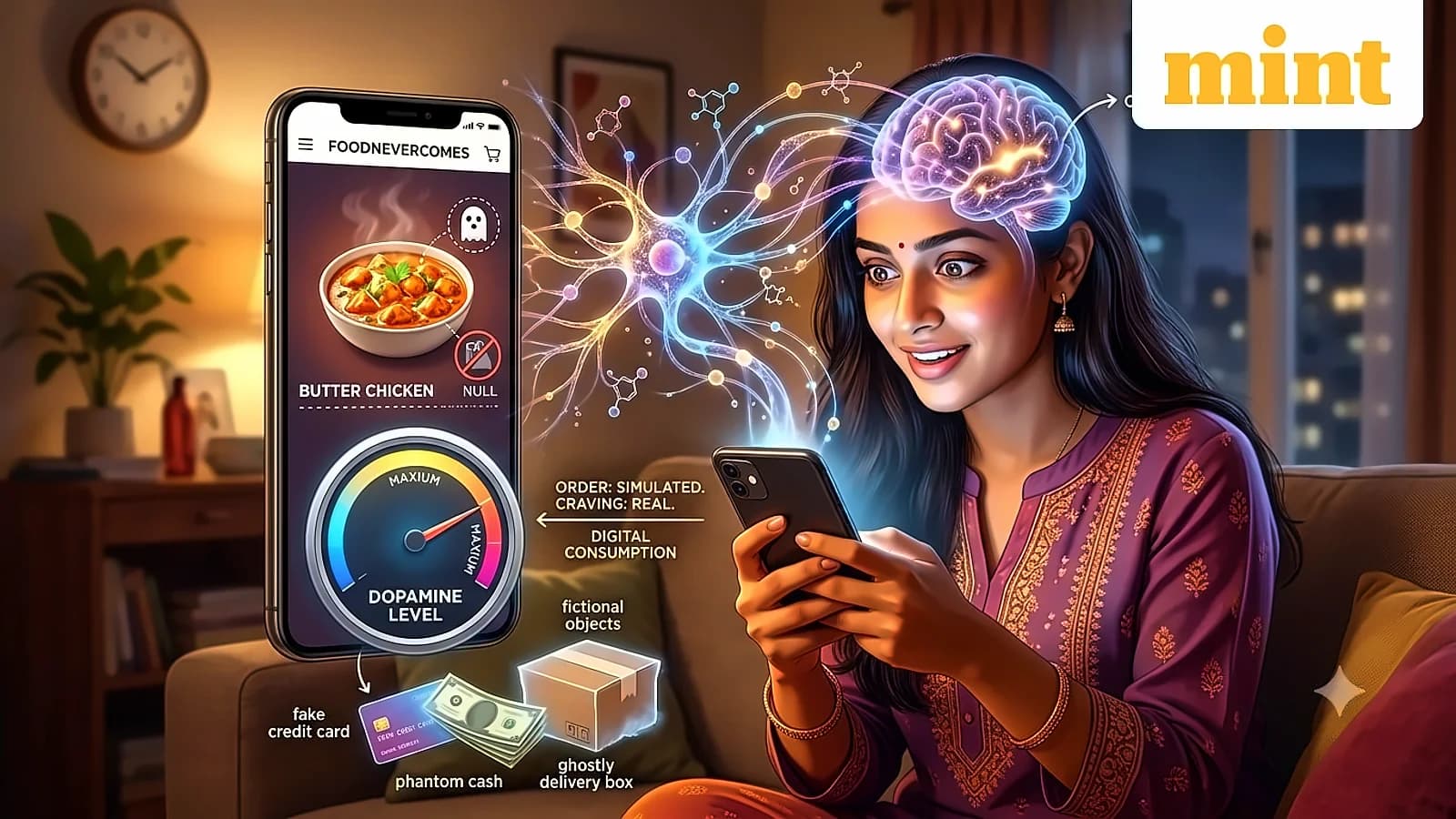
The concept of 'dopamine sites' has gained international recognition, with the BBC reporting that these platforms are now spreading across the internet. The idea originated in South Korea earlier this year when a 21-year-old mechanical engineering student built a fake food delivery site called Food Never Arrives, which also shows users how much money and calories they saved by not ordering real items. The trend has since expanded beyond food delivery to include shopping, travel, and even smoking cessation platforms like Damta World, a South Korean website that lets users take virtual cigarette breaks instead of real ones.
One notable example is FoodNeverComes, built by 26-year-old software developers Purvansh Parmar and Anshul Sharma from Udaipur, Rajasthan. As reported by the BBC, the platform has attracted more than 2.7 million visitors since its launch in June. The site now offers 319 real recipes dressed up as 327 fake dishes across its fake kitchens, with fictional prices, simulated checkout processes, and fake delivery experiences. The founders, who run a software and content company called NeuroX AI, emphasize that there are no actual restaurants or transactions involved, with the product being the experience itself. According to recent reports, the platform features 22 kitchens and 327 dishes with 319 recipes, creating an extensive digital dining experience without any real purchases.
Beyond food delivery, the dopamine site concept has expanded into other consumer habits. Dopamine Shop offers the same browsing experience as Amazon or Flipkart, allowing users to compare products and fill carts without any real items changing hands. For smokers trying to quit, Damta World provides a virtual alternative to real cigarette breaks. As reported by Futurism, these platforms are specifically designed for people trying to reduce their consumption of actual products rather than spending money on real items. Other platforms recreate travel planning, allowing users to select destinations, flights, hotels and activities without actually taking a trip.
The founders' inspiration came from their own shopping habits, with Sharma admitting to browsing electronics without purchasing anything. According to the BBC, a Yale researcher studying customer psychology explained that people often feel 'anticipatory pleasure' - looking forward to a purchase feels just as good, sometimes better, than actually owning it. Neuroscientist Kent Berridge from the University of Michigan explained that 'wanting' and 'liking' come from separate systems in the brain, with dopamine driving the wanting far more than the actual enjoyment. Consumer research suggests this anticipatory pleasure can become part of the overall experience, with experts noting that people can chase purchases intensely even when the payoff feels weak in comparison. As reported by recent sources, Parmar noticed similar behavior in his family members, leading to the development of FoodNeverComes.
While some experts view these platforms as harmless, not everyone agrees with their benefits. As reported by the BBC, a Stanford addiction psychiatrist studying dopamine warned that repeating a ritual tied to reward, even a fake one, can end up reinforcing the same patterns it was meant to relieve. Her concern is that the sites might train the same urges rather than release them, suggesting potential long-term implications for users' consumption habits and their ability to resist actual purchases in the future. The concept raises questions about whether the thrill of buying can be separated from the purchase itself, with dopamine sites stopping before the transaction while betting that the act of browsing and anticipating a purchase can be rewarding on its own.