The ePlane Company, an IIT Madras-incubated startup, has unveiled its first full-scale electric vertical take-off and landing (eVTOL) aircraft prototype, the e200X, on July 20. According to latest reports, the company showcased the prototype at its newly commissioned 60,000 sq ft production facility in Chennai. The aircraft has been designated PT-01 and will now undergo ground testing before progressing to certified flight trials as part of the Directorate General of Civil Aviation's (DGCA) type certification process. As per Business Standard, the company plans to launch commercial services by 2028, beginning with air ambulances before expanding into passenger transport.
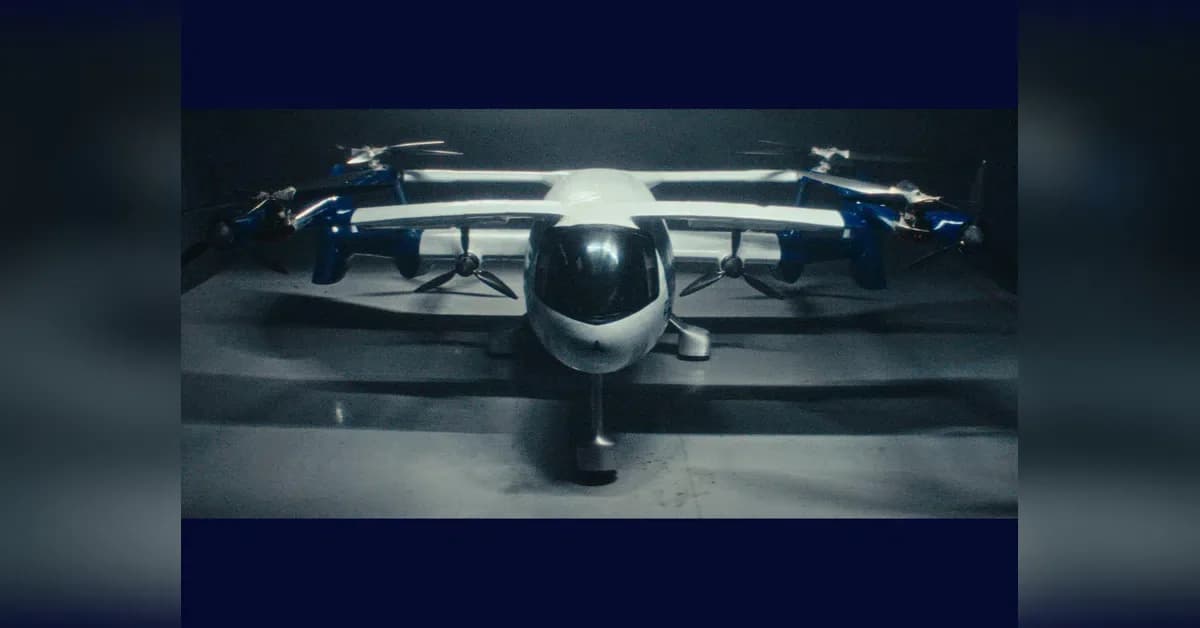
The e200X features an 8-metre by 11-metre footprint and is powered by an 800-volt distributed electric propulsion system built around the company's patented "Synergistic Lift" architecture, which separates vertical lift and forward flight systems instead of relying on tilt-rotor mechanisms. According to Business Standard, these aircraft do not require long runways and most designs use multiple electrically powered propellers instead of a single large rotor, allowing them to lift off from relatively small spaces. The aircraft can carry a pilot and two passengers or up to 200 kg of cargo over an operational range of 110 km. The e200X incorporates NVIDIA's IGX Thor computing platform and HENSOLDT avionics to support navigation and pilot-assistance functions.
The e200X has already secured commitments for more than 800 aircraft, with a significant portion of the demand coming from emergency medical transport operators. According to founder and CEO Satya Chakravarthy, the company deliberately prioritised a compact design over larger aircraft that would require cities to build new infrastructure. The aircraft's compact footprint would allow it to operate from existing helipads and, eventually, suitable urban rooftops, reducing the need for dedicated vertiport infrastructure. Rather than launching passenger air taxi services immediately, ePlane plans to enter the market through air ambulance operations, as Chakravarthy explained that "Any good business targets a lower-volume, higher-margin market first" and the emergency medical transport segment requires fewer aircraft while offering stronger unit economics than urban air taxi services.
The company is targeting completion of certification flight tests by late 2027 and expects early operational approvals in the first quarter of 2028. As reported by Business Standard, the International Critical Air Transfer Team (ICATT) signed an agreement with The ePlane Company to procure 788 eVTOL air ambulances in February 2025. Following certification in India, ePlane plans to seek regulatory approvals in overseas markets as it expands its presence across passenger mobility, cargo logistics and emergency medical services. The full-scale prototype builds on more than 10,000 kilometres of cumulative flight testing carried out using the company's smaller demonstrator aircraft since 2021.
India has entered the eVTOL race later than several global players but is beginning to build its own ecosystem. According to Business Standard, the ePlane Company and Sarla Aviation are among the startups developing electric air mobility platforms, while the government has identified advanced aviation technologies as an area of interest. Globally, US-based Joby Aviation is identified as one of the leaders in piloted operations after obtaining FAA Part 135 operational certification, while China's EHang became the first company to receive a type certificate for a passenger-carrying eVTOL aircraft. The e200X has been designed as a common platform that can be configured for passenger transport, cargo operations and emergency medical services.