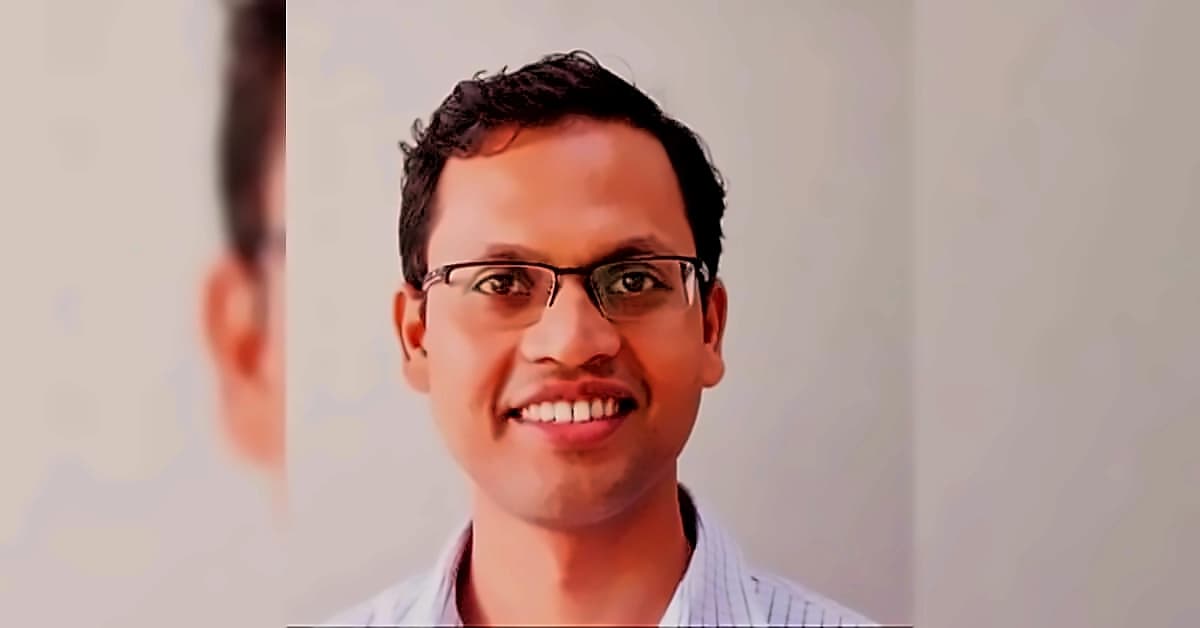
Pratyush Kumar, cofounder and CEO of Sarvam AI, declared that India will lead in artificial intelligence adoption and development over the next decade. Speaking at the Global Fintech Fest 2026 in Mumbai on September 9, Kumar emphasized that while it is year four of ChatGPT's launch globally, this marks year one of India building its own AI capabilities. According to reports from Business Standard, Kumar highlighted that India will not only adopt AI at scale but also at price points that are affordable for a billion users, positioning the country as a global AI leader. The Sarvam CEO described the current stage of India's AI journey as an early one, contrasting it with the four years that have passed since ChatGPT's launch, and argued that the next decade could see India emerge as both a developer and adopter of the technology.
India's biggest advantage in artificial intelligence may not be its ability to build the most powerful models, but its ability to deploy AI at a cost that works for a billion people, Kumar stated at the Global Fintech Fest 2026. As reported by Business Standard, he noted that the country now has its own AI models, growing access to GPUs and an expanding pool of AI talent. Kumar explained that India needs to build the infrastructure to produce and run AI at scale and at a cost structure that can support its massive population. The Sarvam CEO emphasized that India will not only do it at scale, but also at the cost structure that works for a billion people. That's the opportunity India offers to the global effort in AI. He warned that India could repeat its earlier pattern of becoming a consumer of technology rather than a builder, stating that "We are frankly more or less, as my co-founder says, digital colonies right now."
Sarvam has demonstrated significant progress in AI development over the past year, processing 325 million voice AI minutes from India and serving 400 million API calls daily. According to Business Standard, the company has digitized tens of millions of documents and is working on document AI, including with Life Insurance Corporation of India, where it is digitizing more than three crore paper forms generated annually. Kumar highlighted that Sarvam is running models on GPUs in India at prices that are "equal or cheaper" than those available globally, with the company also serving models built by other providers on its infrastructure. The company is betting on smaller, specialized models rather than relying entirely on frontier models, with Kumar citing Sarvam's 105-billion-parameter model as an example, saying it costs about one-eleventh as much as models such as GPT Mini or Gemini Flash for specific use cases while performing better on voice AI metrics.
Kumar identified the financial sector as one of the core sectors that will drive AI adoption and demand in India, particularly emphasizing the importance of sovereign deployment for regulated institutions. As reported by Business Standard, he argued that for banks and other regulated institutions, this combination of lower-cost infrastructure, specialised models and sovereign deployment could become particularly important. Banks need to be able to run AI without necessarily sending sensitive data outside their control, with the government also pushing for wider adoption of homegrown technology. In a July 29 letter listing 23 action points from Prime Minister Narendra Modi's July 22 meeting with government secretaries, Cabinet Secretary TV Somanathan asked ministries and departments to promote Indian digital, AI and messaging platforms, including Zoho, Sarvam and Arattai, with data safety among the considerations.